Run an online store long enough, and you’re bound to learn one slightly annoying fact: no matter how much time and effort you spend tweaking product photos and writing cute descriptions, a single competitor with better rankings can swoop in and eat your lunch.
If they’re sitting at the top of Google, they can have the same (or even slightly worse) products and prices as you, and they’ll still hoover up all the “best [product]” searches while you’re left in the dust, still paying for clicks.
That gap between having a decent store and building a money machine is filled, in part, by eCommerce link building.
I want to walk you through how link building really works for stores, and share a bunch of tactics that work specifically for eCommerce brands. We’ll talk about data as well as any realistic constraints. But most importantly, I’ll keep it practical, so you can actually implement this or hand it to a team.
Why Is eCommerce Link Building so Important?
Across industries, organic search still drives roughly a third to over half of all website traffic. A 2024–2025 benchmark report found organic search producing about 33% of overall traffic on average, with some newer analyses putting that closer to 53% globally as search keeps eating the internet.
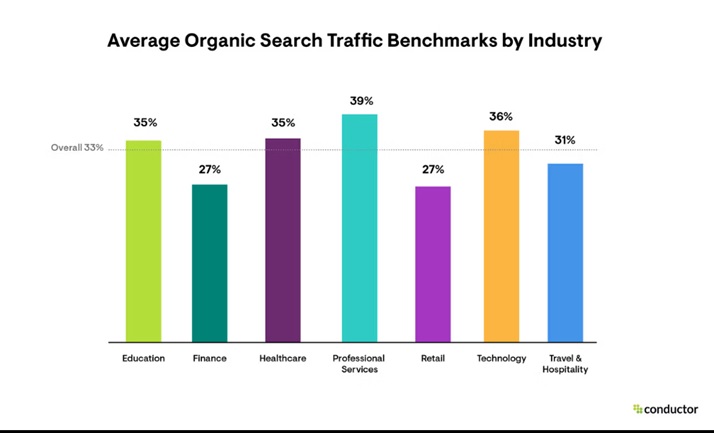
Source: Conductor
When it comes to eCommerce specifically, one 2024 analysis found that about 23.6% of eCommerce orders are directly linked to organic traffic. Another study on eCommerce traffic showed organic search competing closely with (and often beating) paid search for total traffic share, while often being more cost-effective over the long run.
At the same time, paid search is getting brutally expensive, especially in competitive retail categories. During recent Black Friday periods, big players like Temu and Shein drove up cost-per-click by bidding aggressively on competitors’ brand and generic terms, with some keywords increasing in CPC by up to 16x in just a couple of years.
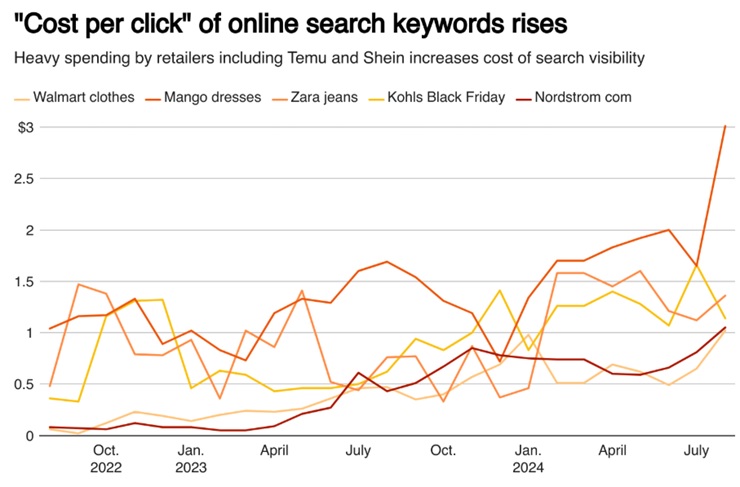
Source: Reuters
So if you’re mostly relying on paid traffic, you’re essentially renting customers from Google and Meta at auction. Link building, on the other hand, is about owning rankings you don’t have to pay for every single time someone clicks.
Here’s a simplified view of what different channels tend to look like for retailers, based on multiple industry reports and benchmark studies (actual numbers will vary by niche and brand):
| Channel | Typical Share of Traffic (Range) | Role in eCommerce Orders | Notes |
|---|---|---|---|
| Organic Search | ~30–50% | ~20–30% of total orders | Scales well; heavily influenced by backlinks and content |
| Paid Search | ~15–30% | Strong short-term order driver | Costs rise over time, and auctions are volatile |
| Social (Organic) | Low single digits | Helpful for discovery | Organic search drives ~10x more traffic than organic social |
| Email/Direct | The rest | High-value repeat buyers | Works best when acquisition is already strong |
These numbers are rough estimates, but they serve to show a pattern. The takeaway is that if your organic search is weak, it’s tough to get anywhere, plus everything else has to work much harder.
And the difference between ranking and not ranking almost always comes down to whether your site deserves to rank based on content and UX, and whether the rest of the web has voted for you with links. That second part is where eCommerce link building comes in.
How eCommerce Link Building Boosts SEO
Saying that “links increase authority,” while technically true, isn’t all that helpful on its own, so let’s dig a bit deeper. For an eCommerce store, solid link building tends to move the needle in a few specific ways.
Category and collection pages start climbing
Google’s original PageRank model (and every modern variant of it) treats links as votes. In other words, when other sites link to your site, they’re essentially telling Google that your content is relevant and useful.
Those external links then flow through your internal links to product and category pages, your key commercial pages. Many eCommerce sites have fewer than 30 referring domains to commercial pages. Done well, this turns your navigation and internal linking into a “pipes and valves” system that channels authority toward the pages that actually generate revenue. Category pages rank higher because they can accumulate and distribute more authority across related products.
You show up in broader, higher-funnel searches
Organic search stats show that the vast majority of searches are four words or more and often informational in nature.
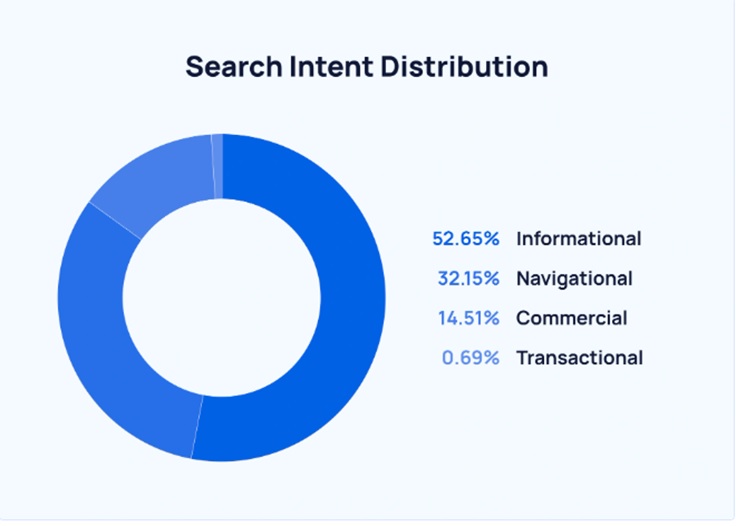
Source: Exploding Topics
That’s a fancy way of saying that people don’t typically start their search with “buy [exact product]”. Instead, they start with something like “best hiking backpack for women,” or “gifts for coffee lovers under $50.”
The brands that win these discovery queries are usually the ones whose guides and comparison pages have earned links from blogs and niche sites. This top-of-funnel visibility then brings in new visitors before they’ve picked a brand and builds familiarity and trust.
You defend your brand against competitors’ paid bids
If your brand name has any value, someone is probably bidding on it. Retailers aggressively bidding on competitors’ branded terms has become normal practice, which drives up your cost per click just to protect your own name.
Having a strong link profile, therefore, helps ensure that your homepage dominates for branded searches. Essentially, the stronger your organic presence around branded queries, the more annoying and expensive it becomes for competitors to steal those clicks with ads.
7 eCommerce Link Building Strategies That Work
Most link building advice on the internet focuses on things like ultimate guides, skyscraper outreach, and stats posts. These can work for stores, but they often ignore the reality that your main job is selling products.
I chose the strategies below with one goal: help your store earn links in ways that support revenue as part of a broader eCommerce SEO strategy. That means eCommerce link building focuses on creating link-worthy assets and using your internal structure to support target pages before using targeted outreach and relationships to earn links to those assets.
eCommerce Link Building Types
Building links for eCommerce websites usually means earning five distinct types of link, and they behave very differently from one another. Most campaigns still favor blog content: 68% of link builders prioritize blog posts, while only 14% prioritize product pages. Knowing which type you are chasing matters more than the tactic you use to get it, because two of the five are not supposed to pass ranking signals at all.
- Editorial. A writer cites your guide, data, or tool because it helped their piece. These links often naturally attract links to informational assets first, not product URLs directly. Passes ranking signals, hardest to earn, and by far the most durable.
- Partner and supplier. Where to Buy listings, authorised dealer directories, and manufacturer case studies. Almost always followed, and the cheapest strong links available to a store that resells anything.
- Affiliate and creator. Comparison sites and review blogs in your program. These should carry rel=“sponsored” and pass no ranking signal, but they drive revenue and branded search, which helps you indirectly.
- Community and sponsorship. Event, club, charity, and association pages. Usually followed, and they send a strong “real business” signal that domain-rating chasing never will.
- Directory and marketplace. Vetted industry lists and trade bodies. Low ceiling, but a sensible baseline that costs almost nothing to claim.
Let’s see how you can do that.
1. Create “state of the niche” reports with your own data
You don’t have to be a giant research firm to publish interesting data for digital PR. If you run a decent-sized store or even a multilingual store, you’re sitting on real purchase and returns behavior across thousands of customers, covering things like which color sells best or seasonal spikes in specific product types.
This kind of proprietary data is catnip for journalists and creators, especially if you package it in a simple, visual way. Over 90% of successful digital PR campaigns are based on original research. And, because you’re publishing original data, people have to link back to reference it properly, which is why digital PR campaigns are one of the most reliable ways to earn high quality links. Strong digital PR campaigns can average 42 unique backlinks from high-authority publications and even deliver a 312% ROI for ecommerce brands.
2. Leverage partner links you’re already entitled to
This is one of the most underused eCommerce link building strategies, and it’s low-hanging fruit. If you stock products from well-known brands or are an official reseller/partner, you are entitled to powerful backlinks that you may not be taking advantage of.
Many manufacturers and wholesalers maintain Where to Buy or Authorized Dealers pages, as well as success story and case study sections on their websites. You’re literally leaving authority on the table if you’re not listed there with a proper followed link to your site, especially since a link from a relevant site is often more valuable than a generic high-DR placement.
All you need to do is reach out with a short email saying you’re an active seller of this brand in your region and would love to be included on their Where to Buy page. Provide a store URL and short description for them to use, and voila!
Partners benefit when you sell more of their products, so the response rate here is going to be much higher than what you get from cold outreach, and over time, these partner links will help not only strengthen your homepage and send direct link equity to the pages you support through internal link paths, but also build brand trust for new customers comparing options.
3. Turn customer reviews and UGC into link magnets
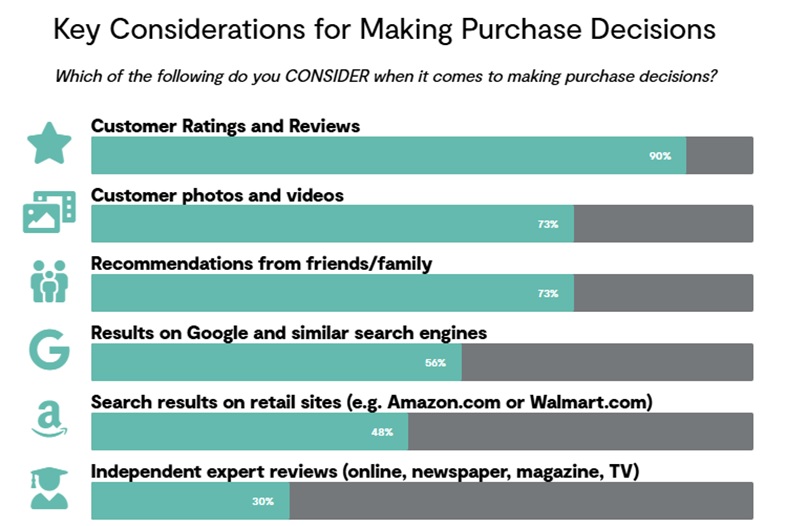
Reviews are a massive conversion lever for any business that operates online, but most stores miss that reviews and user-generated content (UGC) can also be link magnets. Multiple studies over the last few years tell the same story:
- One large psychology and marketing study found that 93% of consumers say online reviews affect their shopping choices.
- A 2023 PowerReviews survey reported that nine in ten shoppers consider reviews when deciding what to buy, and 93% say ratings and reviews influence their purchase decision.
- UGC has ridiculous trust levels, with several analyses based on Nielsen data and follow-up surveys showing 84–92% of consumers trust user-generated content more than traditional advertising.
Source: Power Reviews
At the same time, regulators are finally cracking down on fake reviews. The UK, for example, recently banned fake online reviews and “sneaky” fees, with the government noting that at least 10% of product reviews on third-party platforms are likely fake.
From an eCommerce link building perspective, this is gold. If you can turn that honest customer voice into publicly referenceable assets, bloggers and journalists suddenly have a reason to link to you because those assets provide proof and customer insight that can attract links. The same evidence can also generate branded web mentions even when a publisher does not add a clickable link.
4. Build a modern affiliate & creator program
Affiliate programs have quietly become one of the biggest growth engines in eCommerce, with recent studies showing that US affiliate marketing ad spend is expected to stay in double-digit annual growth and exceed $15 billion by 2028. Some stores also strengthen outreach by offering their own affiliate program to publishers already covering the niche.
From a link building point of view, though, affiliates are also bloggers and niche experts who run comparison sites, as well as creators who maintain resource pages for their audiences. If you set your affiliate program up with content and SEO in mind, it becomes a scalable way to earn links from people who are also motivated to keep promoting you.
When we design eCommerce link building campaigns around affiliates, we prioritize content partners on relevant industry sites who write reviews and buying guides on their own domains. We also make it easy and rewarding to link to high-intent pages by giving affiliates deep links to your best-converting categories, while keeping dofollow links for non-affiliate editorial placements.
If you send affiliates a short content kit with quick product facts, stats, and even suggested internal anchor text, you dramatically increase the odds that their posts are both good and link-rich. Big international companies are using this strategy with great success, and affiliates can keep sending referral traffic even when their links are sponsored.
5. Create tools that bloggers want to link to
People genuinely worry about choosing the wrong mattress firmness, bike frame size, laptop spec, shade of foundation, and so on. That anxiety then leads to queries like “how to choose X” and “size guide for Y”.
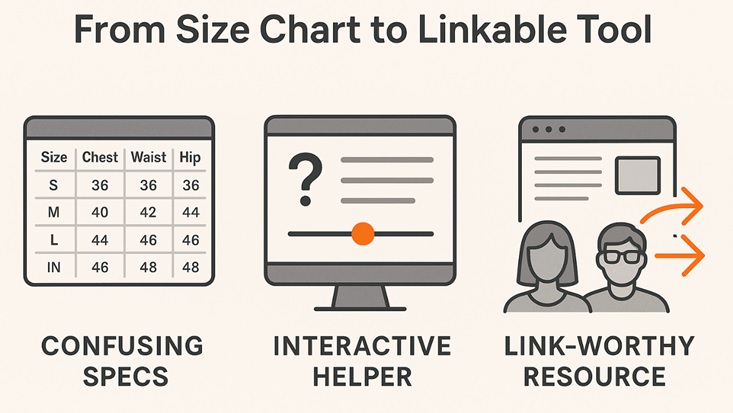
If stores target these keywords, they typically do so with a 300-word static size chart that looks like it escaped from 2009, but for eCommerce link building, you can do a lot better by turning that guidance into a simple tool or calculator built to create links by being genuinely useful.
A quiz that helps runners choose the right shoe based on terrain and injury history, or a sofa size visualizer that shows whether a couch will actually fit in a living room layout, brings a lot more value to the reader. And the best thing is, they don’t need to be complex or custom-coded from scratch.
A lot of these tools can be built with basic forms and logic in your CMS or no-code tools embedded in your site, with just a bit of custom dev to polish it up once you know the concept works.
What matters most for link building is that the tool solves a real, annoying decision problem, because the best ones naturally attract links from bloggers already covering the topic, and that you deliberately pitch it to bloggers and journalists who create “how to choose” pieces in your niche. Original product data or a benchmark built into the tool can also act as link bait. The same approach as SaaS brands and lawyers are using today.
Source: ChatGPT
6. Tap into local and niche communities
A lot of purely eCommerce brands ignore one of the easiest link building angles: local and community connections. Even if you ship worldwide and don’t have a physical store, you still exist somewhere. Your founder comes from someplace, your warehouse is in a city, and your niche has real-world meetups, clubs, and events.
All of those are potential link sources that don’t care about your domain rating. They care that you’re a real business and that you support the same people they do.
Think about sponsoring a local sports team or niche event in your product category, or donating products to fundraisers or charity raffles. These all have sponsor and partner pages, and if you nudge them politely, you can usually get quality links from trusted local organizations to your homepage or a relevant category, which often help a site’s authority more than irrelevant placements.
If you do have brick-and-mortar elements like pop-ups or showrooms, make sure they’re listed in local business directories and industry association member lists. These send a very strong “real company” signal that complements your more advanced eCommerce link building campaigns and supports search visibility in local and niche contexts.
7. Make your blog actually answer buyer questions
Most eCommerce stores have a surprising amount of “lost” link equity hiding in unlinked brand mentions and broken links to old URLs. A lightweight link reclamation process can give you quick results without building anything new.
Use SEO tools, Google Alerts, and manual Google searches to find unlinked brand mentions and 404s with backlinks, then reach out to the site owner with short messages. Unlinked brand mentions can convert at a rate of 20-40%, which makes reclamation worth prioritizing, but chasing high-DR links without relevance yields little benefit. Ask them to link to your product or homepage where your brand is mentioned and offer new URLs for broken links to save their readers from 404s.
If your dev team can set up smart redirects, you can also catch a lot of broken link value by redirecting old product URLs to newer versions of the product or the parent category. That offers a better experience for the user and stops hard-earned authority from evaporating when links change.
Link Building for Small eCommerce Sites
If you are running one of the smaller eCommerce stores with no proprietary data, no PR budget, and no developer, three of the seven strategies above are still fully available to you: partner links you are already entitled to, local and niche community links, and reclamation. Work those to exhaustion before you spend a penny on anything else.
- Partner links need no budget and no content. If you resell any recognised brand, you have unclaimed placements sitting on Where to Buy pages right now. Most small stores find somewhere between five and thirty of them, and the reply rate is high because the manufacturer benefits when you sell more.
- Community links do not care about your domain rating. Sponsoring a niche club, event, or fundraiser gets you a real link from a real organisation, usually for a couple of hundred rather than a couple of thousand.
- Skip the data study until the numbers mean something. A “state of the niche” report built on 200 orders is worse than no report at all, because the journalists you are pitching will check your sample size and quietly bin the email.
- A realistic pace for a one-person store is two to four earned links a month. Expecting overnight results from link building is unrealistic, especially on competitive target keywords. That compounds faster than it sounds, and it comfortably beats buying forty that get discounted — the long-tail queries you can actually win (“best laptops for traveling photographers on a budget”) do not need a huge profile, just a relevant one.
Advanced eCommerce Link Building Tactics
The seven strategies above are the foundation. Once those are already running, link building for eCommerce gets more powerful when you go after links your competitors structurally cannot copy: your supplier ecosystem, your own catalogue history, and category-level PR built from inventory data nobody else holds.
- Map the whole supply chain, not just the brand. Every label you stock has a Where to Buy page, but it usually also has a regional distributor, a press page, and an industry association behind it. Mapping the full tree normally turns one entitled link per brand into three to five, and those links should support product pages as well as the homepage.
- Pitch the category, not the company. “What our returns data says about sizing in [category]” gets covered. “Store announces new range” does not. Journalists write about categories and trends, and almost never about individual retailers.
- Reclaim equity from discontinued products. Large catalogues shed URLs constantly. Every dead SKU that still has backlinks should redirect to its parent category rather than to a 404 or the homepage. On a catalogue of a few thousand products, this is usually the single largest pool of recoverable authority you own.
- Run link intersect at category level. Point the analysis at the top three ranking category pages for your target term rather than at competitor homepages. The resulting list is much shorter, far more relevant, and made up of sites that demonstrably link to pages like the one you are trying to rank. In many campaigns, the linking page is the asset that earns the backlink first, and then authority is routed onward with contextual internal links. After campaigns go live, measure keyword position changes on target pages to see whether the links are improving rankings where revenue happens.
Closing Thoughts
At this point, the idea of eCommerce link building hopefully feels less like a dark art and more like a set of strategies you can actually pull off.
But, if you’d rather have a partner handle the heavy lifting, you can always drop us a line through the contact page so we can talk about your store and your category pages, and improve those ever-elusive rankings together.