Software buyers are savvy. They Google, compare, lurk on review sites, ask peers, open 17 tabs, and then email procurement. In that multi-touch odyssey, links do quiet, compounding work, helping people and search engines find the right pages and nudging them onto shortlists they’d otherwise miss.
This guide is written for SaaS teams who are not interested in hacks that work until the next algorithm wobble, but want durable results. Think of it as a set of field notes you can copy and ship.
“The best link building for SaaS relies on repeatable publishing and partnerships that compound into authority, one small, earned outcome at a time.” — Bogdan, CEO of Tlinks.io
Why Links Still Matter (Even with AI Summaries Crowding the SERP)
There’s a lot of chatter about AI Overviews and zero-click results. Some of it is hype, and some of it is very real.
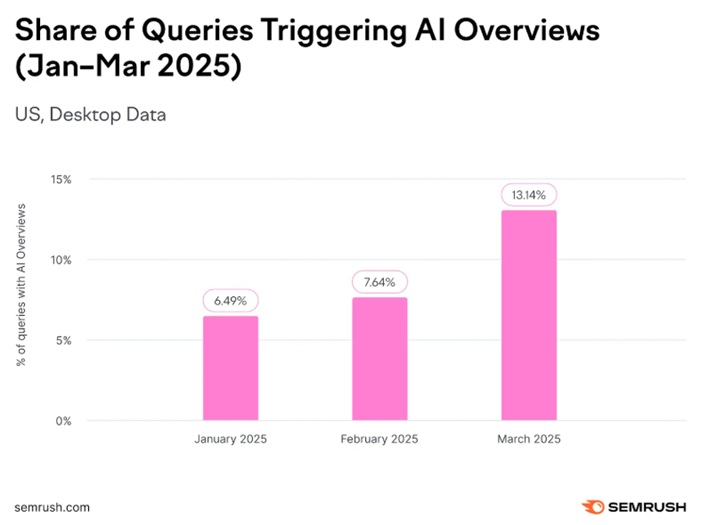
Semrush’s 2025 study saw AI Overviews on ~13% of queries in March, up from ~6% in January. Pew also found that users click fewer results when an AI summary appears, and industry reporting shows similar patterns for informational queries.
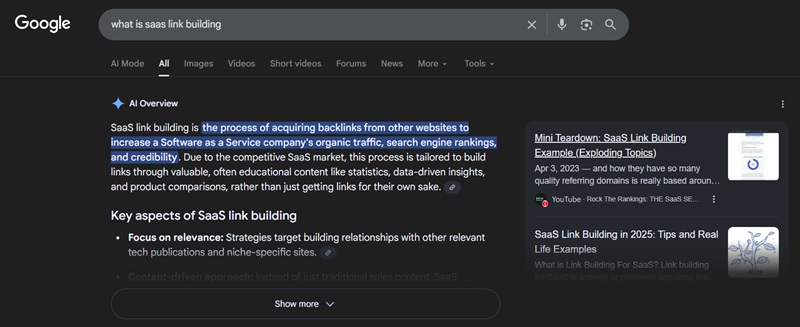
Source: Google
Meanwhile, Google’s own documentation hasn’t changed its fundamentals. It’s all about making links crawlable, using descriptive anchors, and remembering that links are one of the signals used to understand relevance.
The punchline is that you can’t rely on “ten blue links” the way you used to, but you still need authority and discovery signals to win the clicks that do happen and the many journeys that start in search.
How the SaaS Buyer Journey Keeps Links Valuable
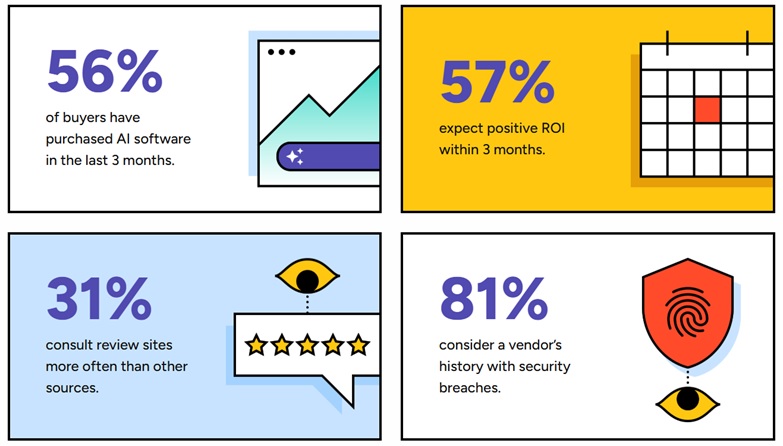
SaaS is not a three-click impulse buy. Most SaaS companies have multiple stakeholders, security reviews, proof-of-value, and a long tail of comparison queries make search a series of small gates. Think with Google reports that B2B spend is increasingly digital, with buyers researching heavily online before escalating. G2’s Buyer Behavior reports also show rising scrutiny, as well as faster ROI expectations, while TrustRadius data points to buyer reliance on demos and peer reviews to validate decisions. Links that put you in front of each of these behaviors are the leverage.
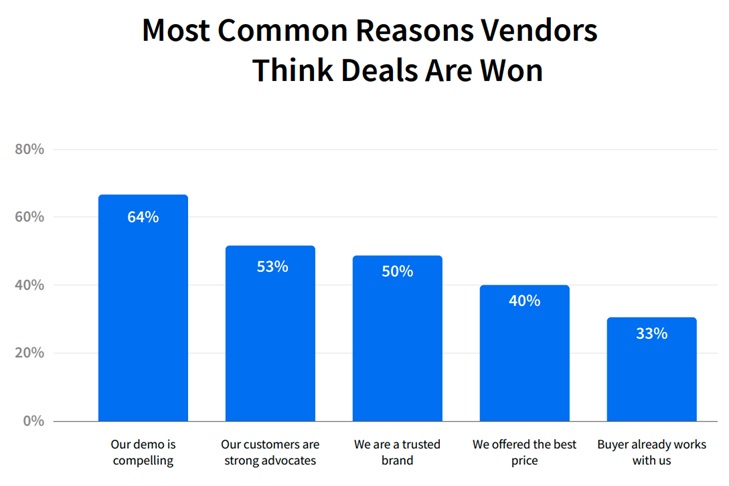
Source: TrustRadius
What this means in practice is that you don’t just “build links to the homepage.” You earn links to the exact pages buyers need at each stage, such as category explainers, comparison pages, integrations, security docs, pricing, and case studies. Then, you route that authority with smart internal links to the product surfaces that convert.
Link Building for B2B SaaS
B2B SaaS changes which pages deserve links, not which tactics work. Once the buying committee includes procurement, a security reviewer, and a technical evaluator, the useful link targets shift away from top-of-funnel guides and toward the pages those specific people open.
- Security and compliance pages become link targets. A SOC 2 or GDPR page cited by a compliance directory or listed in a partner’s approved-vendor page carries more weight in a B2B deal than another blog citation ever will. In self-serve SaaS, those pages are nearly irrelevant.
- Analyst and category-directory placements matter disproportionately, because enterprise shortlists are frequently assembled from those lists rather than from a Google search. Getting into the roundup is often the whole game.
- Your sales cycle is your measurement window. Self-serve products can read link impact in trial starts within weeks. B2B often cannot see it for a cycle or two, which is the single most common reason B2B link programs get cancelled just before they would have worked.
Goals and Metrics That Define Success
Here’s how to define outcomes that matter for a SaaS link building motion, since the number of backlinks should not be the primary KPI on its own:
- Discovery: more impressions and clicks on problem and category queries (“[category] software,” “alternatives to X”), plus growth in quality backlinks acquired over time.
- Shortlisting: visibility on comparison intents (“X vs Y”), integrations (“[tool] + [your brand]”), and security pages.
- Validation: website traffic and conversions from review sites and analyst roundups; “brand + reviews” and “brand + pricing” queries.
- Revenue: assisted conversions from organic and referral, reduced CAC payback as organic carries more of the load.
Industry benchmarks vary, but SEO continues to correlate with outsized ROI in SaaS benchmarking, and organic channels often deliver lower cost per lead (CPL) than paid.
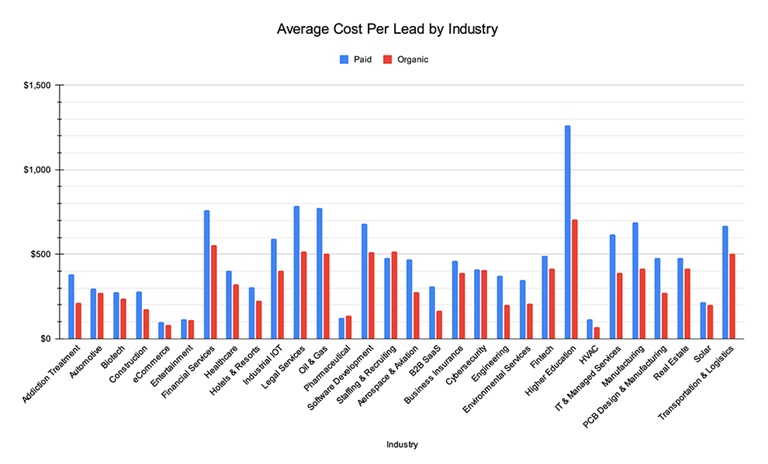
Source: FirstPageSage
Treat these as directional, of course, as your stack, product, and average customer value will drive the true delta.
In the table below we are mapping links to moments that move the pipeline, with an emphasis on link quality and overall SEO performance:
| Buyer Moment | Typical Query/Context | Best Target Pages | Link Sources That Help Most | How to Measure |
|---|---|---|---|---|
| Problem discovery | “automate invoice approvals,” “how to reduce churn” | Educational guides, frameworks, calculators | Data studies, university/NGO citations, industry blogs | Impressions/clicks on non-brand, assisted conversions |
| Category fit | “[category] software,” “top [category] tools” | Category hub, comparison of approaches | Roundups, relevant communities, industry newsletters | Top-3 ranks on head terms, demo/free-trial starts |
| Shortlisting | “X vs Y,” “X alternatives,” “X pricing” | Competitor comparisons, transparent pricing, features | Journalists, reviewers, customer engineering blogs | Click-through rate on bottom-of-the-funnel pages, MQL>SQL progression |
| Integration need | “[brand] + Salesforce,” “Slack integration” | Integration pages, docs, security | Partners’ blogs/docs, app marketplaces, dev forums | Referral signups from partner domains |
| Validation | “yourbrand reviews,” “SOC 2 yourbrand” | Reviews, security/compliance, case studies | Review sites, SOC 2 directories, customers | Closed-won influenced by organic/referral; monitor traffic from linking pages |
Strategy Overview
Over the rest of this guide, we’ll break down a SaaS-specific link engine that’s durable and scalable, relying on:
- Linkable research and tools: proprietary datasets, benchmarks, APIs, calculators, and “state of” reports that others need to cite. SaaS international brands are using this strategy very often.
- Partner and ecosystem links: integrations, app marketplace listings, SSO/SCIM docs, and co-marketing that earns links from products your buyers already use.
- Review site and validation links: profiles on G2 / TrustRadius and category roundups that buyers consult when pressure-testing a shortlist. This is one of the best approaches used by lawyers.
- Thought leadership that attracts journalists: clear, evidence-backed takes that produce one-way mentions on relevant publications (and turn into speaking invites).
- Distribution playbook: digital PR, community syndication, and repurposing cadences that keep the flywheel spinning.
We’ll go deep on each, but first, two ground rules.
Ground rule #1: Create link reasons
People typically don’t link to generic product pages or cite vague think-pieces. They link to hard original numbers, useful tools, checklists they trust enough to share with a manager, and integration docs that solve annoying problems. For example, an eCommerce store’s people will link to product pages if they offer an affiliate program.
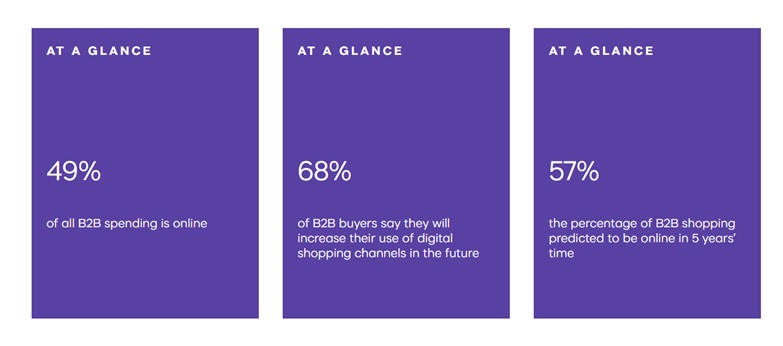
That’s why data-led assets and simple tools outperform “Ultimate Guides” 99 times out of 100 for earning external citations. Buyers are digitally self-directed, with nearly half of B2B spend now online, and they prefer content that’s scannable and shareable. If your asset makes their job faster or their deck stronger, the link follows.
Source: VML
Ground rule #2: Route authority like a product manager
Internal links are how you move the authority you’ve earned to the exact features and use cases that convert. Google explicitly recommends crawlable links and descriptive anchors, even if you own a multilingual business.
Each time you publish a new asset that earns links, add 3–5 clean, descriptive internal links from that asset to:
- The category hub (semantic parent).
- 1–2 high-intent bottom-of-the-funnel (BOFU) pages (pricing, comparison, or top integration).
- One “customer stories” page that proves outcomes in the same use case.
Phrase these naturally so you can safely link them to internal pages, as seen in different articles on our blog. Or if you’re running campaigns for clients instead of your own SaaS, our guide to white label link building explains how agencies can scale outreach and link acquisition while keeping everything under their own brand.
Internal Link Building for SaaS
Internal linking is the only part of a link program you fully control, and it matters more in SaaS than almost anywhere else, because the pages that earn links — guides, datasets, integration docs — are almost never the pages that convert.
Your internal structure is the thing that closes that gap, or fails to.
- Build hub-and-spoke, not a flat blog. One category hub per problem you solve, every supporting guide linking up to it, and the hub linking back down to all of them. This structure is what lets a single earned link on one guide lift the entire cluster rather than just that URL.
- Audit for orphans every quarter. In SaaS, the repeat offenders are integration pages and security or compliance docs — exactly the pages buyers look for late in the cycle, and the ones most often reachable only via a marketplace listing rather than from your own site.
- Cap the links and keep the anchors descriptive. Three to five contextual internal links out of a linkable asset is plenty. Twenty dilutes the routing and reads like somebody pasted a sitemap into a paragraph.
- Hold to a two-click rule for BOFU pages. Pricing, comparison, and customer stories should each be reachable in two clicks from any page that earns external links. If they are not, the authority stops where it lands and never reaches anything that makes money.
Linkable Asset Stack for SaaS
For a simple, defensible dataset, pick a recurring metric your product sees (anonymized and aggregated), or run a tightly scoped survey with a real sample size. The goal is to publish one number or chart that people repeat in slide decks for a year.
High Alpha’s SaaS Benchmarks (powered by 800+ companies) and G2’s Buyer Behavior reports both earn consistent attention and citations because they publish numbers that buyers can argue about. Your version can be smaller and still useful if it’s narrowly defined and consistently updated.
Integration pages also attract links from partner docs, marketplaces, community answers, and “how-to” posts. Buyers search for “[tool] + [tool]” constantly, and partners will link if your page helps their users succeed. Keep them lightweight and technical.
How Links Help You With Review Sites
G2 and TrustRadius are often the last stop before procurement.
G2 reports that buyers expect faster ROI, and a third consult review sites more often than any other source. As mentioned earlier, TrustRadius’ Buying Disconnect work shows demos and peer proof are pivotal, so your job is to earn citations from those properties and the roundups they feed.
Source: G2
What to build:
- Dead-simple Reviews page that consolidates badges, quotes, and links back to your profiles.
- Cadence with a monthly nudge to CSMs for use-case-specific reviews.
- Short media kit for journalists: one-paragraph product description, three approved images, and a list of your most link-worthy resources. Make their job easy, and you’ll earn the link.
Don’t ignore AI Overviews
You can’t control whether AI Overviews render above you, but you can bias toward survivable formats with original stats and interactive tools that summaries reference rather than replace.
Multiple analyses in 2025 point to fewer clicks when AI summaries appear, particularly for information-heavy queries, which is all the more reason to produce assets that other publishers need to cite, and to build brand demand outside of Google.
4 Killer Playbooks for SaaS Link Building
By now, we should be aligned on first principles and the kinds of assets that naturally earn links. Now we’re going to get specific about how to run a SaaS-grade program without becoming That Brand in journalists’ inboxes or shipping comparison pages that feel like hit pieces.
We’ll walk you through four playbooks you can run in parallel, each one shaped to how SaaS is actually evaluated and bought.
Playbook 1: Quality Digital PR
Spray-and-pray outreach and vague “thought leadership” is bad PR. Useful, verifiable material that makes a reporter’s day easier and their story stronger is another story.
Multiple journalism surveys say the same thing in slightly different words: relevance, an actual expert to quote, and real data win replies. Cision’s global survey of journalists even ranks press releases and original research near the top of what reporters want, while the 2025 State of Journalism highlights how credibility and verified sources matter more than ever.
Here’s the simple loop we use with SaaS teams:
1) Ship something citable
A narrowly scoped dataset, a small public tool, or a policy explainer from your security team will do more for you than a “trend” post. Add a /methodology and downloadable CSV so journalists can check your math. This habit also keeps you in the good graces of Google’s “helpful, people-first content” guidance.
2) Build a tiny newsroom
Keep one page that holds the press kit, short founder/PM bios with headshots, your fact-checked boilerplate, and links to your most linkable assets (reports, calculators, integration docs). When you pitch, you paste a single URL that solves logistics for a reporter.
3) Pitch what’s already working
Scan industry calendars, product releases you can explain, and compliance dates your customers care about. Package a clear angle + non-fluffy numbers + a named subject-matter expert who can answer questions live.
4) Respect workflow
Journalists get too many irrelevant pitches. Lead with the valuable thing, keep it short, attach one or two embeddable visuals, and stop after one gentle follow-up.
“We don’t ‘do PR. We publish things people actually need and then introduce them to the right people. The ‘PR’ part is mostly manners.” — Bogdan
Playbook 2: Co-Marketing Your Integrations
Integrations are where your product meets the rest of a buyer’s stack, and where link opportunities are hiding in plain sight. App marketplaces and developer docs often allow or encourage links to setup guides and support resources. If you ship an integration and publish a crisp, honest page for it, partners and their communities will link to you out of self-interest.
A few things to keep in mind:
- Marketplaces have rules, and they matter. Slack’s Marketplace guidelines and review guide spell out what’s required and how long listing takes. Build your timeline and assets accordingly rather than begging for exceptions.
- Support resources usually want links. HubSpot’s listing requirements explicitly ask for support contact info and links to setup documentation, and they allow linking to your company site in the listing. Treat these as opportunities to publish clear, stable URLs that stay fresh.
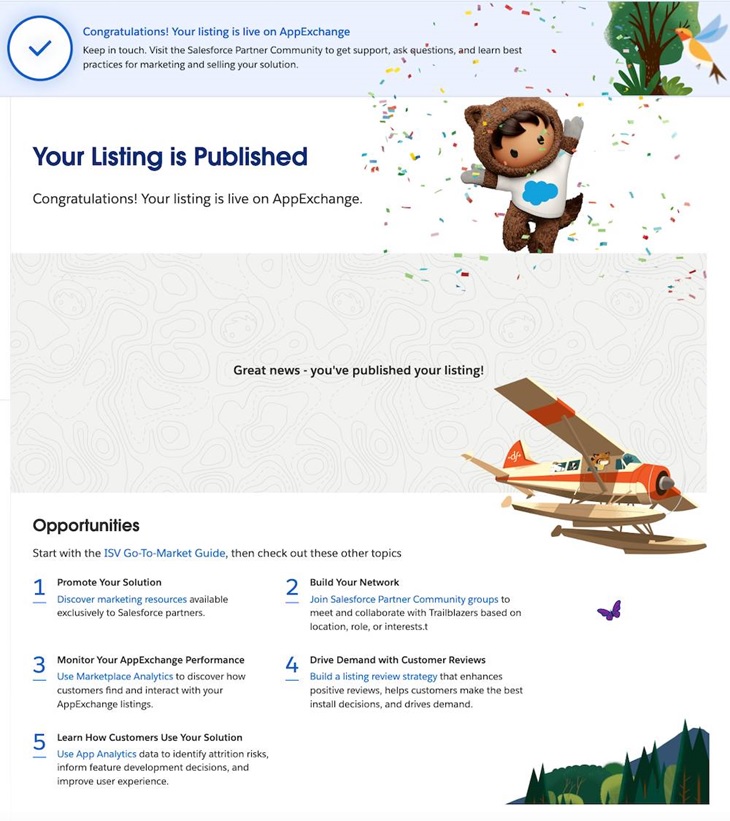
- Ecosystem pages are discoverable. Salesforce’s AppExchange and HubSpot’s App Marketplace both provide public listings that prospects and partners consult during shortlisting. If your listing is thin, you’re losing easy relevance and referral traffic.
Source: Salesforce
Playbook 3: Comparison Pages That Build Trust
People will Google “You vs. Competitor” whether you like it or not. If your page is missing or feels like propaganda, they’ll trust someone else’s narrative. The fix is to write something worthwhile and evidence-backed, then maintain it like a product surface.
Use Google’s people-first guidance as your north star, because that mindset not only earns links but also keeps the page safe through core updates.
Playbook 4: Distribution Cadence You Can Maintain
You don’t need 19 channels. You need a weekly rhythm. Ship one linkable thing per month and distribute it repeatedly but helpfully. Here’s a cadence that fits most teams:
- Week 1: publish the asset + send a short press note to a curated list of reporters and newsletter editors who actually cover your space. Remember, most journalists prefer pitches with a useful asset and an SME.
- Week 2: co-post on the integration partner’s dev blog or support hub, ask for directory and docs links, and seed a concise “how we did it” post on your blog.
- Week 3: share the cleanest chart and the CSV to two communities that care (industry Slack/Discord, practitioner forums). Ask one thoughtful question to invite discussion rather than spamming a link.
- Week 4: re-run the asset with a new angle (e.g., segment by company size or region), then package the update into your customer stories page and a line in your independent reviews outreach.
Keep your link building efforts moving by monitoring unlinked brand mentions and asking for a hyperlink when your brand is cited without one. Review competitor backlink gaps across the 10–30 SaaS brands you routinely compete with for attention and links to find fresh opportunities.
This drumbeat also hedges against shifting SERPs. AI Overviews are appearing more often than they did at the start of the year, especially on informational queries, and many publishers report softer clicks when AI summaries show.
Source: Semrush
That’s even more reason to produce material others need to cite rather than posts that are easy to summarize away.
Earned Syndication vs Traditional Link Building
Syndication republishes your content on somebody else’s domain. Traditional link building earns a citation pointing back to your content on your domain. The two get confused because both end with your name on another site, but only one of them reliably sends a signal to your page.
- Syndicated copies usually carry a canonical back to you, or nothing at all. Where there is no canonical and no link, you have given away the content and kept none of the credit — and occasionally created a competitor for your own ranking.
- The real return on syndication is reach and brand demand, not authority. Treat it as distribution that sometimes produces a link, and budget it against awareness rather than against referring domains.
- Negotiate the link before publication. Specify a followed link to the original, in the first or second paragraph, as a condition of the republication. Retrofitting a link after the piece is live almost never works, because nobody has a reason to go back and edit it.
Link Building for SaaS Startups
A pre-revenue or pre-Series-A startup has no proprietary dataset, no PR function, and no integration ecosystem, which rules out most of the guide above, though early backlinks can help reduce reliance on paid ads as the startup grows.
Three things are still available on a limited budget: your founder’s expertise, the listings you already qualify for, and one narrow tool.
- Founder-as-source costs nothing but time. Answer journalist requests in your category consistently for three months and you will out-earn a small paid campaign. You have the one thing an agency cannot manufacture: somebody who actually built the thing and can answer a follow-up question live. Done well, this can bring high quality backlinks that support rankings without stretching a young budget.
- Marketplace and directory listings are free and fast. Every integration you already ship has a listing you have probably not claimed, and those listings link out by design rather than as a favour. They can also send organic traffic from pages users already trust.
- Build one narrow tool instead of one broad report. A calculator that resolves a single annoying decision in your category takes a weekend rather than a dataset, and it accrues links passively for years afterwards. If the page earns high quality links from relevant sites, it is more likely to drive more organic traffic over time.
- On buying help for a brand-new domain: the risk is not the price, it is the pattern. Established SaaS programs often target 15–25 high-relevance links monthly because that cadence can boost rankings, but a new domain acquiring thirty links a month from unrelated domains looks exactly like the behaviour Google’s spam policies describe, and a new domain has no history to absorb the suspicion. Slow and relevant beats fast and cheap here more than anywhere else.
Closing Thought and Your Next Move
You don’t need more hustle. What you need is repeatable publishing and partnerships that give people something worth citing. The fundamentals haven’t changed, focusing on crawlable links, descriptive anchors, and people-first pages that genuinely help. Ship one meaningful asset a month and route its authority with intent, and your ecosystem will do the heavy lifting.