Searching for a lawyer can be a little painful. Obviously, it’s a more involved pursuit than shopping for a blender or an air fryer. When a person looks for a lawyer, they’re looking for someone who might help them keep their house, their kids, or even their freedom.
So, naturally, they do what the modern human does when the stakes are as high as they get: open a browser and start typing away at that search bar.
That’s why link building for lawyers isn’t really about “winning SEO” the way it can be in other industries. It’s about ethically earning editorial links and mentions that act as public, third-party proof that your firm is reputable and worth contacting. For law firms and legal marketers, that kind of validation affects not just rankings, but trust, local visibility, referral traffic, and whether qualified clients choose to reach out in a crowded, regulated market.
And links, the web’s version of references, fit perfectly into this. In legal marketing, references matter. Below, we’ll break down why they matter, how to earn them without crossing ethical lines, where link reclamation fits in, how tactics change by practice area, and how local data stories, trust signals, and ABA-aware marketing can turn link building into a real client acquisition channel.
Why Link Building Matters for Law Firms
Let’s start with the obvious part. People research legal issues online before contacting an attorney, and they do so in huge numbers. Martindale-Avvo’s Legal Consumer Report 2024 puts that behavior in black and white, showing that the vast majority of legal consumers research their legal issue online before reaching out.
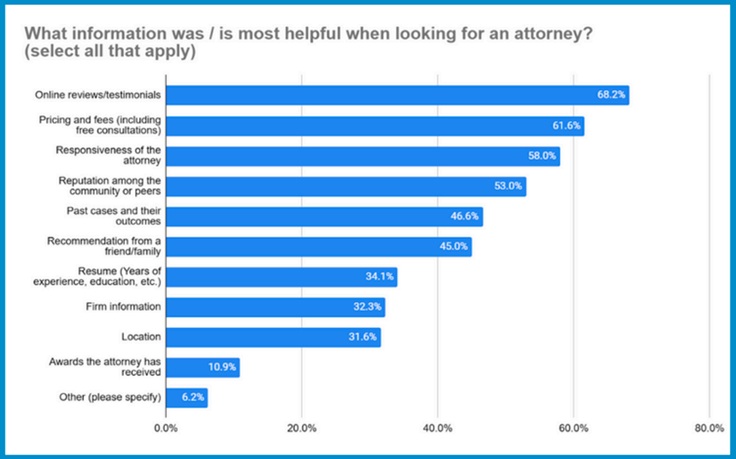
Source: Martindale-Avvo
Now add the fact that Google uses one signal above all others to judge “quality,” and that’s whether other prominent sites link to (or refer to) a piece of content. In plain English, if reputable sites point at you, Google treats that as a sign you’re trustworthy.
That means that even if you write the most helpful page on earth, Google still wants confidence that it’s coming from a legitimate source, not some internet rando with strong opinions and a Canva subscription.
What if I operate only locally?
Local search has its own gravity. Google says local results are mainly based on relevance, distance, and prominence. You can’t control distance, but you can improve relevance with great pages and a complete profile, and you build prominence with real-world signals, including mentions and links.
That last one is where many firms get stuck. They try to manufacture prominence with a stack of directory links that look impressive in a spreadsheet, but do nothing in reality. Meanwhile, the firms that come out on top are the ones that earn a smaller number of better, context-appropriate mentions across the legal and local ecosystem.
What Good Links Do for Law Firms
A backlink is rarely just a ranking signal. It’s also a reputation signal, a referral source, and often a conversion assist (because people click the thing and then judge you). Here’s a quick overview of what that can look like in practice:
| What the link influences | Why it matters for lawyers | Real-world example |
|---|---|---|
| Organic visibility | Competitive practice areas need authority signals | A DUI page starts competing for “DUI lawyer + city” |
| Local prominence | Off-site mentions can reinforce local credibility | Local news site covers your firm’s pro bono work |
| Trust + conversion | People look for third-party validation | Prospects recognize your name from a bar association page |
| Referral leads | Some links send actual cases | A niche association directory sends you qualified inquiries |
In legal marketing, links are often proof that you exist outside your own website. That’s valuable even when rankings don’t instantly jump.
All that being said, we should point out that even well-known SEO datasets suggest links aren’t the only big lever anymore, and their impact depends on query type and competitiveness. Ahrefs’ research (reacting to Google’s “links matter less” messaging) basically says that links may be less dominant overall, but they still matter, especially in certain SERPs. It also suggests that a stronger Domain Rating tends to correlate with higher search engine rankings, which matters more in competitive markets than chasing raw metrics.
The critical distinction is that, for lawyers, those “certain SERPs” are exactly the ones that pay your rent.
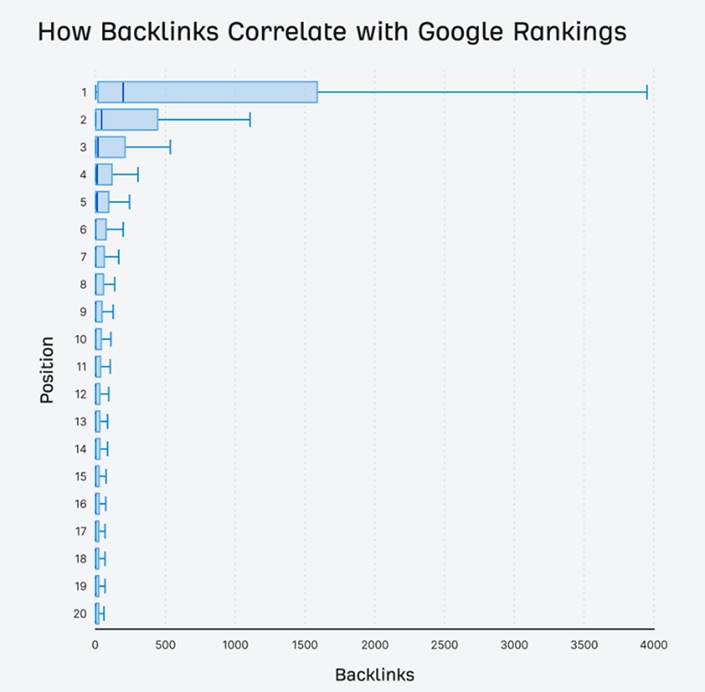
Source: Ahrefs
If you’re in a competitive metro, or you practice in categories where ads, directories, and big publishers crowd page one, you’re not going to finesse your way into online visibility with on-page tweaks alone. You need authority signals, and links are still a major part of that. The right placements can also send referral traffic from relevant sites that already have your future clients’ attention.
Editorial Links for Lawyers
An editorial link is one a writer or editor added because your page was actually useful to their story, with no payment, exchange, or agreement behind it. For law firms, these are the most durable links available, and the only category that sits unambiguously inside ABA Rule 7.2’s boundaries.
- The test is simple: could the publisher delete the link and leave the article intact? If the sentence only exists to hold the link, it isn’t editorial, whatever the invoice says.
- The reliable route is being a source rather than a pitcher — responding to journalist requests, building relationships with the local reporters who cover your case types, and contributing to bar association publications.
- Editorial links survive redesigns, ownership changes, and algorithm updates. Paid placements tend to vanish the month you stop paying for them.
Linkless Mentions for Lawyers
A linkless mention is when a publication names your firm or one of your attorneys without hyperlinking to you. They don’t pass authority on their own, but they’re the cheapest link opportunity in your entire program, because someone has already decided you were worth citing.
- Set alerts for the firm name, every attorney’s name, and the two or three misspellings people actually use so you can catch unlinked brand mentions. Most firms turn up mentions in bar publications, local news, podcast show notes, and event pages they’d forgotten about.
- The outreach converts unusually well because you’re asking for a correction rather than a favor: one email, the exact URL, no pitch.
- Treat unlinked mentions as a prospecting list, not a ranking asset in themselves. The value is the conversion to a real link, which improves the firm’s backlink profile over time, plus a warm contact for the next thing you publish.
Our Lawyer-Specific Link-Building Tips
Law is local, regulated, reputation-heavy, and full of topics where you can’t casually promise outcomes or hand-wave nuance, so this section approaches link building for lawyers through a lawyers link building lens. So, these tips and strategies are built around earning links you can be proud of, from places that make sense for attorneys, with the goal of effective link building in the legal space, not generic outreach.
What Are Some Link Building Strategies for Lawyers?
The strategies that hold up for law firms all support a successful link building strategy for law firm SEO by producing something worth citing: linkable practice-area pages, local data reports built from public records, community and CLE involvement, unlinked mention reclamation, and being a quotable source for local journalists. Everything else in legal SEO is either a directory listing or bad link building wearing a suit.
- Start with one flagship guide per core practice area — specific, sourced, dated — and route authority internally from there to your conversion pages.
- Use the constraints as filters. Anything that would trouble your state bar is also something Google’s spam policies flag, so the compliant tactic and the durable tactic are usually the same tactic.
- Sequence matters: reclaim mentions you’ve already earned before commissioning anything new. It’s the fastest yield in the program, and those early wins strengthen later link building efforts.
1. Build linkable practice-area pages
A surprising number of law firm practice pages boil down to: “We do X. We are amazing. Call us.”
Not exactly link bait, is it?
A linkable practice-area page does two jobs at once. It can convert a prospect and serve as a genuinely useful reference that a journalist, local organization, or adjacent professional might cite.
What usually makes the difference is specificity and proof. Instead of just saying “we handle personal injury,” your practice page should cover what happens after a car accident in your state, what timelines typically look like, what paperwork people will be asked for, and what mistakes to avoid. Original legal research or jurisdiction-specific analysis can also earn citations from other websites. Write that carefully, with transparent sourcing and updated dates, and it can attract links.
Remember that Google explicitly treats links from prominent sites as an indicator of trustworthiness. If your page is the kind of thing a prominent site would want to reference, high quality backlinks become easier to earn, and link building gets easier.
A simple internal move that pays off later is creating a “best page” for each core practice area and treating it as a flagship asset. This is also where you naturally add internal links to your homepage, about, reviews, and case studies pages, because those trust pages help the flagship page convert once the links start landing.
2. Use ethics rules as a competitive advantage
Legal link building has a built-in filter in that you can’t just do what any random eCommerce site does. And honestly, you should think of that as a good thing, because most “link building hacks” are just ways to pay for attention while pretending you didn’t.
ABA Model Rule 7.2 (and its commentary) is a helpful compass because it addresses paying others for recommending a lawyer’s services, with limited exceptions. Even when you’re operating within your state’s specific rules, the principle matters: if the link is effectively a paid recommendation, you’re in a zone that deserves extra caution.
So instead of trying to sneak around ethics, lean into them. Build links through things that look good in daylight:
- Publish a scholarship with transparent criteria and a real committee, sponsor community events, or create other community-facing efforts that earn local links ethically.
- Partner with a nonprofit on a clinic or workshop, or with local charities as part of local PR, and let them list you as a resource.
- Offer a plain-English guide that a community org can share.
- Do a CLE talk and ask the hosting association to post the materials with your bio and site link.
None of this is “gaming SEO.” It’s just making yourself visible in places where visibility is earned. For firms that work with outside SEO providers, it’s also worth understanding what a reputable white label link building service actually includes, since ethical outreach, editorial standards, transparent processes, and digital PR for legal professionals should remain priorities regardless of who executes the campaign.
3. Make reviews part of your link strategy
Reviews are not backlinks, but they shape the environment in which your backlinks land.
If a prospect clicks an article that cited you, then Googles your name and sees a messy review footprint, the link did its job, and then your reputation fumbled the handoff.
BrightLocal’s 2025 Local Consumer Review Survey shows consumer trust in reviews has shifted over time. One headline stat is that the share of consumers who trust reviews as much as personal recommendations dropped noticeably compared to earlier years.
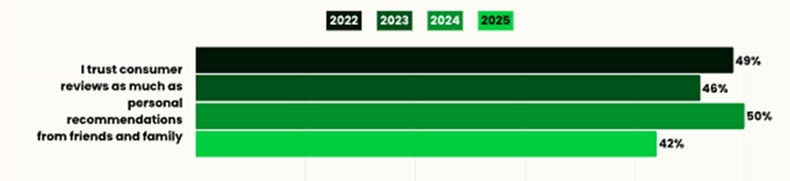
Source: BrightLocal
That doesn’t mean reviews no longer matter, of course. People keep using them and trusting them, if a little less than before. Local SEO stats note that a large share of consumers use Google to find local business reviews.
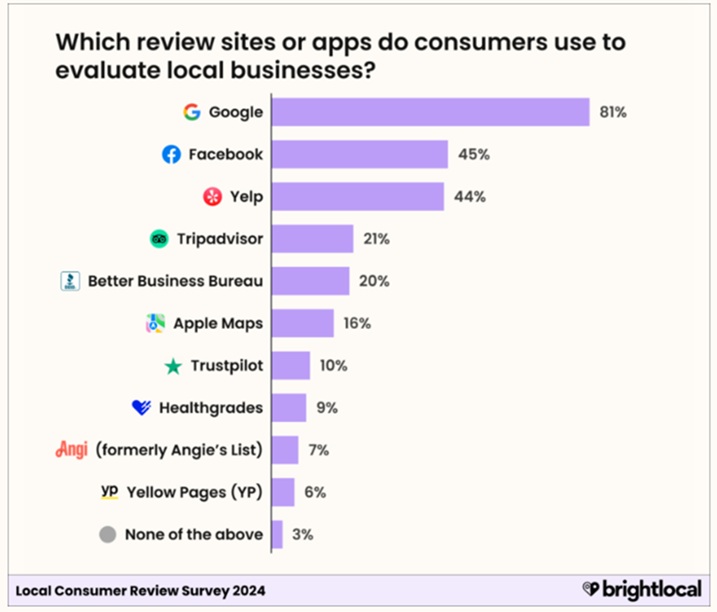
Source: BrightLocal
When link building for lawyers, the practical move is to connect the dots:
Include a short “What to expect when you contact us” section in your link-worthy resources, covering your response times and what info you’ll ask for. Then make sure your actual intake matches that promise.
Clio’s 2024 research on client engagement is a gut punch here: in their study of 500 firms, as many as 48% were unreachable by phone, and only 33% responded to email outreach.
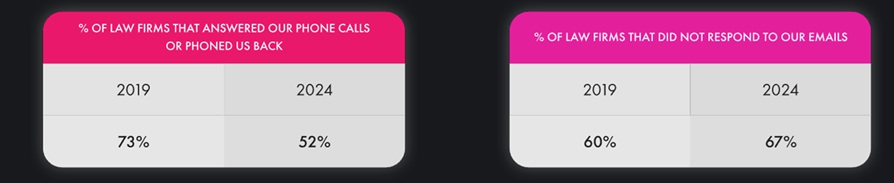
Source: Clio
If you’re already investing in content or PR, audit your intake the same week. You can earn great links and still lose the case because you didn’t call back, so you’re paying to send prospects into a black hole.
4. Publish a local data story using public information
This is the most underused tactic we see with law firms, and it’s weird because lawyers are surrounded by public information all day. Many SaaS websites use the same method with great success.
The idea here is to create a small annual or quarterly report that summarizes a local trend in a way journalists and community orgs can cite. Just a clear summary of what’s happening, with sources and methodology.
Examples that tend to earn links:
- A landlord–tenant firm summarizes eviction filing trends using public court dashboards.
- A personal injury firm publishes a “high-risk intersections” report using city crash data.
- An employment firm tracks local WARN notices and explains what they mean in plain language.
- A family law firm summarizes changes in state family code updates.
Firms can also build free legal tools or calculators tied to the topic, which can attract relevant links over time.
When you do this right, your report becomes a local reference point that earns organic links from news sites, local news outlets, neighborhood blogs, universities, and even city resource pages, and strong local data assets can also attract links from relevant websites.
Just keep your disclosure and sourcing clean. If you’re using endorsements or testimonials anywhere around that report, remember the FTC’s guidance: disclose material connections and don’t present distorted or manipulated review content as genuine consumer sentiment.
5: Build links around real-world trust signals
Google’s spam policies are very direct that not all links help: Google penalizes sites using black hat SEO techniques, and buying or selling links for ranking purposes, excessive exchanges, and similar tactics are considered link spam. So, if the only reason a site is linking to you is that you paid for it, you are building on sand.
And if you are wondering whether the quality bar is getting higher, it is. Google publishes guidance on creating helpful, reliable, people-first content, and their rater guidelines emphasize evaluating reliability and usefulness using concepts like E-E-A-T (short for experience, expertise, authoritativeness, and trustworthiness). In practice, quality links from authoritative websites pass more value than manipulative placements.
One more reason to take trust seriously is that even when people find you through a search, they still cross-check. FindLaw’s 2024 U.S. Consumer Legal Needs Survey write-up reports that 82% of respondents who contacted an attorney after learning about them online used online reviews as part of their decision-making.
Link Schemes for Lawyers
A link scheme is any arrangement whose main purpose is manipulating rankings rather than informing a reader — Google’s spam policies specifically name buying or selling links, excessive link exchanges, and large-scale guest posting with keyword-rich anchors, and these tactics often damage a site’s link profile and search rankings.
For law firms, the downside is doubled, because the same arrangement that risks a Google penalty can also draw a bar complaint.
- The legal-industry versions are easy to recognize once you know the shape: pay-to-play “Top 10 Attorneys” badges, bulk legal directory submissions, attorney blog networks, private blog networks, and lead-gen sites structured to imply endorsement.
- The ABA framework and the Google framework converge. If a site is linking to you because money changed hands, both treat the arrangement as suspect, with paid links raising concerns under both search rules and ethics frameworks, and you now have two regulators to explain it to.
- The practical filter: would you be comfortable if opposing counsel put the arrangement, in writing, in front of your state bar? If the answer takes more than a second, don’t do it.
Law Firm Link Exchanges
Trading links with another firm is a link exchange, and Google’s spam policies list excessive reciprocal linking as link spam.
A single link between two genuinely related firms is unlikely to hurt anything; a systematic swap arrangement is a different problem.
- There’s an ethics layer as well. Under ABA Model Rule 7.2, reciprocal referral arrangements are permitted only where they’re non-exclusive and the client is informed of the existence and nature of the arrangement — so a link swap tied to referral flow isn’t purely an SEO decision. State rules vary, so check yours.
- The version that works: co-produce a real resource with a non-competing firm — an estate planning practice and an elder law practice, for instance. Both sites link to it because it’s useful, and the link survives on its own merits.
- The version that doesn’t: a “Legal Partners” page whose only function is housing outbound links, mirrored by an identical page on their site.
Link Building by Practice Area
The tactics above apply across the board, but the link ecosystem around a family law practice looks nothing like the one around personal injury. Here’s what changes.
Link Building for Family Law Firms
Link building for family law firms works best when it’s anchored to the procedural questions people search during a crisis — filing steps, custody schedules, support calculations — rather than to the firm itself, with those family-law resources published on the law firm’s website in forms organizations can confidently cite.
The linkable asset is almost never a case result, because you can’t publish one.
- Family law sits inside an unusually dense referral network of organizations that need something to hand people: mediation centers, parenting-class providers, domestic violence shelters, school counselors, and county self-help desks. These organizations are relevant sites because their audiences closely match the firm’s target audience, and all of them maintain resource pages, preferring to link to a plain-English guide over writing one.
- State family code updates are a recurring, citeable event. A short annual “what changed in [state] family law this year” summary gives local reporters and family-service nonprofits a reason to reference you every single year.
- Confidentiality caps your proof assets, so build the citeable version instead: county-specific filing checklists, realistic timelines, and document lists. Those earn links precisely because they’re boring and accurate.
Link Building for Criminal Defense Lawyers
Criminal defense is the hardest legal niche to build links in ethically, because the money queries are saturated with ad spend and directories while the content itself has to stay strictly informational.
The workable path is rights-education material that community organizations are willing to distribute.
- Publish what happens at each procedural stage — arraignment, bail hearing, plea, expungement eligibility — for your specific jurisdiction. Public defenders’ offices, reentry programs, and campus legal aid pages link to this because the official versions are usually unreadable.
- Court dispositions, arrest data, and case-backlog figures are public in most counties. A quarterly summary of local court delays is genuinely newsworthy and hard for a competitor to replicate.
- Nothing you publish should imply an outcome. Both your state’s advertising rules and Google’s helpful-content guidance push in the same direction here, which makes the compliant version and the linkable version the same document.
Link Building for Personal Injury Lawyers
Personal injury has the most competitive SERPs in law, especially in competitive legal markets, so the only links that move anything are the ones a competitor can’t simply buy: local news, city agencies, and medical or safety organizations.
Volume tactics fail here faster than anywhere else.
- Crash, injury, and workplace-incident data is public in most cities. A “most dangerous intersections in [city]” report built from municipal crash data is the most reliable link magnet for a personal injury lawyer or firm in the practice area, and it renews annually.
- Adjacent professionals are underused: physical therapists, occupational health clinics, body shops, and medical billing advocates all run resource pages and link without much persuasion.
- PI attracts more link spam pitches than any other legal vertical. If a vendor is offering a fixed monthly count of high-DR links with no relevance criteria, you’re being sold a link scheme.
How We Chose These Tips
We filtered everything through three questions:
- Would the tactic hold up to scrutiny? Rules vary by jurisdiction, but the principle is consistent: avoid anything that smells like paying for recommendations, and be cautious with lead-gen arrangements that imply endorsement.
- Is the link likely to be durable? A link from a real organization, publication, or community resource page tends to survive website redesigns and algorithm updates. A link on a guest post farm tends to disappear the moment someone stops paying.
- Does it compound? The best legal links also build trust, drive referrals, and enhance brand recognition. Those are the same signals that matter when prospects do what they almost always do: research you before hiring.
Ahrefs can support backlink analysis and competitor research when evaluating options.
Semrush’s Backlink Gap Tool helps compare backlink profiles and spot missed opportunities.
Moz’s Domain Analysis can be used to check authority and spam signals, and tools like Ahrefs and Semrush also help track link building campaigns over time.
Link Building Services for Lawyers
A link building service for lawyers should be running prospecting, outreach, and content collaboration as part of broader law firm link building execution against publications a bar regulator would find unremarkable.
What you’re actually buying is editorial access and judgment — not a monthly link quota.
- A real scope includes target-page and anchor mapping, a prospect list you can review and veto before any outreach goes out, live placement reporting with actual URLs, link monitoring for dropped or changed links, and a stated policy for links that drop.
- Be wary of guaranteed link counts, guaranteed DR thresholds, promises of high domain authority without relevance or quality review, undisclosed publisher networks, and per-link pricing with no relevance criteria attached. Each of those is a promise that can only be kept by buying placements.
- Budget in months, not weeks. Legal SERPs are among the slowest to respond and the quickest to punish shortcuts, so a provider promising movement in six weeks is telling you which tactics they plan to use.
Which Firms Specialize in Ethical Link Acquisition?
Ethical link acquisition firms are the ones that earn placements through editorial relationships and decline the tactics Google’s spam policies name — no PBNs, no toxic links, no bought placements, no undisclosed sponsorships.
You can identify them by how they scope and report work, which is far more reliable than what they claim on a homepage.
- They show their work before it happens. You see the prospect list and can strike sites off it after they evaluate domain authority and relevance before outreach. Agencies buying links can’t do this, because the list is the product.
- They report URLs, not counts. A monthly number with no links attached means the links either don’t exist or don’t survive inspection.
- They say no. A provider that accepts every target page, every anchor, and every deadline isn’t applying editorial standards to anything.
- They tell you when it’s going badly. Legal outreach has genuinely bad months. Silence during one is a signal about what’s filling the gap.
That’s the standard we hold ourselves to at Tlinks — our pricing and process are public for exactly this reason, and our white label link building guide covers what to check if your links are being executed by a subcontractor you never speak to. Good providers also monitor placements over time to preserve a healthy backlink profile.
Conclusion
The unfortunate thing about legal link building is that you can do it perfectly and still lose.
You can earn a great local news mention, send a journalist a clean quote, get the link, and then miss the case because no one answered the phone. So, if you are building authority, make sure your intake can catch what authority sends you.
If you’re wondering where to start, create valuable content with the right tools so those assets can improve your firm’s online presence as they earn mentions and links from reputable websites, then run a link reclamation sweep for mentions you already earned. After that, build relationships in the local and professional ecosystems that your clients actually engage with.