It hurts to pour your heart and soul into a great page only to watch it get buried in Google’s rankings. And that can happen easily, because although quality definitely matters in 2026, it alone is rarely enough to get your page to the top of the SERPs.
Instead, the pages that reliably rank for competitive queries are those that earn credible, contextual links, as well as those that route that authority intelligently through internal links.
Tlinks.io exists to help you do this the right way. Below is a field guide with no gimmicks, lots of examples, and a focus on what scales without getting you in trouble with Google.
How Links Still Move the Needle in 2026
Links continue to help Google discover pages and understand what they’re about. Google’s own documentation tells site owners to make links crawlable and to use clear anchor text, which is exactly what good editors do by default.
What has changed is how much links matter relative to everything else. According to Google’s Gary Illyes, links haven’t been a “top three” ranking factor for some time. This means you can’t brute-force rankings with raw link counts, but earning the right editorial citations still helps discovery, especially when paired with on-page usefulness.
There’s also a distribution shift. More people are encountering information via social and video platforms, and creators are acting as gatekeepers.
The Reuters Institute’s 2025 report shows social video use rising across markets and a growing share of audiences discovering news through creators and platforms rather than homepages. In practical terms, the links that matter most are often the ones embedded in explainers and creator write-ups that journalists and researchers also read and cite.
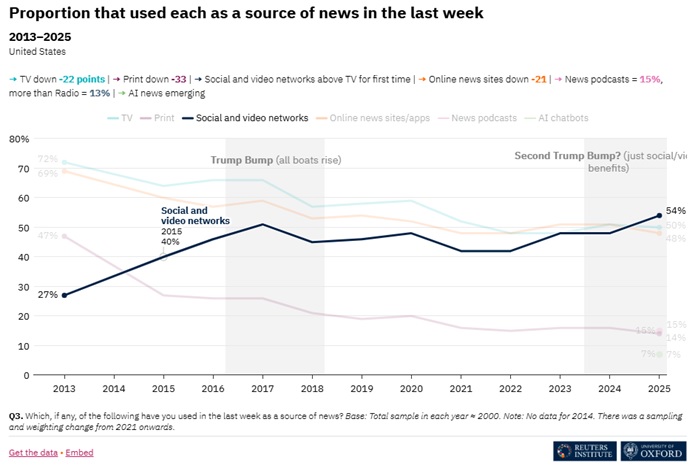
Source: Reuters
All this makes link quality and qualification non-negotiable. Paid placements and sponsorships are fine when you’re transparent and Google explicitly says to qualify those with rel=”sponsored” or “nofollow”. Keep the editorial stuff editorial, and the ad stuff labeled. That clarity protects your reputation and keeps your link profile future-proof.
What Qualifies as the Best?
To earn a place here, a tactic must be:
- Editorial by default. Someone chooses to cite you because you helped their readers.
- Defensible. It aligns with Google’s link and spam policies.
- Scalable with craft. Systems and templates help, but quality still drives results.
- Measurable. You can show how each technique contributes to traffic, rankings, and pipeline.
Techniques at a Glance
Before we move on to the specifics, here’s a quick explainer table on the best link building techniques available in 2026. The techniques here are listed in no particular order, so don’t think of this as a ranking but rather as a menu.
You’ll typically only focus on 2-3 tactics at a time to fit your goals, resources, and brand stage, then build around them rather than trying everything at once.
| Technique | When It Works Best | Time-to-Impact | Effort | Risk (Policy) | Notes |
|---|---|---|---|---|---|
| Digital PR with original data | News cycles, industry data voids | Fast–Medium | High | Low | Combines newsworthiness + linkable assets |
| Thought-leadership guest features | Niche publications your audience reads | Medium | Medium | Low | Must be editorial quality; not a link dump |
| Resource page inclusion | Evergreen topics/tools | Medium | Medium | Low | Curated “best of” lists, universities, .orgs |
| Linkable tools & calculators | Product-adjacent painkillers | Medium–Slow | High | Low | Earns passive links over time |
| Unlinked mention reclamation | Brands with PR/social footprints | Fast | Low | Low | High hit-rate if you offer value |
| Journalist request responses (Help a Reporter, etc.) | Fast expert commentary | Fast | Medium | Low | Consistency beats one-off pitches |
| Broken link building (modernized) | Evergreen topics with link rot | Medium | Medium | Low | Lower hit-rate but still works with quality |
| Partnerships/sponsorships (properly qualified) | Community fit | Medium | Low | Low | Use rel=”sponsored”/nofollow as appropriate |
| High-signal directories/citations | Local & regulated niches | Medium | Low | Low | Avoid generic, low-quality directories |
| Systematic internal linking | Every site, always | Fast | Low | Low | Control the flow of authority across hubs |
Legend:
- Time-to-Impact: how soon you tend to feel momentum
- Effort: combined creation and outreach work
- Risk: policy defensibility
- Notes: trade-offs and where the technique particularly shines
What to Do, How to Do It, and What to Watch?
This is where we talk a little bit more specifically about the link building techniques outlined in the table above, turning those big ideas into focused steps. Again, no particular order, it all depends on your brand stage and goals.
1. Digital PR with original data
When journalists and niche bloggers are hungry for something new (numbers, patterns, counter-intuition), data-led stories earn links from publications you can’t buy your way into.
How it works:
Pick a question your market argues about. Then, pull a dataset (survey, anonymized product usage, public data), analyze it, and package the result into a narrative with 2–3 unexpected learnings. Build a clear press page with charts and quotable lines. Pitch exclusive angles to a short list of outlets that actually cover the topic.
Why it’s “best”:
You’re creating reference-worthy work. Editors link because the citation is the point. Over time, that page attracts passive links, and your follow-ups become easier because you’re now a known source.
Measurement:
Track new referring domains, traffic to the study, and how often it’s cited by blog posts that also rank. (Semrush and others show correlation between referring domains and rankings, which is why this compounding is powerful.)
2. Thought-leadership guest features
Google’s spam policies call out manipulative link schemes, but high-quality contributions in respected publications are fine, so long as the editorial value leads and any link is a byproduct.
How it works:
Identify 10–20 publications your buyers read and pitch articles that teach something you uniquely know, but avoid “ultimate guide” clichés. One internal link to a relevant resource is usually enough. In short: if you wouldn’t be proud to share the piece without the link, don’t pitch it.
Measurement:
Track referring domains + assisted conversions via first-touch/assisted models.
3. Resource page inclusion
Universities and established blogs maintain “best resources” pages for their audiences. If your asset genuinely helps that audience, you can earn an evergreen citation.
How it works:
Find relevant “resources,” “reading lists,” “toolkits,” and curriculum pages with queries like:
site:.edu “resources” + [your topic] or intitle:resources “best” + [your niche].
Offer your guide/tool with a short blurb explaining why it’s useful, in a quick email with a two-sentence summary, your one-line credibility proof, and a suggested blurb. This saves the editor time and increases your odds.
4. Linkable tools & calculators
A tiny product-adjacent calculator can quietly earn dozens of links over time because writers love to embed or cite practical tools, same as many SaaS companies, eCommerce stores, and lawyers are doing this strategy.
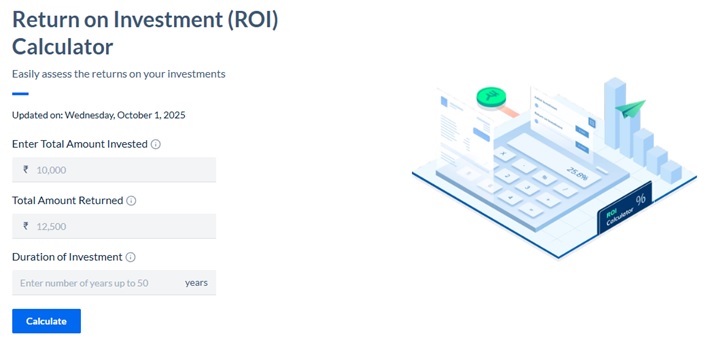
Source: Razorpay
How it works:
Brainstorm repeat calculations readers need before/after buying your thing. Ship a minimal tool with a clean URL and how-to instructions.
Why it works:
Utility ages well. When someone writes a “how much does X cost?” piece, they love having a calculator to cite.
Compliance:
Nothing tricky here. Just make the tool and docs crawlable with clear descriptive anchors pointing into it (Google encourages good anchor text).
5. Unlinked mention reclamation
If blogs and news sites already name your brand or CEO but don’t link, you’re one polite email away from a relevant mention becoming a citation.
How it works:
Use brand monitoring tools to collect mentions and sort by relevance and traffic. If you can offer an upgrade, like a link to your explainer, dataset, or tool that supports their readers, even better. This offers high relevance at low friction. Editors already chose you, now you’re just helping them help their readers.
6. Journalist requests
Reporters on deadline ask for credible quotes and examples. If you’re responsive and concise, you’ll land coverage and links from publications you couldn’t cold pitch successfully.
How it works:
Create a “quotes bank” of 10–15 expert takes your team can adapt quickly and respond within hours with a 2–4 sentence quote and a 1-line credential. If you also supply proprietary numbers from your datasets, you 10x the odds of earning the citation.
7. Broken link building
Classic broken link building had its spammy era. The modern version is much more targeted: find a dead but once-authoritative resource, then offer a genuinely better replacement.
How it works:
Locate 404’d popular resources with backlinks and rebuild the concept with updated data/UX. Reach out to webmasters with a short note and a specific replacement URL. Keep in mind that hit-rates are much smaller than they used to be, but you can still add value at scale if your replacements are truly superior.
8. Partnerships, sponsorships, and community
Sponsoring an event, contributing to an association resource, or supporting a scholarship can include a link. It just needs to be properly qualified with rel=”sponsored” and/or nofollow. Google’s guidance explains when to use these attributes.
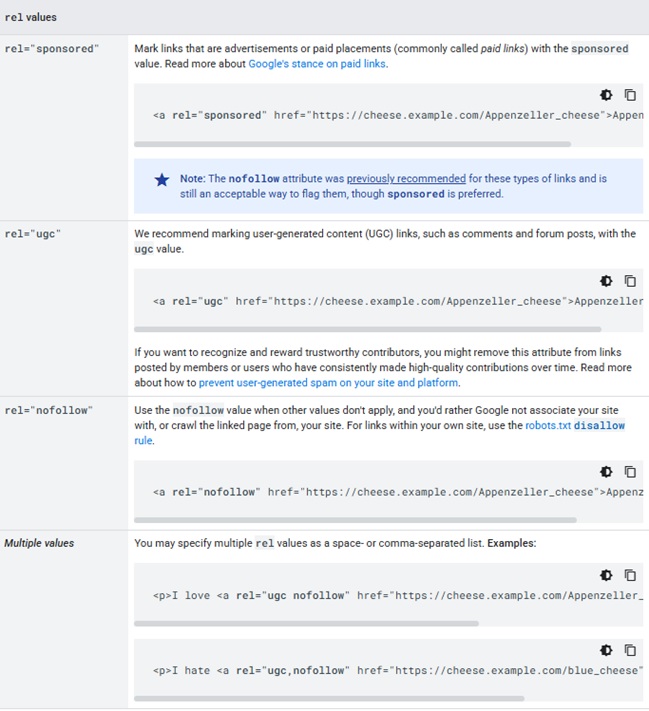
Source: Google
Why it belongs on this list:
It’s defensible and builds relationships that often lead to later editorial wins.
9. High-signal directories & citations
For many local, professional, and regulated niches, vetted directories and citation sites are a sensible foundation. Avoid generic, low-quality lists and prioritize industry and governmental sites.
10. Systematic internal linking
Internal links are a lever you fully control. They help users navigate and help search engines discover and understand pages. They also concentrate authority on your most important content. Google’s docs specifically encourage descriptive, crawlable anchor text, so use that to your advantage in every cluster.
Audit your pillar pages and ensure each “hub” links out to its “spokes” with descriptive anchors. Add contextual links back from spokes to hubs and keep it human-focused. If a link doesn’t help a reader, it probably won’t help a bot either.
What’s Overrated
A few “power moves” are still making the rounds even though they are now squarely in Google’s crosshairs. If a tactic scales faster than quality can, assume it’s a short-term hack and skip it to protect your domain and peace of mind.
Here are a few wildly overrated link building techniques in 2026:
- Mass guest posting and “domain authority shopping.” Publishing irrelevant third-party content on domains purely to hijack their ranking signals is how you wander into site-reputation-abuse territory. Not worth it.
- Expired-domain “content barns.” Buying old domains and stuffing them with AI content to point links at your money site is clearly addressed in Google’s 2024 spam policies.
- Chasing exact-match anchors. Your link profile should look like normal human writing. Obsessing over exact phrasing does more harm than good, and paid insertions need proper rel-attributes anyway.
Matching Techniques to Goals
Use this table as a cheat sheet when you’re not sure what to do next. Start with the outcome you care about (authority, evergreen links, brand lift, or crawlability), pick the 1–2 plays in the middle column that naturally ladder up to it, and measure.
If signals don’t move within a reasonable window for your niche, swap tactics and give it another quarter.
| Goal | Best-fit Techniques | What to Measure |
|---|---|---|
| Fast authority lift to a new pillar | Digital PR, journalist requests, unlinked mentions | New referring domains to the pillar; growth in ranking keywords |
| Evergreen link equity | Tools/calculators, resource page inclusion | Passive link accrual; year-over-year mentions |
| Brand + community building | Partnerships, vetted directories | Referral traffic; branded search lift |
| Crawlability & context | Internal linking | Indexation; improved rankings for long-tail variations |
Prefer to see what this looks like in the wild? Browse what customers say and skim a couple of recent case studies before you decide
Final Thought
The best link building techniques in 2026 make things worth citing, put them in front of people who care, are crystal clear with anchors and disclosures, and route the authority to where it helps users most.
You used to be able to get pretty far in SEO with a bag of tricks, but that’s not been the case for a long time. High-quality link building requires experience, know-how, and lots of hard work. If you want a partner that lives and breathes this, we’re here to help.