There was a time in the early days of SEO when you could build authority by publishing dozens of mildly useful guest posts with exact-match anchors crammed in. And it worked, the way bad ideas often do before they send you a bill with interest.
In 2026, link building best practices are less about collecting those blue underlined trophies and more about proving that your site belongs in a real web of trusted, contextually relevant sources. The work is pretty down-to-earth: create useful pages, earn citations from reputable sites, build real relationships with publishers, and avoid manipulative tactics that inflate link counts without building trust.
If you’re an SEO professional, digital marketer, content creator, or business owner trying to improve search visibility the right way, this guide breaks link building down from the ground up. We’ll cover what links are, why backlinks still matter for rankings and organic traffic, what “quality” actually means, how link juice works, how tactics like digital PR and broken link building fit in, how to build partnerships that last, and which mistakes can cost you results or trigger the wrong kind of attention.
What Link Building Best Practices Actually Mean in 2026
This guide covers link building best practices, but if you want a more in-depth explanation of the concept of link building in general, we have a useful beginner-friendly explainer on what is link building.
Big picture, a backlink does two jobs at once:
First, it gives people a path from one page to another. Someone reads an article, sees your resource cited, clicks, and lands on your site. Simple.
Second, it gives search engines a signal. Google says links help it discover pages, and its own Search docs explain that prominent websites linking or referring to content are a sign of trustworthiness.
That does not mean every link helps, though. A random link from a half-dead blog about “business lifestyle tech casino pets” is not the same thing as a contextual citation from a relevant industry publication, and this is where many people mess up. They treat every backlink as a point on a scoreboard.
Here’s a quick comparison between the “old way” and what actually works in 2026:
| Old way of thinking | Better 2026 way of thinking |
|---|---|
| “How many links did we build?” | “Which pages gained relevant authority?” |
| “What’s the DR?” | “Is this site relevant and trusted?” |
| “Can we use exact-match anchors?” | “Would this anchor make sense to a reader?” |
| “Can we scale this fast?” | “Can we repeat this without creating risk?” |
| “Did we get the link?” | “Did the link support our credibility?” |
SEO link building best practices now sit closer to digital PR, content strategy, and relationship management than old-school “link insertion” work.
The link is just the output. The real asset is trust.
Why Backlinks Matter for SEO
Let’s say two pages answer the same question equally well.
One page lives on a site nobody references, while the other has been cited by universities, trade blogs, niche newsletters, podcasts, and comparison guides. A search engine will likely feel better about showing the second one, and that’s the basic logic behind backlinks.
Links are not votes in a perfect democracy. Some votes come from experts, and others come from weird directories with 900 casino links in the footer. But the general idea is still there: when credible pages cite you, it becomes easier for search engines to treat your page as credible too.
The original PageRank concept was built around using links to evaluate importance across the web, and while Google has changed massively since then, links never stopped being part of the conversation.
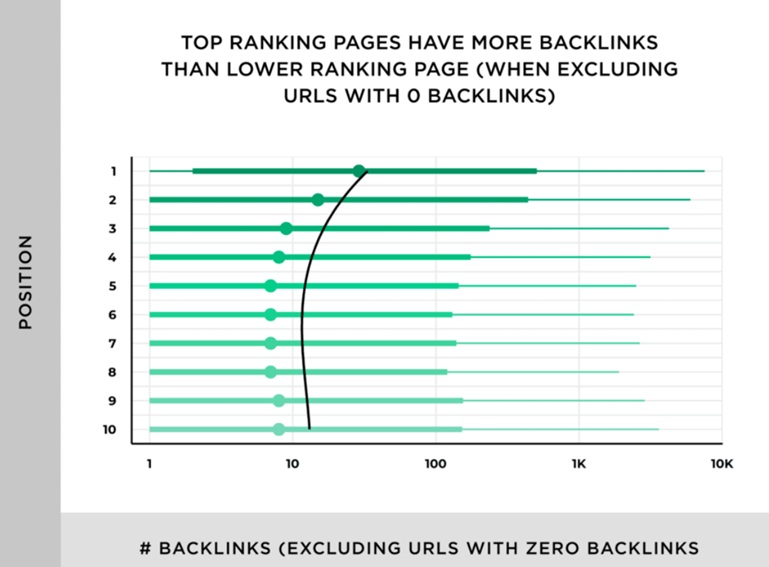
Backlinko’s analysis of 11.8 million Google search results also found a strong correlation between rankings and backlinks.
But one of the major benefits of link building is that good links do not just make a page “stronger” in isolation. They help your site build topical credibility and support pages that are harder to promote directly.
Imagine you sell project management software and publish a guide on resource planning. If that guide earns links from productivity blogs, SaaS review sites, remote work newsletters, and operations consultants, it starts looking like a useful resource in that topic cluster.
If those links point to the guide, and the guide internally links to your product pages, some of that authority can help the commercial parts of your site too.
Nobody’s likely to link to your pricing page just out of the blue, but they might link to your original benchmark report, comparison framework, calculator, or research-led guide. From there, your internal links direct the “juice”.
“Link juice” is the casual SEO term for authority passed through links. Basically, a link from a strong, relevant page can pass value to another page, and your internal links help route that value around your site.
This is why organic link building best practices start with assets, and not outreach.
If the page is weak, outreach feels like begging, but if the page is genuinely useful, outreach feels like showing someone a tool they should have already known about.
SEO Link Building Best Practices in 2026: The Rules That Work
Now we get to the slightly unpleasant fact that the difference between a sustainable campaign and a doomed one usually comes down to discipline. Bad campaigns chase volume, while good campaigns match links to business goals and build relationships that can survive beyond a single placement.
Here’s how.
Best Practice #1: Link Building Best Practices in 2026 – Start With Relevance
Relevance beats raw authority more often than you might think.
A DR 80 site can be useless if the topic makes no sense. A DR 35 niche blog can be valuable if it reaches the exact audience you care about and links to your page in a natural context.
For example, if you run accounting software for small agencies, a link from a freelance operations newsletter may be more useful than a generic “top business tips” site with a huge domain score. The second link may look better in a dashboard, but dashboards do not buy software.
Ask these questions to check relevance:
| Question | Good sign | Bad sign |
|---|---|---|
| Does the site cover your topic? | Regular, focused content in your niche | Random categories with no editorial logic |
| Would its audience care? | Clear overlap with your buyers or readers | No obvious user reason for the link |
| Is the link contextual? | Inside a useful paragraph | Footer, author bio, or stuffed resource list |
| Does the page get indexed? | Visible in search and internally linked | Orphaned page made only for links |
| Does the site look alive? | Real authors, updates, comments, brand presence | Thin posts, fake authors, broken layout |
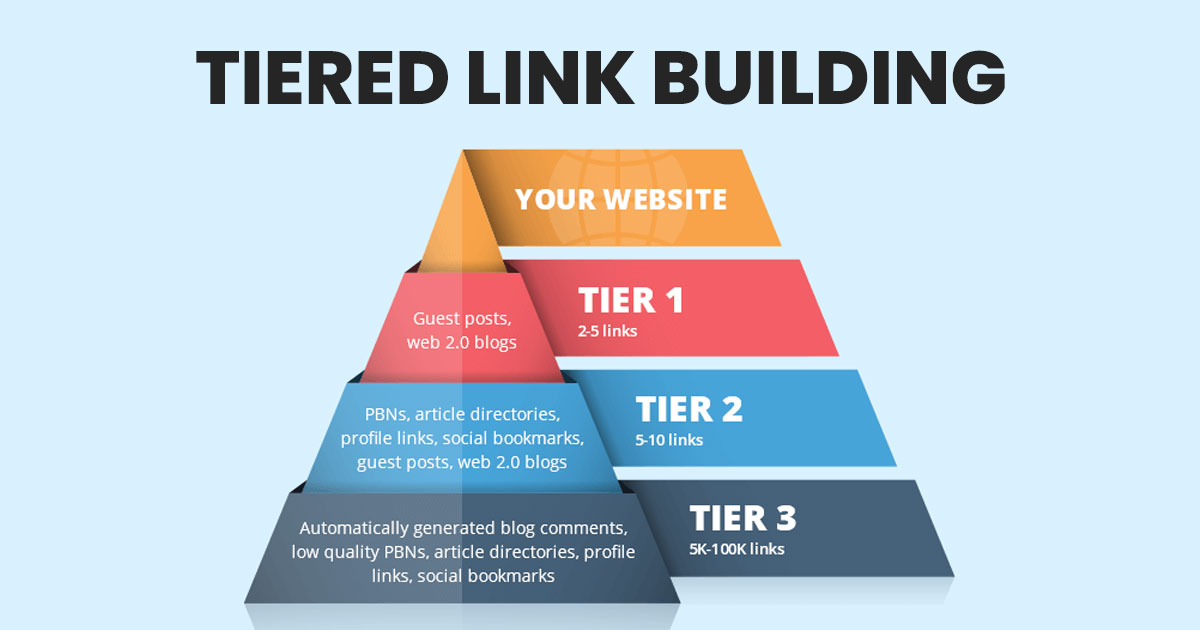
Start with topical fit, then evaluate authority; not the other way around. Even with a smaller budget, you can do tiered link building and have great success.
Best Practice #2: Define Qualified Links Before You Start Outreach
A qualified link meets your standards before you spend time or curry favor getting it.
The exact standards vary by business, but the idea stays the same: instead of looking for any site that says yes, you are looking for sites that make sense for your topic, audience, risk tolerance, and goals.
A qualified link usually has topical relevance, real organic visibility, editorial standards, a clean outbound link profile, indexable pages, natural anchor context, and a reason for readers to click.
For a SaaS brand, qualified links might come from software roundups, integration guides, founder interviews, templates, statistics pages, and industry newsletters. For a local service business, the bar shifts toward local link building sources like community sites, chambers of commerce, local media, schools, event pages, and regional resource hubs.
Different business, different link profile.
The safest link building best practices are built around fit, so a qualified link for a cybersecurity platform is not the same as a qualified link for a dental clinic. One needs technical trust, and the other needs local proof.
A good campaign brief should define qualified links before a single pitch goes out. Otherwise, your outreach team is just wandering through the internet with a butterfly net.
Best Practice #3: Use Link Juice Carefully
Instead of forcing links to commercial pages, build linkable assets that deserve citations, then use internal links to pass authority toward the pages that convert.
This is especially important for link building for SaaS, where the best external links often point to research, comparison content, templates, free tools, reports, or technical explainers. Those pages then link naturally to product pages, use cases, integrations, or signup flows.
Do not overcomplicate this.
If a page earns links, add a few useful internal links from that page to related commercial or strategic pages. Make the anchors descriptive but keep them natural; do not turn every paragraph into a subway map.
Best Practice #4: Use ABC Exchanges Only With Real Editorial Fit
An ABC exchange, or 3-way exchange, works like this: Site A links to Site B, Site B links to Site C, and Site C links back to Site A. The goal is to avoid obvious reciprocity.
This is common in link building because it is easy to abuse. However, more often than not, there’s an intent and quality problem. If three unrelated sites are passing links around to hide manipulation, it is actually pretty easy to spot.
ABC exchanges can be part of link building best practices only when they are treated as relationship-based editorial opportunities, not loopholes. The same standards still apply: relevance, context, quality, indexability, and reader value.
If you have a real publishing partner, and you know they need a source for a topic where another client or owned asset genuinely helps, you can suggest it. But the link still has to earn its place in the content. You should never force a link because the triangle needs to be closed.
Best Practice #5: Build Linkable Assets Before You Build Links
Some pages are naturally hard to promote. Product and pricing pages are useful to buyers, but they rarely make great citation targets. Linkable assets, on the other hand, give writers and site owners something they can reference without sounding like they are advertising for you.
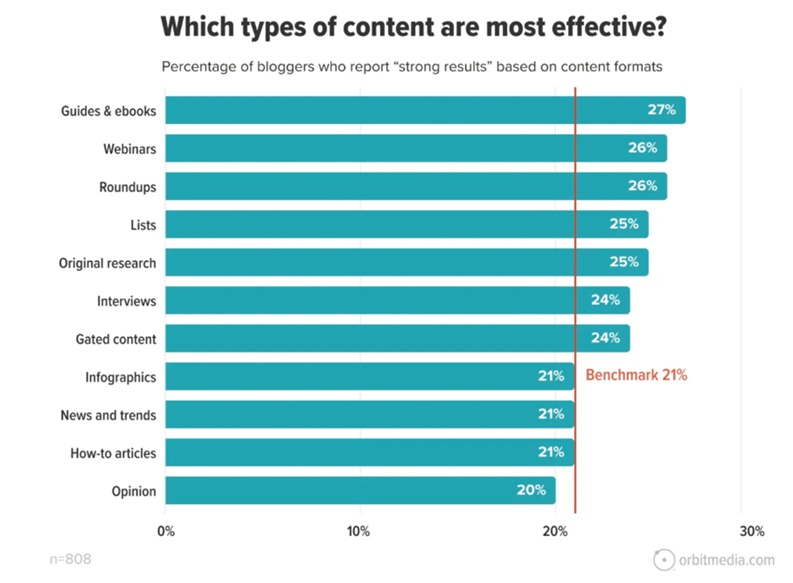
According to an Orbit Media survey, good linkable assets include guides, webinars, original surveys, statistics pages, calculators, templates, checklists, comparison frameworks, glossaries, benchmark reports, case studies, infographics, and “state of the industry” resources.
This is where your content team and link building team need to work together, because quality content is what helps attract links in the first place.
For example, a small CRM company could create content around original research like “average lead response time by industry” using anonymized customer data, while a payroll platform could publish a calculator for estimating contractor vs employee costs. Done well, that kind of link bait can attract backlinks passively over time: creating original research can generate thousands of backlinks, case studies can attract over 3,470 backlinks, creating free online tools can attract over 1,000 backlinks, evergreen content can generate 150-200 links monthly, and even infographics can still attract significant backlinks if they are remarkable.
Those pages are easier to pitch because they solve a problem outside your own sales funnel, making them more link worthy and more likely to become link worthy content.
Best Practice #6: International Link Building Requires Local Trust Signals
If your business operates across countries, you cannot build one generic link profile and hope it works everywhere.
Different markets have different publishers, search behavior, languages, trust signals, and outreach norms. A link from a respected Romanian business publication might matter a lot for a Balkan campaign, but it may mean almost nothing for a campaign targeting Canada, Germany, or Japan.
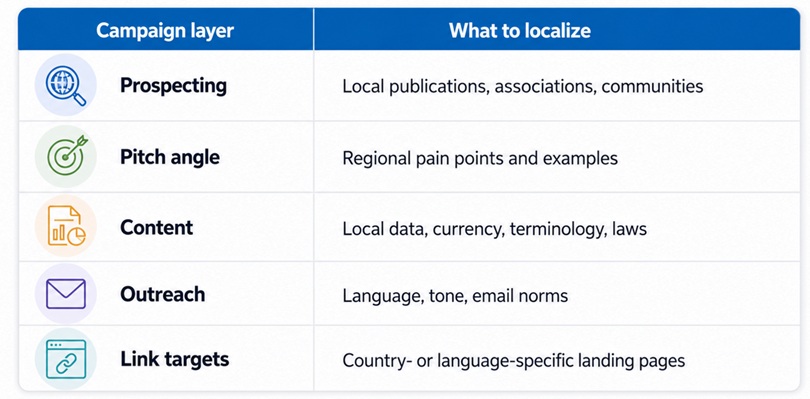
International link building needs to be treated as a local credibility project, not just a translation, which means adapting the outreach asset or relevant content to the local market.
This is especially important when entering new markets. You need links that show search engines and users that your brand belongs in that region. That can include local media, regional industry blogs, local associations, event pages, supplier directories, universities, chambers of commerce, and country-specific resource pages.
For multinational brands, this is one of the best link building practices because it keeps authority aligned with the market you actually want to grow in.
Best Practice #7: Track Campaigns Like a Business Channel
A link campaign can look successful and still fail.
This happens when the report is full of links, but rankings do not move, referral traffic is nonexistent, target pages do not improve, and nobody can explain what the campaign was actually supposed to achieve.
Good link building best practices require campaign-level tracking. Before launch, define the target pages, target topics, acceptable link types, anchor mix, expected timeline, and business reason. After launch, track what changed.
Links rarely produce clean cause-and-effect data. SEO is messier than that, but you can still track directional signals.
Look at ranking movement for target pages, organic traffic to linked pages, referral traffic, assisted conversions, indexation, new keyword growth, and whether internal pages connected to the linked asset improve over time. Campaign tracking should also include monitoring competitors’ new backlinks for fresh outreach opportunities and tracking new links over time.
Also, track what failed.
For teams that want to systemize this instead of guessing campaign by campaign, Tlinks is a good starting point for seeing how an experienced link building team frames sustainable growth.
Link Building Strategies & Tactics for 2026
Best practices tell you how to judge a link. Strategies tell you how to actually go get one. Here are the tactics that hold up in 2026, roughly ordered by effort-to-payoff ratio.
- Digital PR and journalist requests. Journalists and podcast hosts are constantly looking for expert sources, and platforms in the HARO-style journalist request space, including Qwoted and Featured, connect you directly with them. Respond with a specific, credentialed answer instead of a generic pitch, and you can pick up links from outlets you could never buy your way onto; the strongest pitches often use unique data studies or compelling stories to earn coverage from authoritative sites or news sites.
- Unlinked mention reclamation. Set up a mention alert for your brand name and check it monthly. Plenty of writers mention a company or product by name without linking to it, usually because they forgot or didn’t think to. A short, polite email asking them to add the link converts more often than cold outreach, because the writer has already decided you’re worth mentioning.
- Broken link building. Find dead pages on relevant sites, then reach out to whoever linked to that dead page and suggest your live, related resource as a replacement. You’re doing them a small favor, which is most of why this works.
- Competitor backlink gap analysis. Pull the backlink profiles of two or three competitors who outrank you and look for sites that link to more than one of them but not you. Prioritize domains linking to multiple competitors and treat them as higher-confidence link prospects you can selectively replicate, since those sites have already shown they’ll link to something like your page, which makes them a warmer prospect list than a cold one you build from scratch.
- Resource page link building. Some sites maintain curated lists of tools, guides, or reading on a specific topic. If your page genuinely fits, a short pitch explaining why it belongs can work, especially on niche or local resource pages that get far less outreach than big publications. More on where and how these links should appear in the next section.
- Link roundups. Many blogs and newsletters publish a regular “best of” or “worth reading” roundup in their niche. These are usually easier to land than a full guest post because the ask is smaller, and they tend to accept pitches on a recurring basis rather than a one-off basis.
- Foundational links. Directory listings, industry associations, and citation sources rarely move rankings on their own, but they establish that your business exists and is legitimate before you start pitching editorial links. Skipping this step is not fatal, but a brand-new domain trying to land high-authority editorial links with zero foundational presence tends to have a harder time.
- Guest posting, done narrowly. Guest posting isn’t dead, but the “publish anywhere that says yes” version described at the start of this guide is. In 2026, guest posting still works when the site is genuinely relevant, the post says something the site’s regular readers would want, and it’s an occasional placement rather than a volume play. A strong guest post usually includes one contextual link, and at most two links back to your site when editorially justified.
None of these tactics work in isolation forever. The teams that keep growing are the ones running two or three of these at once and doubling down on whichever brings back the best mix of relevance and results.
Where Backlinks Should Actually Appear: Link Placement Types
“Link placement” just means where on a page your backlink physically sits, and it matters almost as much as which site links to you. The same domain can hand you a link that’s genuinely useful or one that does almost nothing, depending on where it lands.
Here’s how the common placements stack up, roughly from strongest to weakest:
- Contextual, in-content links — a link inside a paragraph of relevant editorial content, and usually the strongest kind of contextual link because it sits within the main editorial content of the linking site. This is the gold standard, because a reader has to actually reach that sentence to see it, which tends to improve link quality.
- Resource or “further reading” pages — a curated list of tools, guides, or sites on a topic. Worth pursuing when the page is genuinely maintained and relevant to your topic.
- Author bio links — a link in your byline on a guest post. Weaker than an in-content link, but still visible and clickable.
- Footer, sidebar, or widget links — a link stuffed into a site-wide template element. Avoid these; this is exactly the pattern Google’s spam systems are built to catch.
- Comment or forum links — a link dropped into blog comments or forum posts. Avoid these too; they almost never earn trust or traffic, and they’re one of the fastest ways to look spammy.
Resource pages deserve special mention because they’re an underused opportunity. Search for phrases like “resources,” “useful links,” or “recommended tools” combined with your topic, and you’ll find pages maintained by universities, associations, local chambers of commerce, and niche blogs that exist specifically to list things worth knowing about.
The pitch is simple: explain what your page adds that isn’t already on the list, and ask to be included. These pages get far less outreach volume than big publications, so response rates tend to be higher.
The placement test that matters most: would this link still be there if the page owner had never heard of SEO? If yes, it’s probably a good placement. If the only reason it exists is to pass authority, it’s a liability waiting to be devalued.
Common Link Building Mistakes to Avoid in 2026
Most link building mistakes aren’t dramatic. They’re small, repeatable habits that quietly waste a quarter’s budget. Here are the ones we see most often.
- Chasing DR instead of relevance. A high domain rating link from an unrelated site looks great in a report and does very little for rankings or referral traffic. Relevance should always be the first filter, not the tiebreaker.
- Stuffing exact-match anchor text. If every link back to your pricing page reads “best project management software,” you’re not building authority, you’re building a footprint that’s easy for spam systems to flag. Vary anchors and let some of them just say “this guide” or the brand name.
- Treating footer and sidebar links as wins. A link buried in a site-wide template gets counted the same as a real citation on some dashboards, but it doesn’t behave the same way to a search engine, and it definitely doesn’t behave the same way to a human reader.
- Skipping the indexability check. A link from a page that isn’t indexed, or that’s blocked from crawling, passes nothing. Always confirm the linking page itself shows up in search before counting it as a win.
- Closing the loop with no internal links. You land a great link to a linkable asset, then never connect that asset to the commercial pages it was supposed to support. The authority has nowhere to go.
- Over-relying on reciprocal exchanges. The occasional two-way link between genuine partners is normal. A pattern where every placement your team gets is matched by an outbound link in return is exactly the kind of footprint link schemes are built to catch.
- Skipping campaign-level tracking. Landing links without deciding upfront which pages, topics, and outcomes they’re supposed to move makes it nearly impossible to tell a good campaign from a lucky one, or a bad one from an unlucky one.
- Giving up after one no. A single rejected pitch doesn’t mean the site isn’t a fit. It might mean the timing, the specific contact, or the angle was wrong. Good link builders track replies and revisit strong prospects with a different angle before crossing them off.
Most of these mistakes share a root cause: optimizing for the link itself instead of for what the link is supposed to do. Fix that, and most of this list takes care of itself.
Link Schemes, Ethics & Google’s Guidelines: What’s Actually Safe in 2026
Is link building still safe to do in 2026? Yes, and Google says so directly: its own Search Central documentation on link spam treats links as a normal part of how the web works. What Google penalizes isn’t links in general, it’s links built specifically to manipulate rankings.
According to that documentation, a link scheme includes things like buying or selling links that pass ranking value, excessive link exchanges, using automated software or services to generate links at scale, and large-scale guest posting or article marketing campaigns where the primary purpose is the link rather than the content. If you’re doing sponsored or paid placements, adding a rel=“nofollow” or rel=“sponsored” attribute keeps them compliant; Google is explicit that paid links are fine as long as they’re marked.
The pattern behind all of these is the same: would this link exist if search rankings weren’t a factor? A sponsored placement disclosed as sponsored, a genuine partner exchange, or a citation earned because your content is useful all pass that test. A triangle of unrelated sites passing links around in a circle, or a marketplace selling “50 backlinks” in bulk, does not.
Ethical link building is really the same standard applied earlier, before a campaign starts instead of after Google notices. That mostly comes down to disclosure (mark paid or sponsored links as such), consent (don’t insert links into content the site owner didn’t agree to), and honesty in outreach (don’t misrepresent who you are or why you’re reaching out).
Some niches carry extra scrutiny. Higher education is one of them: .edu links are trusted enough that entire vendor cottage industries exist around scholarship pages and “resource” listings built purely to sell placements to universities. If you’re pursuing links from colleges or universities, treat editorial fit and genuine relevance as non-negotiable, since these sites and their link profiles get watched closely.
The short version: link building itself is not a risk. Building links that only make sense in the context of manipulating a ranking algorithm is.
Sustainable Link Building Strategy Best Practices: 4 Stages
Many teams only prospect and pitch, but their assets are average, and their learning loops are nonexistent. A sustainable link building system has four parts: assets on the client’s site or your own website, prospects, outreach, and learning.
- The asset gives people a reason to link.
- The prospect list finds people who might care.
- Outreach starts the conversation.
- Learning improves the next campaign and helps build link authority into those assets so they can support money pages over time.
This grown-up version of link building may not make a LinkedIn growth bro kick down your door, but it works because it turns link building best practices into a repeatable process.
Best Link Building Tools for 2026
Tools don’t build relationships or write good outreach emails, but they save enormous amounts of time on the research side. A reasonable 2026 stack covers four jobs:
- Backlink and prospect research: Ahrefs, Semrush, and Moz remain the standard choices for backlink analysis, competitor gap analysis, analyzing top-ranking pages, finding sites linking to competitors, and spotting broken-link or unlinked-mention prospects across your own domain and competing domains.
- Outreach and relationship management: BuzzStream, Pitchbox, and Respona help manage prospect lists, personalize outreach at some scale, and track replies so good prospects don’t get lost after one no.
- Mention monitoring: Google Alerts is free and catches a lot; paid tools like Mention or Brand24 catch more, faster, and across more sources, which matters most for the unlinked mention reclamation tactic covered earlier.
- Journalist request platforms: Services in the HARO-style space, including Qwoted and Featured, connect you with reporters and podcast hosts looking for expert sources, which is one of the more reliable ways to earn links from sites you could never pitch cold.
None of these tools replace the judgment calls covered throughout this guide. They’re built to widen the funnel of prospects and mentions worth reviewing; a person still has to decide which ones are actually worth pursuing.
Link Building Checklist for 2026
Use this as a quick pre-campaign and pre-outreach gut check.
Before you start outreach:
- The target page is genuinely useful on its own, independent of any link value
- You’ve defined what a “qualified link” means for this specific campaign
- You know which pages you’re trying to strengthen and why
- You have a prospect list built from relevance, not just domain metrics
- You’ve confirmed the asset is truly link-worthy and that you’re promoting the actual site, not just a social profile or third-party page
Before you pitch a specific site:
- The site actively covers your topic, not just occasionally
- The link would sit in a contextual, in-content placement, or a genuinely maintained resource page
- The site looks active: real authors, recent updates, real traffic
- The anchor text you’re suggesting reads naturally to a human
- The contact details for the right editor or site owner are verified before outreach
Before you count a link as a win:
- The linking page is indexed and shows up in search
- The link doesn’t rely on an undisclosed reciprocal exchange
- You’ve added internal links from the new asset to related commercial pages
- You’ve logged it against the campaign’s original goal, not just added it to a spreadsheet tally
Ongoing:
- Track ranking movement, referral traffic, and assisted conversions for target pages, not just link count
- Revisit strong prospects who said no the first time, with a different angle
- Review what failed as carefully as what worked
If a link fails more than one or two of these checks, it’s worth asking whether it’s actually going to help, or just going to show up in a report.
Final Thoughts on Link Building Best Practices
The funny thing about link building is that the safest tactic is to create something useful. Once you have that, things become relatively easy. All you need to do is show it to the right people and explain why it helps their audience. That’s how you build relationships.
Just make sure to track outcomes and avoid weird shortcuts.
This may not be as exciting as a “secret link building trick nobody knows,” but most secret tricks age like milk in a hot car.
If you are starting from scratch, do not try to build a giant machine on day one. Create or improve one linkable asset, and send thoughtful outreach to a small list of highly relevant prospects. Even if you get no backlinks from it, you’ll learn something from the replies.
Then do it again, slightly better.
For teams that want help turning this into a repeatable campaign instead of another half-finished SEO experiment, there’s a form on our contact page. And if you are still researching the topic, the Tlinks blog has more in-depth guides that can help you connect strategy and execution.