If you’ve ever Googled your product and wondered why your genuinely helpful page sits under a competitor that seems… less useful, you’re not alone. The simple truth is that quality is still not enough to propel a page to the top of the search engine results.
Even though Google and other search engines have done well to add nuance to their indexing algorithms, other websites linking to yours still carries a lot of weight. In short, Google uses links as a signal for discovering pages and understanding what matters, even as its systems evolve.
At the same time, you cannot just buy, spam, or manipulate your way to lots of backlinks. That would be a shady business practice at best, but more importantly, Google explicitly punishes sites that resort to such methods. Modern link building is all about walking the tightrope between Google’s good side and giving your site as much exposure as possible.
Stick around, as this guide will explain what is link building, why it still matters in 2026, and how to do it in a way that grows rankings and traffic, and builds your brand without risking penalties or wasting budget.
TL;DR Version
If you don’t have the time to read the whole guide (or just simply can’t be bothered to), here is a 60-second recap of what we’ll cover in more detail below:
- Link building is the process of earning or acquiring links from other websites to yours to help search engines discover, understand, and rank your pages. (Think of links as citations + pathways.)
- Google still uses links as a ranking signal and to find new pages. Link spam (buying, trading at scale, automated link drops, etc.) is explicitly against policy.
- Links matter, but how they matter has changed. Quality, context, and relevance trump raw counts, while internal links and anchor text clarity matter more than most people realize.
- Real-world results correlate with links. Large-scale studies have found that pages with more unique referring domains tend to rank higher, even as Google reduces over-reliance on links.
- In a world where Google handles ~90% of global search and zero-click behaviors are rising, earning credible links is still one of the highest-leverage ways to build durable organic visibility.
What Exactly Is Link Building?
At its simplest, link building is encouraging other websites to reference and send users to your content using clickable links. Those links:
- Help search engines find your pages
- Offer context via the surrounding text and anchor text
- Act like signals of credibility when they come from respected, relevant sites
The idea isn’t new. It’s built on the original PageRank concept presented in a 1998 academic paper by Google co-founders Sergey Brin and Larry Page (link for nerds). It’s actually a surprisingly compelling read, but the gist is this: the more high-quality, on-topic sites that cite you, the more likely your page is to be important for a given topic.
“We don’t ‘build’ links so much as we earn references by being useful. The strategy is simple to say and hard to fake.” — Bogdan, CEO, Tlinks.io
Do Links Still Matter in 2026?
Yes, but nuance matters more.
Google says it uses links as a signal for relevancy and discovery, and it documents best practices for anchor text, internal linking, and link qualification (nofollow, sponsored, ugc). It also explicitly defines link spam (buying/selling for ranking credit, excessive exchanges, automated creation, injected widgets, etc.) and expects paid/sponsored relationships to be qualified properly.
Industry research also continues to show that the number of unique referring domains correlates with higher rankings. Correlation isn’t causation, but at web scale, it’s a strong directional signal.
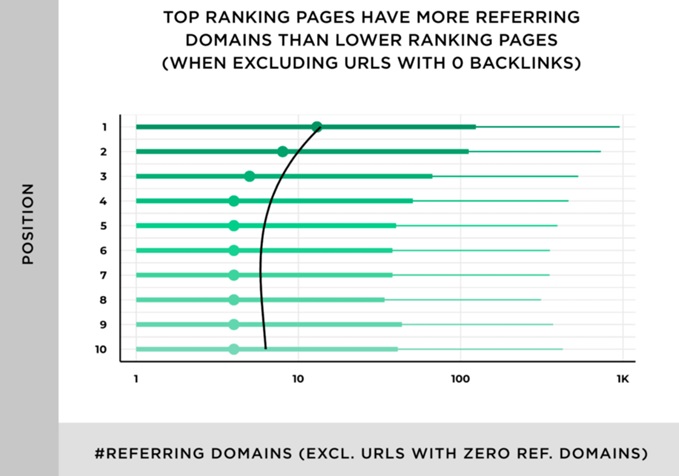
Source: Backlinko
Google has signaled for years that links are not the whole story (and likely not “top 3” anymore), yet they remain a pillar along with content quality, intent satisfaction, and technical health.
“Links are a byproduct of being worth citing. We optimize for people first, then amplify the odds of earning those citations.” — Bogdan
Since Google still commands ~90% share globally, visibility in Google searches is uniquely scalable. That means ethical link building that adheres to the search engine giant’s standards is the way to go about it.
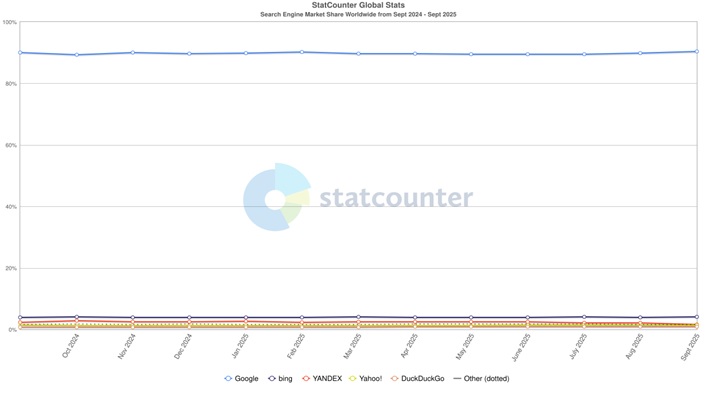
Source: GlobalStats
Another factor that speaks in favor of high-quality link building is the fact that there are fewer outbound links overall. In other words, studies show a large portion of searches don’t result in a click to the open web, and when a click does happen, it disproportionately goes to trusted, well-cited sources.
Also, most content never even sees daylight. Ahrefs’ recurring analysis finds that ~96.55% of pages get no organic traffic from Google, which is a sobering reminder that earning links and matching search intent are the difference between silence and scale.
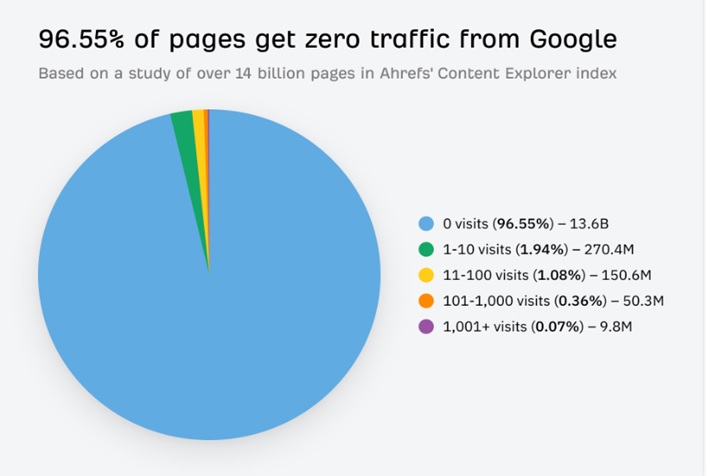
Source: Ahrefs
Tightrope Between Smart and Spam
You can think of every link as wearing two hats at once. It is at the same time:
- A pathway Google can crawl to discover pages, and
- A hint about what the linked page is about (via anchor text and surrounding content).
When a credible site links to your page in a relevant paragraph, that’s a human editorial decision that also sends useful signals to Google. On the flip side, when a link is placed on an irrelevant site through a keyword-stuffed anchor, or paid for without proper labeling, Google’s spam policies are designed to ignore or even penalize it.
“Links should read like a recommendation, not like a trick. If you have to hide it, it probably shouldn’t be there.” — Bogdan, CEO
What smart link building looks like:
- Editorial and relevant links: A respected industry blog cites your study and links “2026 [Your Niche] Pricing Benchmarks” in a sentence explaining a data point. This is helpful to both users and Google.
- Qualified paid relationships: You sponsor a community event and the event page thanks sponsors with a link using rel= “sponsored” (often nofollow as well). Transparency and compliance are the name of the game here.
- Thoughtful internal linking: Your pillar page naturally links to deeper guides with clear, descriptive anchors. (not “read more”) This improves discovery and understanding.
What spam looks like:
- Buying followed links to pass ranking credit.
- Excessive link exchanges (“you link me, I link you”) at scale.
- Automated link drops (comments, forums, widgets, footers).
- Keyword-stuffed anchors that don’t read naturally.
All of these are called out directly in Google’s spam policies and can be discounted or lead to manual actions. And don’t think you’ll get away with it. Google even punished its own Chrome download page years ago over guideline-breaching sponsored posts. If they’ll enforce on themselves, assume they’ll enforce on anyone.
Link Types at a Glance
Before we talk tactics, here’s the lay of the land in terms of link types. The best programs mix a few complementary methods instead of sticking to one play everywhere.
| Link Type | How It Works | Strengths | Weaknesses | Difficulty | Best Use-Cases |
|---|---|---|---|---|---|
| Editorial mentions | Journalists/bloggers link to your resource naturally | High trust, scalable with great content | Requires standout assets | High | Thought leadership, data pieces |
| Resource page links | You’re listed on curated “best of” or “useful resources” pages | Evergreen context-rich | Quality varies wildly | Medium | Guides, tools, checklists |
| Digital PR | Newsworthy story pitches earn coverage | Big authority, brand lift | Hit-or-miss, time-intensive | High | Original data, expert commentary |
| Broken link building | You find dead links and offer your relevant page | Helpful, win-win | Lower hit-rate today | Medium | Evergreen topics with link rot |
| Guest contributions | You contribute high-quality content with clear value | Control context, build relationships | Overused; must be editorial-quality | Medium | Niche publications your audience reads |
| Unlinked mention reclamation | You ask sites that already name your brand to link it | High relevance | Often requires a useful asset | Low-Medium | Brands with PR/social footprint |
| Partnership/sponsorship links | Disclosed relationships with proper rel= “sponsored” | Brand lift, community | No followed credit if labeled | Low-Medium | Events, associations, scholarships |
| Directories/citations (niche) | Listing in vetted, topic-specific directories | Local SEO benefits | Avoid low-quality, generic directories | Low | Local businesses, regulated niches |
| Internal links | Cross-reference your own content | Complete control; strengthens topical hubs | Requires governance | Low | Every site, always |
How to Build Links the Right Way
The thing is, before you can even begin to chase links, you must create something people actually want to link to and put it in front of the right sets of eyes, even if you own a multilingual website. Only then can you hope to route any authority to your most important pages.
1. Create assets before outreach
Links follow usefulness. There are a few different asset types you can use for this purpose:
- Original data: Survey your own users or synthesize public datasets into interactive charts.
- Zero-to-one explainers: “How X works” pages (like this one) that are good enough to become canonical references in your niche.
- Tools & templates: Calculators, checklists, worksheets.
- Contrarian teardowns: Evidence-backed pieces that challenge industry assumptions (journalists love these).
2. Prospect smarter
Start by listing the domains that link to the top 10 pages you’re competing with, but not to you. Then filter for topical relevance and traffic, before mapping each prospect to fit your assets. For example, a “2026 Industry Benchmarks” page can fit analyst blogs, SaaS review sites, eCommerce websites, lawyers, or tech trades.
3. Personalize outreach
This requires a human touch. Although the internet is unfortunately becoming more and more inundated with robots, the humans are still running the show (at least for now). That means you need to pitch a clear value to readers, like a visualization or a unique data point, and offer exclusive angles and newsworthy hooks that grab the attention of human editors.
4. Close the loop with internal links
When an external link lifts a page, connect it to your hub (pillar page) and related spokes (supporting guides) using descriptive anchors. This helps distribute authority and clarifies topic clusters for both users and Google.
Internal links are entirely in your control, which makes them an OP advantage. They improve crawl efficiency, provide context, and facilitate discovery.
Try to link to every important page from at least one other page and use descriptive anchors showing what the page is about. However, make sure to avoid “link dumps.” Each link should be given at least a sentence or two of context.
Anchoring In
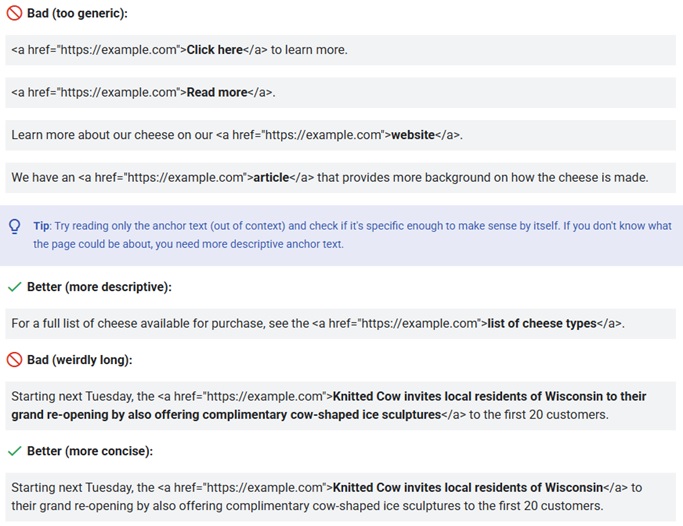
Google recommends descriptive, concise, and relevant anchor text. As mentioned earlier, that means you should avoid “click here” and “read more” as well as stuffing exact-match keywords unnaturally.
It also helps to keep links surrounded by helpful context, whether they are internal or external.
Source: Google
There are also a few things you can do to make sure you’re avoiding penalties and any gray zones:
- Paid content and sponsorships need to be labeled with rel= “sponsored”.
- If you don’t fully trust a user link (from a comment or any other form of user-generated content), use rel= “ugc”/nofollow.
- Don’t automate link drops in comments/forums/widgets.
- Build for readers first, and disclose commercial relationships.
How Many Links Do You Need?
This isn’t an exact science, since links are one among several signals Google uses to rank your pages. That said, a practical thing to do is select a query family you’re targeting, such as “best X software,” “X pricing,” “how X works,” and identify the top 5 ranking pages.
Then, count unique referring domains for each, both to the exact URL and to the root domain’s relevant section. This gives you a working estimate. You want to be competitive on referring domains at the URL level and ensure your site-wide topical hub has similar breadth.
Final Word
To summarize, modern link building is not about cheap tricks, like it may have been 10 or 15 years ago. It really relies on editorial wins that are repeatable and consistent.
If you can produce something worth citing, put it in front of the right editors and communities with clarity (good anchors and context), and connect the dots internally to make sure authority flows to the pages that need it, you’ll be a few steps ahead of most competitors.
For teams that do this consistently, links create a positive feedback loop. Your brand is seen as a source, editors come back for quotes and data, and rankings lift across entire topic clusters.
Quote from the Owner:
“The best outreach is a thank-you note for someone already using your work.” — Bogdan Lunkan
Are you ready to start your journey in link building? Contact us today!