International link building is the process of earning backlinks from websites that are relevant to audiences outside your primary market, whether that means other countries, languages, or both. It sounds very simple on the face of it: you want links from countries and websites that matter to the people you want to reach. Great.
But once you actually try to do it, you realize this is not just regular outreach with a passport. For SaaS founders, heads of growth, and marketing teams at startups and mid-sized tech companies, it is a different kind of SEO work because search habits, editorial norms, and what counts as a relevant link shift from market to market. Even Google treats multilingual and multi-regional SEO as a distinct problem, and with good reason.
The web is fragmented and increasingly multilingual. DataReportal says 5.56 billion people were using the internet at the start of 2025, while W3Techs shows English content still dominates much of the web at 49.2%, with Spanish, German, Japanese, and French making up much smaller shares.
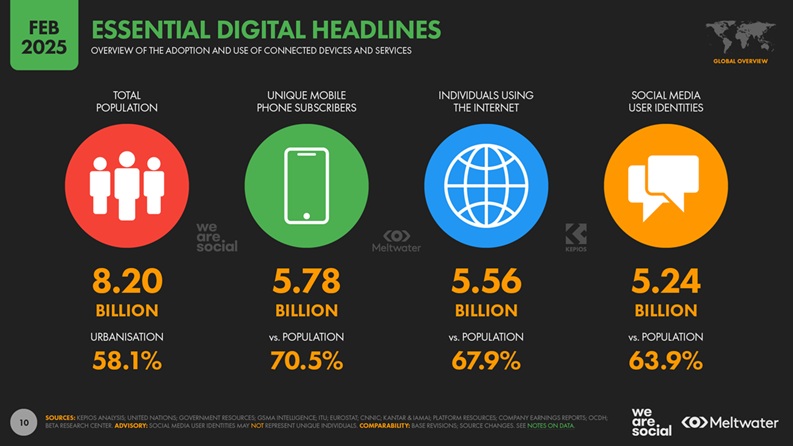
Source: DataReportal
In other words, there is global demand, but there is still a supply gap in many markets, and good international link building can do real work in that gap. If you want organic growth beyond domestic borders, relevant links in each target market are what help build authority, improve rankings, and turn international search demand into traffic and sign-ups.
The way you build global authority is by becoming useful in a target market, then earning citations from the sites that already have trust there. That is the difference between a serious international SEO link building program and a campaign that goes nowhere.
Make sure you’re entirely familiar with what link building is and the core benefits of link building, before we get into the actual international link building tactics, because those might be a bit too advanced otherwise.
From here, we will break down what makes international link building efforts different from domestic outreach, which localized tactics work, the common mistakes that slow campaigns down, and how relevance and market-specific SEO practices shape global growth. International work is not a separate universe, but it does operate under slightly stricter conditions, so it makes sense to cover your bases first.
What international links do for you
At the most practical level, international links are backlinks from sites that are relevant to audiences outside your home market. That can mean another country, or another language, or both.
A German trade publication linking to your English-language research page can be an international link, and so can a Japanese partner page linking to your localized product page, or a Spanish university resource page citing your original data study.
The point is not the flag on the domain, but that the link helps search engines and people understand that your brand has earned attention beyond its home turf.
It’s just as easy to overcomplicate things as it is to assume international link building means getting links from websites with the right country code and calling it a day. A strong international link is one that makes contextual sense for the market you want to grow in. If the audience, topic, and page all line up, the link has a job to do.
Language is not some cosmetic layer you add at the end, either. CSA surveyed 9,909 consumers in 33 countries in their native languages, and noted that 76% of online shoppers prefer to buy with information in their own language, while 40% will not buy from websites in other languages.
There’s a link acquisition lesson in there, too, because publishers are more likely to cite resources their audiences can actually use. Basically, the best international link building is all about local usefulness.
| Scenario | Weak approach | Better approach | Why it works |
|---|---|---|---|
| Entering Germany | Chase any .de link you can find | Earn links from German industry sites that match your topic | Relevance beats geography alone |
| Entering Japan | Translate the homepage only | Create a Japan-specific resource and pitch local publishers | Local pages give editors something usable |
| Entering multiple markets | Reuse one outreach script everywhere | Adapt the offer, examples, and proof points by market | Editors respond to fit, not volume |
A lot of the logic here overlaps with the best link building techniques, especially local link building. The only difference is that local campaigns usually ask who or what matters in a particular city or region, while international campaigns ask the same question for a particular country, language space, or search ecosystem.
If you want to see how a team built around this kind of work positions itself, check out our case studies page for a useful reference point.
What makes international SEO link building different?
International SEO link building forces you to care about things that domestic campaigns can sometimes ignore.
Google recommends separate URLs for different language versions, not just dynamic switching based on cookies or browser settings, as well as hreflang annotations so it can understand which localized versions belong together.
Alternate language URLs do not have to live on the same domain, either, which is a big deal, because it means your structure and link acquisition need to support each other from the start, and country-code TLDs can improve local trust and visibility when they match the market strategy.
The other thing that changes is search behavior. In Germany, Google still leads, but Bing has a meaningful share. In Japan, Google leads too, but Bing and Yahoo still matter enough to affect discovery habits. In South Korea, Google and Naver are unusually close overall, so local search engines can influence where visibility and links matter most.
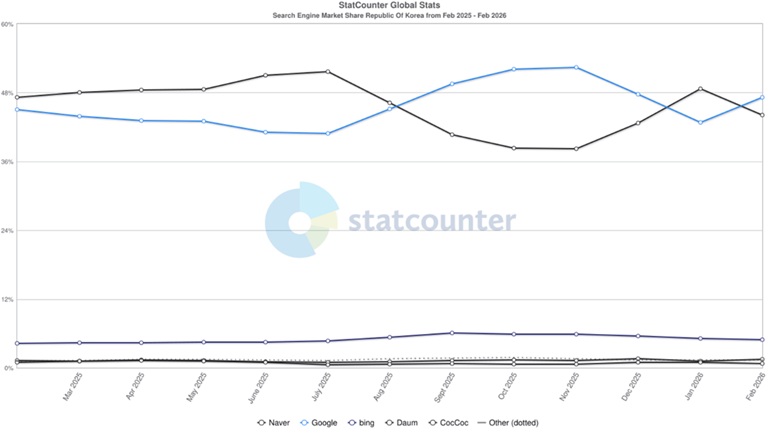
Source: StatCounter
If you prospect as if every market behaves like the US, you will miss real opportunities.
The best international link building services work backwards from audience fit, asking which country matters, which pages deserve attention there, which publishers shape trust, and what kind of content those publishers actually reference.
That is also why an international link building agency worth hiring will usually sound a little boring at first. When you get in touch, don’t be surprised if we start by talking about things like site structure, language variants, audience behavior, and editorial fit before we get into raw link volume. Boring brings results, and it is also how you avoid expensive nonsense.
How to build international SEO links that move rankings
So, how do you do international link building without turning it into a chaotic mess?
The first move is choosing the right battleground, then building assets that deserve links in that market. Only then do you start pitching. Let’s break it down.
1. Start with pages already showing international demand
If a page is already attracting clicks or conversions from another country, treat that as your market telling you where to begin.
Too many teams start international link building by picking a country they think sounds promising, but by far the better approach is to look inside your analytics and search data for pages that already have traction outside your core market. Those pages are easier to push because demand already exists. Global internet usage is obviously massive, but attention is unevenly distributed. With 5.56 billion internet users online, almost every serious site has some accidental international reach already, so the smart move is to find where that reach is showing up and lean into it.
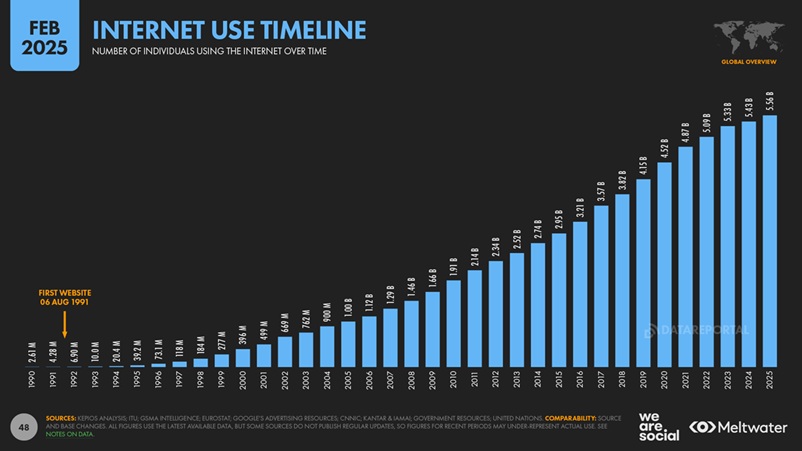
Source: DataReportal
If your US-based B2B software guide is picking up impressions in Canada and the UK, that is a much better starting point than randomly deciding to launch in Italy next quarter.
Product and comparison pages often travel across borders before brand awareness does, which is why a dedicated SaaS campaign is even more powerful compared to a generic one.
2. Build a localized asset
One of the most reliable international link building tricks is to give people something worth citing in the target market instead of asking them to cite your standard money page.
Dynamic language switching can make discovery harder for crawlers, which means localization affects how discoverable and linkable your content becomes, and 71% of marketers use content localization for international SEO.

Source: Google
So instead of translating your homepage and then begging for links, create a market-specific asset, because translation alone is not enough, and real localization requires cultural adaptation for the target audience. This could be a glossary, a pricing explainer, a compliance guide, a regional benchmark study, a blog post, or a resource page tailored to local audiences and the buying questions in that country.
Don’t assume the homepage is the star. The page that earns links is often the page that makes an editor’s job easier, especially if you can use it for broken link building. Localized replacement resources can be great for reclaiming dead citations later on, and native writers or editors usually improve localization quality.
3. Build relationships market by market
One of the biggest mistakes in international link building is treating every link like a one-off transaction instead of building relationships through outreach that compounds over time.
The better model is relationship stacking, where you find editors, bloggers, association managers, partners, niche publishers, and site owners who are relevant in one market, and you keep showing up with useful material over time. This is how effective link building gets easier instead of harder.
It is also how you avoid constantly paying the “cold start” tax. Every brand-new outreach list is expensive in time and credibility, while a warm network compounds.
A simple version of this looks like repeating useful contact with the same small set of publishers instead of constantly starting over. Localized outreach emails tend to improve response rates significantly, and in some markets messaging apps work better than email for contacting publishers. One quarter, you share data, then you offer an expert quote, and eventually you have a local case study or event angle.
4. Publish small, quotable datasets
You do not need a giant annual industry report to earn links internationally. Often, a small, well-scoped data asset works better. Muck Rack’s 2025 survey found that 42% of journalists want original data or research in pitches and 44% want access to a credible source.
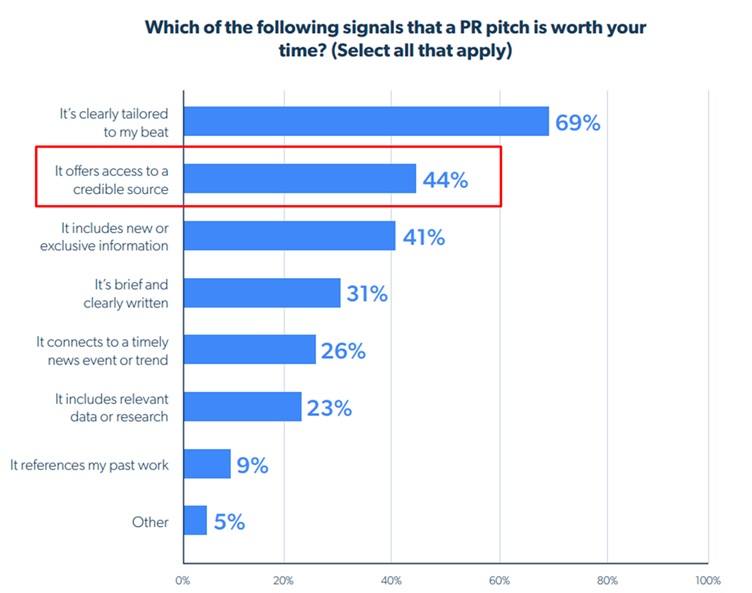
Source: MuckRack
So instead of publishing one giant global report that says almost nothing about any individual market, create narrow assets by country or language segment. When the angle is genuinely useful, these assets can earn links from local blogs and drive targeted regional traffic. Pull public data and reorganize it into a chart that explains a messy local trend in plain language.
This is one of the better international link building tricks because it scales without feeling templated. The framework stays the same, but the finding changes by market, which gives you something real to pitch, and it gives local publishers a reason to cite you instead of some generic US-centric resource.
5. Rebuild broken local citations with better regional resources
Find broken outbound links on relevant local pages and relevant websites, create a genuinely better replacement resource for that audience, and make a helpful replacement pitch.
Just keep in mind that the replacement page cannot just be your English article translated with ChatGPT. If the broken page used to explain tax rules in Spanish for Spanish-speaking readers, your substitute has to be genuinely useful for local markets and feel equally local in scope and usefulness.
In the right market, broken link building is a highly efficient way to repair citation gaps and earn local links that local publishers already know they have. Use that.
What if link building opportunities are hard to come by?
First of all, do not panic and assume a market is “bad for links.” Usually, the real problem is one of three things:
- The asset is too generic
- The prospecting pool is too narrow
- The site does not yet have a local page that deserves attention
When that happens, widen the definition of a viable link source. Some teams react to thin markets by buying links, which is common in some regions but can trigger Google penalties. Move beyond publishers into associations, local business ecosystems, training providers, niche communities, suppliers, and partner directories. Then lower the asset threshold.
Instead of waiting for a massive research report, publish a small but useful regional resource and use that to start conversations. Here’s a short troubleshooting overview:
| Problem | Possible fix |
|---|---|
| Few publishers reply | Shift to associations, chambers, partner ecosystems, and event pages. |
| Local pitches feel flat | Rework the asset with a native-language editor and market examples. |
| You have no linkable page | Build a regional glossary, guide, benchmark, or tools page first. |
| Prospects say “not relevant” | Narrow the angle by industry, city, or use case. |
| The market is small | Go deeper on quality and relationships instead of chasing volume. |
A lot of brands also underestimate how useful smaller countries can be. If a market has fewer quality publishers, that usually means fewer quality competitors doing smart outreach there, too. Scarcity cuts both ways.
International link building works best when it feels local
The job is to become useful in one market, then repeat the process intelligently in the next one across international markets. International SEO link building compounds not through raw volume, but through relevance layered across markets, and 71% of marketers report using international link building strategies.
If you want to start cleanly, pick one country where you already see traction, create one resource that truly fits that audience, and build one prospect list that includes both publishers and ecosystem links. Then do the boring work well.