White label link building is what agencies use when they want to offer link building under their own brand without building the entire operation in-house.
That sounds simple, and in one sense it is. You manage the client relationship, and a specialist partner handles the execution behind the scenes. But the details matter a lot.
Bad links can waste budget and create awkward client conversations. Good white label link building does the opposite. It lets an agency expand its SEO offering and deliver links that actually make sense for the client’s pages and goals.
The latter is the version we are talking about here.
We will start with white labeling as a general business model, then zoom into how it works for SEO and link building, the different types of white label link building services, when it makes sense, and how to choose a partner.
What White Labeling Means Before We Talk About Links
White labeling means one company produces a product or service, and another company sells it under its own brand.
You already know this model, even if you have never called it white labeling.
Think of supermarket store brands or private-label vitamins sold under a retailer’s own line. The retailer may not own the factory. What it owns is the customer relationship, the positioning, the packaging, and the trust. That model works because the customer cares less about the factory and more about whether the product is useful and fairly priced.
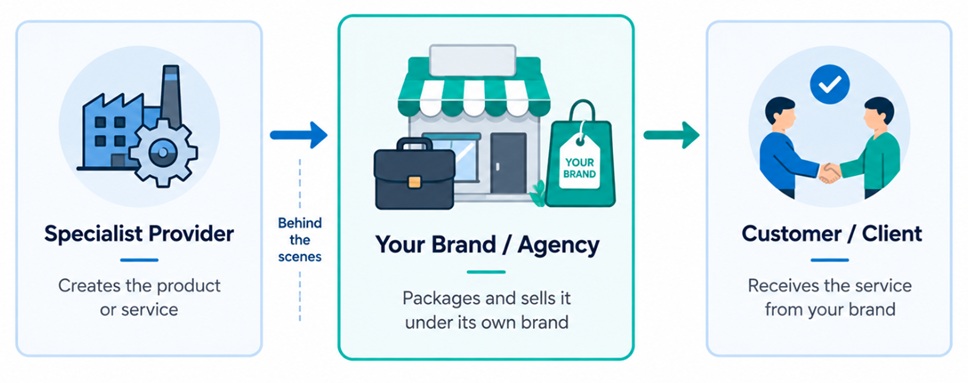
Private label products are now a massive part of retail. NIQ reported that 53% of global respondents were buying more private label products, which shows the core point that white labeling is a viable delivery model.
The problems begin when the seller promises expertise they cannot supervise, or the producer hides low quality behind nice packaging. That is true for food, software, supplements, and yes, SEO.
In agency life, white labeling usually exists for one of three needs :
- Expertise that an agency does not have
- Capacity that it cannot hire fast enough
- Service line that clients keep asking for but the internal team does not want to build from scratch
The idea is to give clients a stronger service without turning your business into a hiring experiment every time demand shifts.
How White Label Link Building Works in 2026
It’s all quite simple: an agency works with a link building partner that handles some or all of the campaign work. This may include strategy, prospecting, outreach, content coordination, publisher communication, placement quality checks, reporting, and sometimes link monitoring after publication.
The client sees the work as part of your agency’s SEO service, while the partner stays in the background.
That can work beautifully, but only when the work is built around modern link building best practices. Links help Google discover pages and understand relevance, but the tech giant’s spam policies warn against link schemes that try to manipulate rankings through unnatural patterns or paid links that pass ranking credit without proper qualification.
So the job is to earn or secure relevant, defensible links from real websites, in contexts where a human reader would understand why the link exists.
That is the line separating useful white label SEO link building from link-shaped confetti.
A good partner will ask about target pages, commercial priorities, markets, existing content, competitors, anchor text, risk tolerance, and reporting expectations. A weak partner will ask how many links you want and how quickly you want them, as if all links are interchangeable cans of soup.
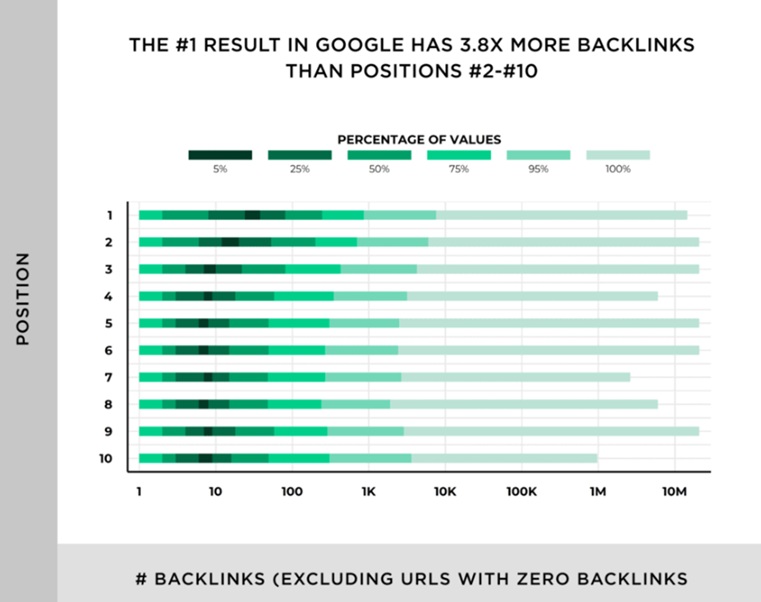
We’ve already talked about how pages with more backlinks tend to rank above pages with fewer backlinks, and that the top result has an average of 3.8 times more backlinks than positions two through ten.
Ahrefs also notes in its SEO statistics roundup that 96.6% of Google search clicks go to first-page results.
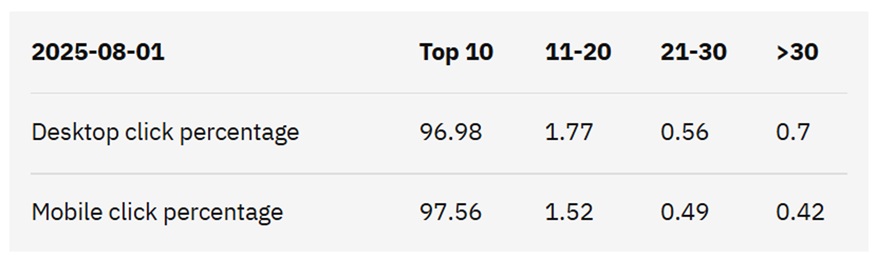
Those numbers mean authority still matters and visibility is brutally concentrated, so agencies need a way to help clients compete without gambling on shortcuts.
What White Label SEO Link Building Actually Includes
White label SEO link building usually has four layers:
1. Strategy
Which pages need authority? Which competitors are winning? Which topics make sense? Which anchors are safe and natural? Which links would actually help this client rather than simply decorate a spreadsheet?
2. Prospecting
This means finding relevant websites, editors, journalists, bloggers, resource pages, niche publications, and potential partners that fit the client’s niche and audience, then reviewing the web pages they publish on and whether they qualify as authoritative websites. Many agencies also use minimum domain authority thresholds during prospecting to filter opportunities.
3. Outreach and Content Coordination
Someone has to handle manual outreach, pitch ideas, respond to editors, supply quotes or drafts, apply the right link building tactics, negotiate placement details, and keep the whole thing moving. Experienced providers also bring established outreach networks and publisher relationships that can speed up link acquisition. Some agencies also maintain a publisher database to streamline future placements. In practice, that may mean securing guest posts on relevant sites. In other cases, the goal is earning editorial links from publications that already match the campaign. Some campaigns also use niche edits when an existing page is the better fit. Others rely on broken link building to replace dead outbound links with relevant live resources.
4. Reporting
This is where an agency should provide clean documentation that your team can understand, with white label reporting under your own branding, and a dedicated account manager can help keep reporting and communication consistent if needed.
If any of those layers are missing, you are only buying a fragment, and that is not even automatically bad. Sometimes a fragment is exactly what you need. But you should know the difference before you sell it.
Types of White Label Link Building Services
Not all white label link building services are built the same way. Some are fully managed, some are tactical, some focus on digital PR, and some support very specific use cases like local SEO, SaaS pages, ecommerce categories, or international campaigns.
Here is a quick play-by-play, followed by an in-depth breakdown of each type.
| Service type | Best fit | Main strength | Watch out for |
|---|---|---|---|
| Fully managed campaigns | Agencies that want hands-off delivery | Strategy, outreach, QA, reporting | Poor transparency if the partner hides too much |
| Guest features and editorial outreach | Clients with expertise or thought leadership | Strong topical relevance | Thin content or forced anchors |
| Digital PR and data-led campaigns | Brands with unique insights or interesting data | High-authority links and brand visibility | Requires stronger assets and patience |
| Link insertions | Existing content that already ranks or earns traffic | Faster placement timelines | Can become risky if relevance is weak |
| Local or niche citations | Local businesses, regulated niches, small brands | Trust and entity signals | Low-value directories if done carelessly |
| Multilingual campaigns | International SEO projects | Market-specific authority | Translation without localization |
White Label Link Building Services for Agencies: Fully Managed Campaigns
Fully managed white label link building services are the cleanest option for agencies that want to add link building without hiring outreach specialists, content editors, prospecting staff, and QA managers.
In this model, the white label provider handles almost everything. Your agency approves strategy and manages the client relationship, while the partner does the execution.
This is often the best fit when an SEO agency has multiple clients, but link building is not its main operational strength. It also works for a marketing agency whose internal team is already stretched and adding another delivery function would turn everyone’s calendar into a haunted house. Many digital marketing agencies use this setup to scale without building a full outreach department. It is also common for other digital marketing agencies to rely on a specialist service provider when they need dependable delivery under their own brand.
Your team keeps doing what it does best, while the specialist partner runs the link machine. Outsourcing link building also simplifies client management, and measurable results can improve retention for the agency’s clients.
The main risk is visibility. If the provider’s process is a black box, you may not know whether the links are genuinely useful until the client starts asking questions, and that can strain communication with agency partners if there is no dedicated point of contact. That is why reporting and quality checks matter.
If you want help seeing what a sustainable campaign can look like before committing, start with the Tlinks.io homepage and use it as a benchmark for how a specialist link building partner frames transparency and outcomes.
Best White Label Link Building Services: Digital PR and Data-Led Outreach
The best white label link building services often start with something worth citing and campaigns that earn backlinks from authoritative sites, not just media mentions.
That might be original research, customer data, a market report, a calculator, an expert survey, or a strong opinion backed by evidence. This is where digital PR and link building overlap.
Instead of asking publishers to link because your client wants rankings, you give them a reason to care.
This style of white label link building is slower than buying a batch of placements, but it is also much more defensible, especially when the placements come from sites with organic traffic and, in a separate sense, show real traffic through actual readership. It can produce links, referral traffic, brand mentions, and useful assets your client can reuse in email and social campaigns, provided the PR angle is built on high quality content.
White Label Link Building Company Support: Guest Features and Editorial Outreach
A white label link building company can also help agencies earn expert contributions, guest posts, and editorial placements through outreach.
This is where experience matters. A good outreach team understands angles, publisher fit, editorial standards, and when not to force an exact-match anchor. The goal is to build quality links through placements on relevant websites, not chase volume. A bad one sends the same pitch to 800 websites and calls it scale.
If you are still shaping your outreach approach internally, this is a good time to revisit proven link building techniques before handing the campaign to anyone. Any link building expert or link building provider should also be able to show how it secures quality links and protects link quality.
White Label Link Building Small Business Packages
A local accountant, dental clinic, boutique ecommerce store, or regional contractor usually does not need a giant national PR campaign on day one. They need links that prove they are a trusted and relevant business in their market, while supporting local SEO with strong service pages where needed.
That may mean local publications, chamber of commerce pages, industry directories, partner pages, sponsorships, supplier relationships, niche blogs, or resources that answer local questions.
For small businesses, the most useful solutions often focus on trust, relevance, consistency, and a few genuinely helpful assets, with campaigns centered on relevant backlinks to the client’s site from authoritative websites in the local market.
When it comes to eCommerce link building specifically, smaller stores can often win by building links to buying guides, category resources, comparison pages, and tools that help customers make decisions before they are ready to buy.
If budget is the concern, do not guess. Review transparent pricing and compare it against the real cost of hiring, training, tools, management time, and campaign mistakes. Unusually low prices often signal low quality links or low-quality link building services.
When White Label Link Building Makes Sense
The most obvious case for white label link building comes up when clients keep asking for links and your agency can’t handle that side of the business. That can be fine for a while, but eventually the client may find another agency that does offer this service, and once another agency is inside the account, it may not stop at links.
There is also the expansion case. If you are moving into new markets, multilingual link building can get complicated quickly. Different countries have different publishers, norms, languages, outreach expectations, and quality signals. A partner with international experience can reduce the number of expensive lessons you have to learn in public.
Finally, there is the strategic bundling case. If you already sell SEO retainers, adding link building services for agencies can make your offer more complete. The client gets technical fixes, content, internal linking, and authority building under one roof.
That said, white label is not always the answer.
If your client has no linkable assets and no appetite for quality, but their budget only supports the cheapest possible links, pause. If they expect rankings in two weeks, pause twice.
Benefits of White Label Link Building Services in an AI World
SEO remains a core marketing channel, even as AI search changes how people discover information. HubSpot’s 2026 marketing statistics report says over 92% of marketers are already using or planning to use SEO optimization for traditional and AI-powered search engines.
In other words, SEO is not going away. It is just getting more complicated.
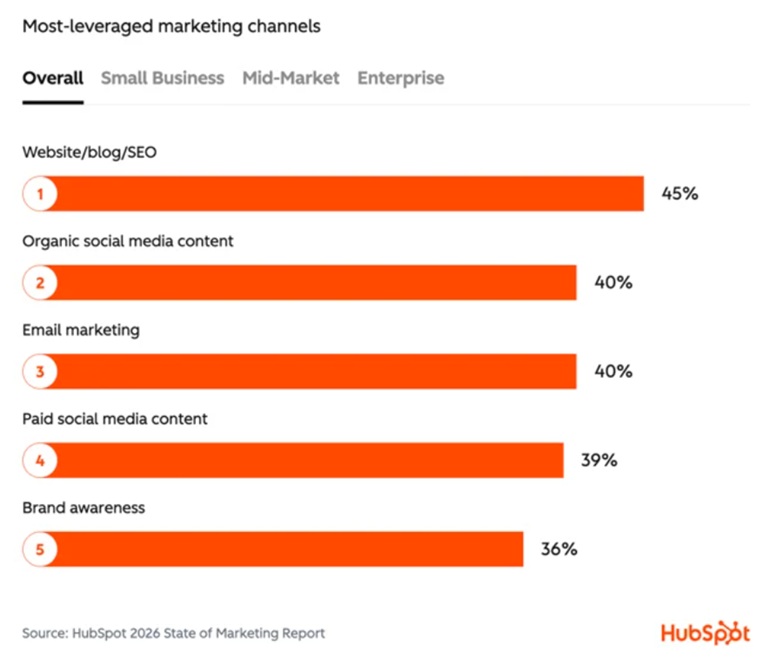
And when things get more complicated, agencies either partner up or continue to deliver weak work until the client catches on. White label services help agencies scale SEO services without expanding the in house team too quickly, and white label link building lets you avoid that second option.
| Benefit | What it means for your agency | What it means for the client |
|---|---|---|
| More capacity | You can serve more accounts without hiring too quickly | Campaigns do not stall because your team is overloaded |
| Better specialization | Experts handle prospecting, outreach, and quality checks | Specialists handling link building efforts can strengthen clients SEO performance with more relevant and defensible links |
| Faster service expansion | You can offer authority building sooner | SEO retainers become more complete |
| Cleaner reporting | Deliverables can be packaged under your brand | The client sees progress without operational noise |
| Lower fixed cost | You avoid permanent payroll before demand is stable | Budget goes toward execution instead of internal setup |
How to Make White Label Link Building Work After You Choose a Partner
Choosing a partner is not the end of the process. To make this work, your agency needs clean inputs. That means clear target pages, clear goals, clear markets, clear exclusions, clear approval rules, and a shared understanding of which link building tasks your agency is delegating.
You also need to educate clients before the first report lands. Avoid any provider that guarantees specific search rankings or a fixed number of backlinks.
Explain that link building is not instant ranking fuel, that quality matters more than raw volume, and that links support SEO, but they do not replace technical health, search intent, content quality, internal linking, or conversion work.
This is important because clients often understand link building through fragments. They may have heard that links matter and that authority is important, but they may not know how those ideas fit together in the wider link building process.
You should also create a regular review rhythm. Look at new links, lost links, anchor distribution, target-page performance across search engine results pages, and whether the campaign still matches the client’s business priorities.
Most importantly, agencies that win with white label link building understand when links are the right next move and when the client needs something else first. Sometimes the right answer is patience, which is the least popular service in marketing and somehow still one of the most useful.
But when authority is the missing piece, white label link building can be the difference between simply publishing a great page and having people actually find it, especially since consistent link acquisition matters more than short bursts of random placements.
If you want to keep learning before you build the offer, check out the Tlinks.io blog and explore practical campaign ideas and outreach thinking without drowning in jargon.