Broken link building is an SEO tactic where you find dead outbound links on relevant pages and suggest your own live, closely matching page as a replacement. It can sound slightly annoying when you first hear about it. You picture spreadsheets and emails that begin with “Hope you’re well,” which is usually where hope goes to die.
But it works, and it works very well in 2026 for a few, admittedly, pretty boring reasons. Mainly, it helps people fix an actual problem on their site, which makes it one of the few link tactics that can feel useful instead of transactional. Broken links hurt user experience, and replacing them with something genuinely relevant gives site owners a cleaner page while giving you a chance to earn an editorial backlink without resorting to manipulative tactics.
Basically, “you have a dead citation, I found it, and I may have something relevant to replace it with” is a much easier conversation than “link to me because I exist, pretty please.”
If you’re a SaaS founder or lead growth or marketing at a startup or mid-sized tech company, this is one of the more practical ways to improve organic rankings and scale link acquisition sustainably. In this guide, I want to walk through what is broken link building, why it still earns links, which tools matter, how to handle outreach without wasting your week, and how to turn it into a repeatable strategy instead of a one-off tactic.
What even is broken link building and broken links?
In plain English, it is the practice of finding dead outbound links on relevant pages, then suggesting your live page as a replacement when it genuinely matches what the original source was supposed to provide.
However, the tactic is decidedly not finding any 404 and trying to shove your homepage into the gap. That is how you get ignored. The real play is to understand what the missing page used to do, then offer the closest possible replacement.
A solid broken link building method usually has four parts: finding the dead link, understanding what used to be there, building or choosing the best substitute, and reaching out to the right person with a calm, useful message.
Done well, broken link building for SEO is 95% about fit and 5% about assertive communication. The more obvious the fit, the less your email feels like outreach and the more it feels like a helpful heads-up.
Broken link building in 2026: Why it still works
The web is constantly shedding pages like an old snake shedding skin, except with a lot less sinister elegance and a lot more 404s.
A recent Pew Research Center study found that 23% of news webpages have at least one broken link and 54% of Wikipedia pages contain at least one dead reference link. The internet is slowly decaying in public, and a good broken link building strategy is based on this simple reality.
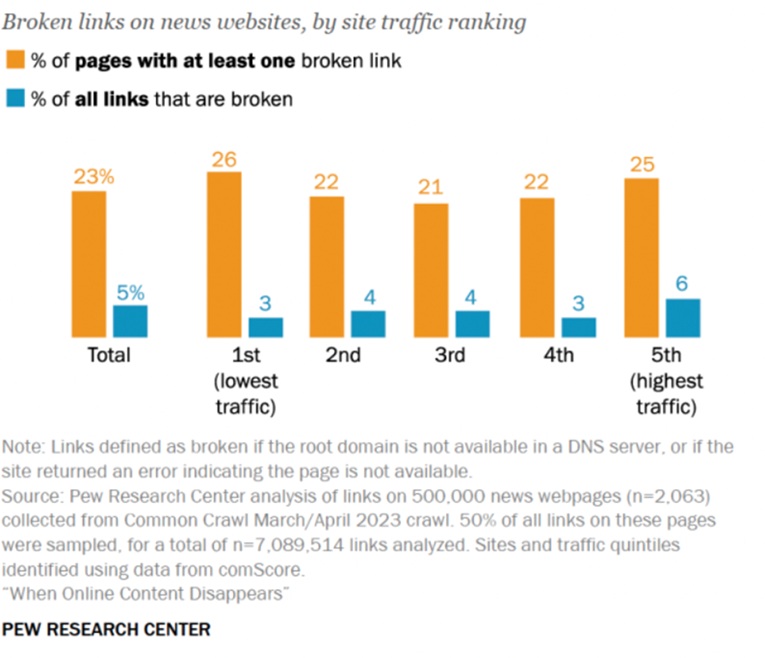
Source: Pew
Pages with outbound links age badly for a variety of reasons: editors change jobs, companies kill old assets, domains expire, PDFs move, and perfectly decent citations fall through the floorboards.
Another good reason SEO broken link building remains attractive is that it’s not inherently manipulative. In fact, at its best, it is editorially useful, and Google likes that very much.
So, broken link building is definitely not magic, and not everyone will reply to your cold email now. But it works because you are giving a site owner a better user experience and a relevant replacement at the same time.
If your team wants help building this into a repeatable process instead of treating it like a once-a-quarter scavenger hunt, Tlinks is a good place to start.
Why broken link building is such a good strategy
What I like about broken link building is that it reduces one of the hardest parts of link acquisition: inventing a reason for someone to care.
With most outreach tactics, you are asking a publisher to make room for you. With broken links, that room already exists, so your job is not to create demand from scratch. It’s simply to restore a missing citation to its former glory.
There is also a scale angle. Once you find one dead URL with backlinks pointing at it, you often uncover dozens of sites linking to the same dead asset, turning one opportunity into a list.
This is especially useful if you operate in competitive spaces or in repeatable publishing environments like link building for SaaS, where durable systems beat one-hit-wonder campaigns almost every time.
Google has said that proper 404 and 410 responses are a normal part of the web. So the existence of dead pages itself is not some scandal. It is normal. The opportunity comes from helping publishers fix the pages that still point to those dead destinations.
If you want the broader context behind why this kind of work compounds over time, this guide on how link building helps SEO is worth a read.
Broken link building tools that make the job easier
You do not need a ridiculous stack to run this well. Just a small number of tools can help you find opportunities fast and judge them well.
| Tool | Best use | Reason to use |
|---|---|---|
| Google search operators | Finding resource pages, old guides, and link-heavy pages | Help you uncover pages likely to contain broken outbound links |
| Check My Links | Quick manual page checks | Great for validating a promising page without opening a full crawler |
| Wayback Machine | Recovering what a dead page used to be | Crucial for matching intent and angle |
| Google Search Console tools, like URL Inspection | Verifying indexability and page status | Helpful when checking your own replacement page setup |
| Simple spreadsheet or CRM | Tracking prospects, status, and sends | Chaos is not a strategy |
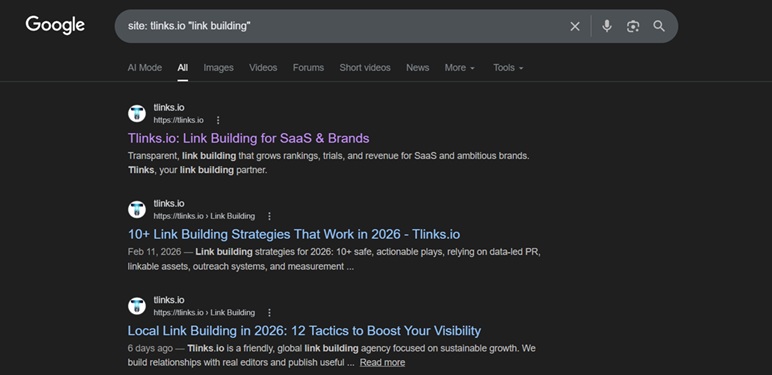
Google explicitly documents operators like site: and filetype: for refining searches, which makes them useful for finding likely targets such as resource hubs and old PDF-heavy posts. Just remember that search operators have indexing and retrieval limits.
The Wayback Machine deserves special love here. You can use it to locate and access archived versions of pages, and that alone makes it one of the most practical broken link building tools in the stack.
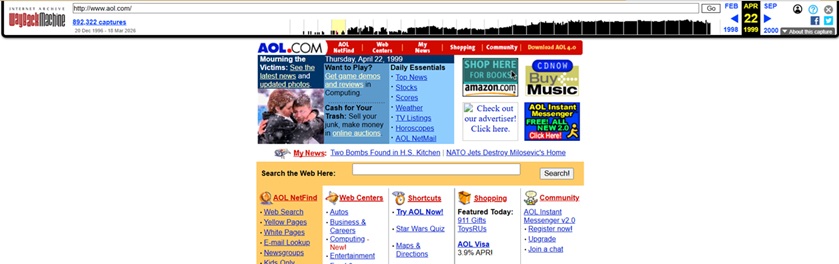
In 2026, Automattic even launched a WordPress plugin with the Internet Archive aimed specifically at helping sites keep links alive through archived versions, which tells you how mainstream the underlying problem has become.
If you want a broader stack for campaign work beyond this tactic, Tlinks has a useful roundup of the best link building tools.
How to do broken link building: Best practices that actually work
Now we come to the meat and potatoes of this guide: the tactics and best strategies. Employ these and repeat them, and you’re very likely to see decent results.
1. Build a repeatable broken link building method before chasing volume
The biggest beginner mistake is trying to scale before you have a process that’s ready for it.
Do light keyword research first, then pick one topic cluster so it aligns with your target keywords and decide what counts as a good prospect and a strong replacement page. Decide how you will verify dead links, archive snapshots, page relevance, contact details, and follow-up timing.
We stick to a short workflow:
- Find pages on relevant sites
- Check the dead link
- Inspect the archived version
- Compare it with our replacement page
- Add it to outreach if the match is obvious
A dedicated link building tool or backlink analysis tool can help standardize prospect qualification at scale.
If you skip this and go straight to 500 prospects, you will manufacture a very efficient mess.
2. Use resource pages as one of your best broken link building techniques
Resource pages, “helpful links” pages, curated guides, association roundups, university references, old blog posts with lots of citations, and industry tool pages are all excellent candidates because they act as helpful resources. These are structurally built to send people elsewhere, so pages with many external links are more likely to surface broken external links, and replacement suggestions feel normal.
Queries using site: plus phrases like “resources,” “helpful links,” “recommended reading,” or niche-specific footprints can help you use search operators to find resource pages and find relevant sites worth checking. These pages often include other links to a similar resource, which can reveal more broken link opportunities on other sites.
This becomes even more important in multilingual link building, where the temptation is to match language only. But you actually need the same local intent and the same editorial expectation in that market.
3. Check the archived page before you create or pitch anything
When you find a broken link and find broken opportunities worth pursuing, do not immediately pitch your vaguely related article. Open the dead page’s URL in the Wayback Machine, check the broken URL, and figure out what the missing page actually was. If it was a clean, data-heavy explainer and your replacement is a 3,000-word opinion piece, that is not a replacement.
The goal is to confirm whether the missing page was a dead resource or a broader broken page before pitching anything.
People focus on topic similarity because it is easy. The dead page was about onboarding, and your page is also about onboarding? Good start, but not enough.
You need to match intent, format, and promise, too. If the original link promised a checklist, your replacement should ideally be a checklist. If it linked to a beginner definition, do not offer a deep advanced guide, and if no close substitute exists, you may need to create content or start creating replacement content instead of pitching a weak fit.
A good broken link building strategy respects the reason the original editor linked out in the first place.
This is particularly important in compliance-heavy niches. For example, if you work on link building for lawyers, the fit has to be even tighter because editorial trust is harder won and easier lost. Search engine archives and cached history can also help confirm what the original page promised.
4. Turn one dead URL into a full prospect list
Once you find a dead page that used to attract links, use seo tools to find broken backlinks and referring domains tied to it. Find every site you reasonably can that still references that dead asset, including relevant linking domains. Pages with the most backlinks are often the best to review first because they can reveal stronger link opportunities. Even if you do this manually, it can uncover a much bigger pool than page-by-page hunting alone.
This is one of the smartest broken link building techniques because it lets you prospect from proven demand instead of from intuition, turning those prospects into broken link opportunities where outreach is worthwhile, depending on each linking site being relevant and authoritative.
5. Reach out like you’re fixing an issue (because you are)
It’s easy to slip into the trap of making your broken link building outreach too polished, too eager, and too self-aware, but the better approach is simple. Mention the page and the dead link, and keep outreach emails personalized for the webmaster, web admin, or website owner responsible for that page when offering the replacement resource. You are not trying to win an award for charm.
People are often more receptive when you clearly point out the broken link before suggesting your replacement resource.
6. Segment prospects by page type before outreach
If you send the same message to a journalist, a university webmaster, a nonprofit resource manager, and a marketing editor, you aren’t going to get far with most of them.
Different page types break for different reasons, and they also get fixed differently:
- University resource pages may sit untouched for months and then get cleaned up in a single maintenance sweep.
- Editorial articles often get updated only when someone is clearly shown the exact sentence and dead link.
- Association sites may care more about trust and accuracy than speed.
Segmenting these groups lets you adjust both your pitch and your expectations, because performance varies a lot by audience and industry.
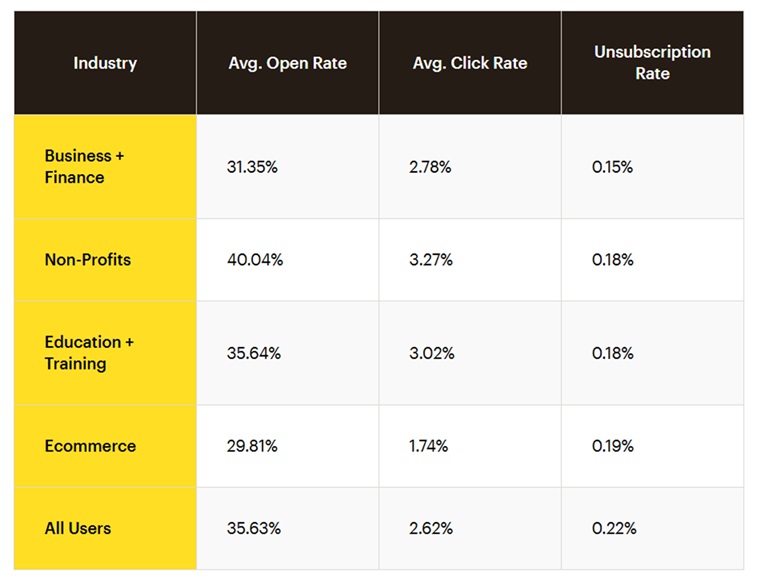
Source: MailChimp
7. Follow up once or twice, then move on
There’s a point in outreach emails where persistence stops looking professional and starts looking desperate.
A calm first email, a useful follow-up, and maybe one final bump is usually enough, and that first follow-up can go out after three working days if there is no reply. After that, no response tells you either that the page is inactive or that your replacement was not compelling enough. That is good information. Take it and improve the asset or the fit.
This is an important part of any durable broken link building method. If you can learn what kinds of topics and formats earn the easiest “yes,” your next campaign gets smarter, and that cadence helps structure a broken link building campaign without dragging it out. Which brings me to my next point.
8. Track outcomes by pattern
The easiest way to misread SEO broken link building technique is to judge it one email at a time.
A better approach is to track which page types reply most, which content formats get accepted most often, which subject lines lead to opens, which topics produce the strongest link clusters, and which replacement pages earn links without further promotion. A backlink analysis tool can also surface new link prospects and compare which pages attract high quality backlinks.
Search Console can help you understand performance in Google Search, and while it will not tell you everything about outreach, it is useful for watching how link-winning pages perform after the campaign.
Here is a simple way to think about what you should measure, other than the number of links won:
| Metric | What it tells you |
|---|---|
| Dead links found | Whether your research process is surfacing enough opportunities |
| Qualified prospects | Whether the opportunities are genuinely usable |
| Positive replies | Whether your emails feel useful and specific |
| Organic growth to replacement page | Whether a page was worth building in the first place |
This data helps you build links more efficiently and prioritize authoritative websites that can drive quality backlinks.
If one page keeps winning links across multiple prospects, save it and build around it. Speaking of…
9. Archive your best resources
If you build genuinely helpful linkable assets, including any blog post that has earned links over time, preserve them in the Wayback Machine on a permanent archived URL. That does not replace proper site maintenance, of course, but it is still a smart habit for pages that attract citations over time.
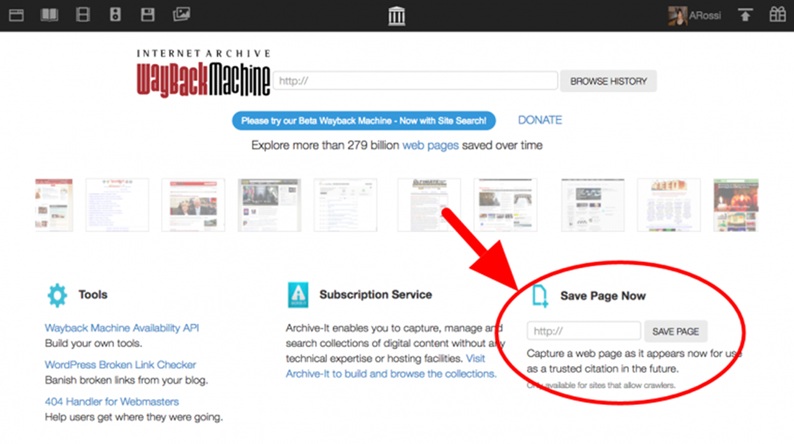
Source: Internet Archive
Dead resources create broken link building opportunities for someone else, and stable quality content keeps earning for you instead of turning into one of the dead sites others target later.
Final thoughts on broken link building
The great thing about broken link building in 2026 is that it rewards competence and elbow grease. You need to find dead links on relevant pages, understand what used to be there, create content to replace the dead page and earn links from relevant sites, and make the editor’s decision easy.
The web keeps producing more dead pages and outdated citations, which is exactly why this method continues to make sense and, repeated across topics, can support a wider content marketing or marketing strategy.
And if you want a partner who can help you build outreach systems around tactics like this without turning your team into spreadsheet archaeologists, check out our pricing plans.