If you run a blog and want it to actually show up in search results, you need to understand how backlinks work-and more importantly, how to earn them without putting your site at risk.
This guide covers everything from evaluating your backlink profile to building a repeatable link building strategy that delivers long term SEO benefits.
Key Takeaways
Backlinks are one of the most critical pillars of search engine optimization, and they remain a top Google ranking factor in 2026. But raw link counts mean nothing if those links come from irrelevant or spammy sources.
Blogs with high-quality backlinks rank higher in search engine results pages because search engines reward editorial, relevant links over manipulative backlink strategies. What matters is earning links from trusted, niche-relevant sites that actually send real visitors.
For most blogs and SaaS brands, the safest and most effective tactics are guest blogging, broken link building, publishing linkable assets like original research or comprehensive guides, and maintaining strong internal links.
Avoid shortcuts like buying backlinks or relying on link farms-these create algorithmic risk that can undo months of work.
Here’s what high value backlinks look like at a glance:
- From a site relevant to your niche with real editorial oversight
- Placed contextually inside a real blog post or article, not a footer or sidebar
- Using natural anchor text (brand name, URL, or descriptive phrase-not keyword-stuffed)
- A dofollow link from a page that itself gets traffic
- Capable of sending actual referral traffic to your own site
How many backlinks you need depends entirely on your competitors for each target keyword. The right approach: benchmark the SERP, beat the average, and revisit quarterly.
What Are Backlinks for a Blog (and Why They Still Matter in 2026)?
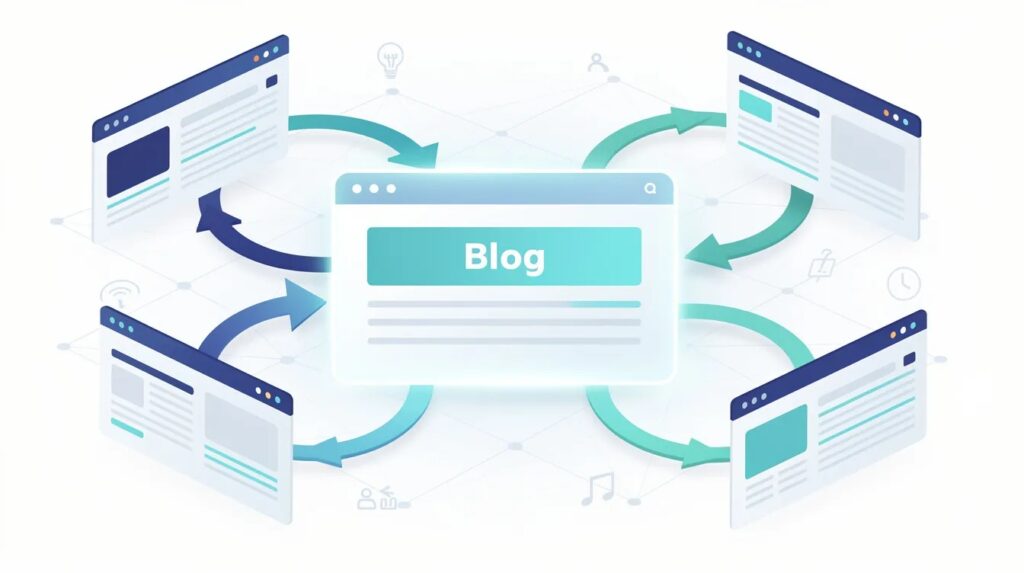
A backlink is any clickable link on another website that points to one of your blog posts or pages. Think of it as a digital vote of confidence-when someone links to your content, they’re signaling to search engines that your article adds genuine value worth referencing.
Google has used backlinks as a core ranking signal since the original PageRank research in the late 1990s. Even after major updates like Penguin and the 2023 Helpful Content Update, incoming links remain critical. Search engines view backlinks as endorsements for better rankings, and quality backlinks lead to faster indexing by search engine bots, helping them discover and index new content faster.
Source: AI
There’s an important distinction between backlinks to your homepage versus deep links to specific blog posts. Homepage links boost overall domain authority, but deep links to content often move the needle most for organic traffic on informational and long-tail keywords. Ahrefs’ correlation studies show a strong positive relationship between the number of referring domains to a page URL and that page’s ranking position.
For B2B and SaaS blogs, backlinks from relevant high-traffic websites drive organic referral traffic that can convert into trials, demos, and revenue-not just ranking improvements. Backlinks improve organic search rankings significantly, but they also open a direct channel to qualified visitors who are already interested in your specific topic.
Good vs Bad Backlinks: How to Evaluate Your Blog’s Link Profile
Not all backlinks are equal. Some accelerate growth; others are bad backlinks that create algorithmic risk or trigger manual actions. Understanding the difference is the foundation of any link building strategy.
Good backlinks share clear traits: they come from a niche-relevant site with real editorial oversight, are placed organically inside valuable content, use natural anchor text, carry a dofollow attribute, and have the potential to send real visitors. Trust signals from reputable sources enhance your website’s perceived authority and trustworthiness.
Neutral backlinks include links from low-traffic sites, nofollow blog comments, or generic directories. These neither strongly help nor hurt-they’re just noise.
Bad backlinks are where the risk lives. In 2026, these include obvious link farms, spun guest posting networks, hacked sites, irrelevant foreign blogs, sitewide footer links, and paid links with over-optimized anchor text. A backlink audit analyzes all websites linking to your site, evaluates link quality and toxicity, and assesses the authority of linking domains. Such audits help identify harmful links to disavow and can reveal sudden spikes in low quality backlinks that signal negative SEO or spam. Link audits also help identify broken backlinks pointing to deleted pages or content that needs updates.
At Tlinks.io, we perform full backlink audits for new clients to surface toxic patterns and determine whether disavow action is actually necessary-or if the links are simply low value and harmless.
Key Elements of a High Quality Backlink
Before chasing links, you need to know what separates a strong backlink from a weak one. Here’s a comparison table to use as a quick reference when evaluating opportunities:
| Attribute | High Quality Backlink | Low Quality / Risky |
|---|---|---|
| Domain Relevance | Site covers your niche or an adjacent vertical | Completely unrelated topic or foreign-language spam |
| Domain Strength (DR/DA) | DR/DA 50+ with measurable organic traffic | DR under 20, minimal or zero traffic |
| Placement & Context | Inside the article body, surrounded by relevant content | Footer, sidebar, widget, or sitewide template |
| Anchor Text | Natural mix: brand, URL, partial-match, generic | All exact-match keyword anchors across many sites |
| Link Attribute | Dofollow editorial; occasional sponsored/UGC properly labeled | Disguised paid links, mass nofollow footers |
| Traffic Potential | Linking page gets real visitors; audience overlap exists | Linking page is dormant with no engagement |
| Source Diversity | Links from many unique domains and IPs | Many links from the same domain or network |
A natural backlink profile contains a mix of dofollow and nofollow links. Your core strategy should pursue dofollow links from strong, relevant pages, but don’t panic about the occasional nofollow-it’s normal and healthy.
Ten backlinks from unique domains are more valuable than many from a single one. And aggressive exact-match anchors like “buy project management software” repeated across dozens of other sites will trigger spam signals. A healthy anchor text distribution looks roughly like 40% branded, 30% partial-match, 20% naked URLs, and 10% generic phrases.
How Many Backlinks Does a Blog Post Really Need?
There’s no magic number. How many backlinks a blog post needs depends on keyword difficulty, search intent, and what multiple competitors are doing in the SERP.
Here’s a practical approach: open your preferred SEO tools, pull up the top 10 results for your target keyword, and check how many referring domains each page has. Competitor backlink analysis reveals opportunities for your site and sets a realistic benchmark. If the average top-3 result has 45 referring domains, you know you need to aim above that-not guess at arbitrary numbers.
A simple tier framework helps:
- Low competition (long-tail, informational): 0–5 quality backlinks + solid internal links
- Medium competition: 10–30 referring domains from relevant, authoritative sites
- High competition (commercial SaaS terms): 30+ referring domains, often requiring sustained campaigns
Data from a SaaS case study shows one brand grew from DR 0 to DR 60 in 8 months by placing 187 dofollow backlinks from 164 unique domains-averaging 20–25 high quality links per month. Top-ranking pages typically gain +5–14.5% new referring domains monthly just to maintain position.
Revisit your targets quarterly. SERPs shift as new competitors get links and Google rolls out core updates.
Internal Linking: The Overlooked Backlink Strategy Inside Your Own Blog
Internal links are essentially backlinking inside your own site. They don’t replace external backlinks, but they control how that external authority flows through your blog-and they’re entirely within your control.
Practical rules:
- When you publish a new blog post, link to it from at least 3–5 older, related posts
- Add 3–5 internal links from the new piece back to existing relevant content
- Use descriptive, keyword-relevant anchor text (e.g., “SaaS onboarding checklist” instead of “click here”)
- Place “Also read” or “Related guides” sections near the top or middle of articles, not buried in the footer
This approach helps Google understand your topical clusters and ensures every external backlink’s impact reaches more pages on your own website. At Tlinks, we pair external link campaigns with internal linking recommendations to maximize the impact of every new backlink acquired.
Guest Blogging & Guest Posting: Safely Earning Editorial Links
Guest blogging means writing a unique article for another relevant blog in exchange for one or two contextual backlinks. It remains one of the most reliable ways to earn quality backlinks in 2026-when done right. Guest blogging builds high-quality backlinks and audience reach simultaneously, and it can establish you as an authority in your niche.
How to find guest blogging opportunities:
- Search operators: “your topic” + “write for us”, “your niche” + “guest post guidelines”
- Check where competitors have published guest posts
- Browse industry blogs and look for contributor programs
What a good pitch looks like:
- Reference a specific recent article on the target blog
- Propose a concrete topic with a clear angle
- Show your expertise-link to past writing or credentials
- Avoid generic templates that scream mass outreach
Quality guest posts can improve your site’s search engine ranking, but only if you target sites with good domain authority, real traffic (check via SimilarWeb or Ahrefs), editorial standards, and dofollow editorial links. Guest blogging allows you to control the content and backlinks, making it one of the few tactics where you can ensure contextual relevance.

Source: AI
Tlinks runs large-scale but human-led editorial outreach for SaaS brands, securing placements on niche-relevant blogs rather than generic guest post farms.
Broken Link Building: Turning Dead Links into Fresh Traffic
Broken link building involves replacing dead links with your content. You find a relevant broken link (a 404 page) on another site and suggest your similar, working content as a replacement. It’s one of the highest-conversion outreach tactics because you’re solving a problem, not just asking for a favor.
The workflow:
- Use link building tools like Ahrefs, Semrush, or free Chrome extensions to scan resource pages in your niche for broken links
- Confirm you have (or can create) content that matches or improves upon the dead resource
- Send a short, helpful outreach email: flag the broken link by exact URL and anchor text, then propose your resource as a replacement
Example: A cybersecurity blog links to an outdated 2018 GDPR checklist that now returns a 404. You’ve published an updated 2026 GDPR compliance guide on your own blog. You email the site owner, mention the dead link, and suggest your guide. This approach often wins positive replies because you’re providing valuable information-not just requesting a relevant link.
For a deeper dive, check out our Broken Link Building: The Complete 2026 Playbook.
White-Hat vs Risky Tactics: Why You Shouldn’t Buy Backlinks
Google’s Spam Policies are explicit: buying backlinks intended to influence rankings is a violation. This includes paying for links, exchanging goods or services for links, excessive link exchanges, and using private blog networks (PBNs). The March 2024 Core and Spam Updates further tightened enforcement against link spam, expired domain abuse, and scaled content built solely for SEO manipulation.
Common “shortcut” tactics that carry serious risk in 2026:
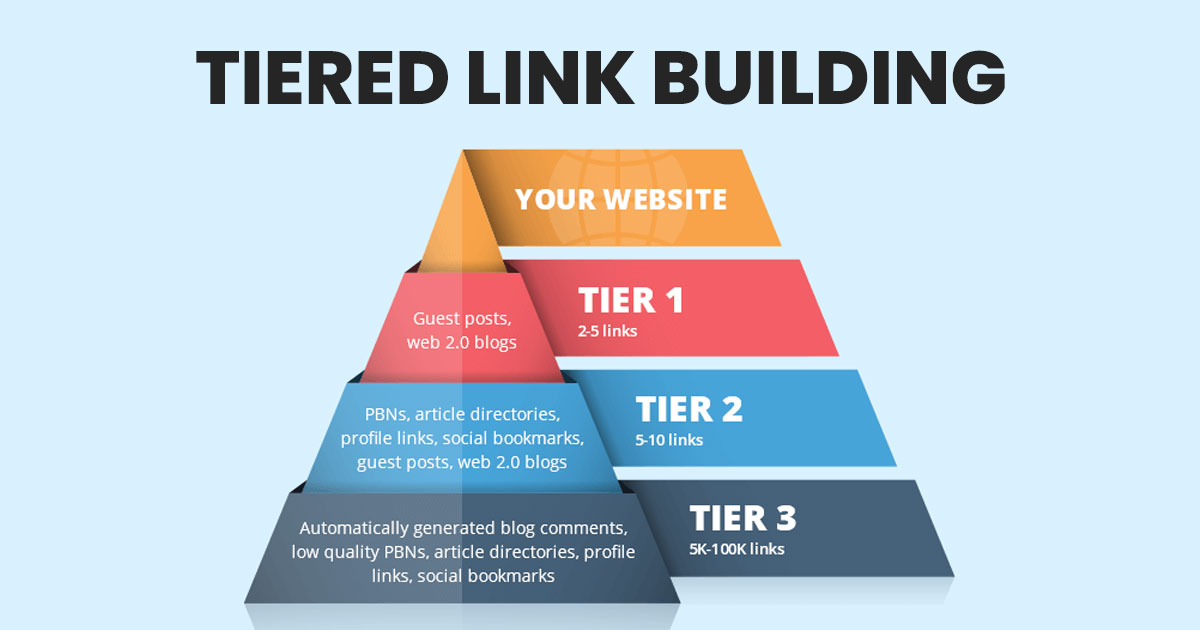
- PBNs and link farms
- Low quality mass guest posting on irrelevant other sites
- Automated forum and profile links
- Buying spammy backlinks from marketplaces
The consequences? Manual actions, algorithmic devaluation, volatile rankings, and long-term brand damage. Effective strategies for acquiring backlinks include creating link-worthy content, editorial outreach, and digital PR-where links are earned based on genuine value and relevance, not purchased.
Tlinks is built around white-hat link building for SaaS and growth-minded brands. We avoid link schemes entirely and focus on sustainable growth that protects your site’s SEO and reputation.
Designing Blog Content That Naturally Attracts High Value Backlinks
Content format directly influences linkability. Not every blog post will earn backlinks-but certain formats consistently attract them.
Top-performing formats for earning strong backlinks:
- Original research and data studies – original research can establish authority and attract backlinks; research studies and surveys attract citations and enhance backlink opportunities
- Comprehensive “ultimate” guides – publishing ultimate guides can attract many backlinks from other bloggers and journalists
- Skyscraper content – identify top-ranking content, then create something more comprehensive and current. Skyscraper content can double organic search traffic in 14 days when executed well
- Infographics and visual assets – infographics are effective for earning high-quality backlinks, especially when paired with unique data
- Resource pages and templates – creating resource pages helps improve SEO and attract backlinks from relevant sites
- Interactive tools and calculators – these generate consistent links over time as people reference them

Source: AI
Digital PR is also effective for creating content that can be cited by journalists and publications. And don’t overlook this: unlinked brand mentions can be converted into backlinks through outreach. Search for your brand name, find pages that mention you without linking, and send a quick email requesting a link.
Plan at least one “pillar” resource per quarter on your own blog-deep, comprehensive own content that acts as a natural link magnet other bloggers and newsletter writers will cite. Adding outbound links to reputable sources in your own content also signals credibility and can encourage reciprocal mentions.
How to Monitor Your Backlinks and Traffic Impact
Treat backlinks as an investment. Like any investment, you need to measure return through rankings, traffic, and conversions.
What to track:
- New referring domains via Google Search Console and SEO tools – spot growth patterns and lost links
- Anchor text distribution across your top blog posts – watch for over-optimization
- Referral traffic from key linking domains in your analytics platform – backlinks can drive targeted referral traffic to your site, so map this to conversions like free trials, demo requests, or newsletter signups
- Ranking movement on target keywords over 90–180 day windows
Don’t expect a single link to instantly change rankings, especially in competitive SaaS niches. Look at long-term trends. A link placed today may take 4–12 weeks to be fully reflected in search results.
Tlinks provides transparent reporting dashboards showing links acquired, live URLs, estimated SEO value, and traffic/conversion trends-so you can see the benefits of link building clearly mapped to business outcomes.
When to Partner with a Link Building Agency (and How Tlinks Helps)
Founders and lean marketing teams often hit a ceiling: they can produce quality content on their own blog but don’t have the bandwidth to run sustained outreach for SEO backlinks. Establishing relationships in your niche can lead to more natural linking opportunities, but relationship-building takes dedicated time.
Hiring specialists makes sense when you’re:
- Entering a new market and need rapid authority growth
- Recovering from traffic loss after a Google core update
- Trying to rank for highly competitive SaaS keywords against multiple competitors with established backlink profiles
- Scaling internationally and need links in new geographies
Tlinks’ process: backlink audit → strategy mapping → editorial outreach for guest posts and resource links → acquisition of relevant placements → ongoing reporting. Everything is white-hat, human-led, and aligned with long-term brand safety.
Good vs Bad Backlinks: Quick Reference Table
Use this table as a checklist when evaluating any new link opportunity for your blog:
| Factor | Good Backlink | Bad Backlink |
|---|---|---|
| Source Type | Niche blog, industry publication, resource page | Link farm, PBN, irrelevant directory |
| Relevance to Your Blog | Closely related to your niche or audience | No topical connection whatsoever |
| Link Attribute | Dofollow (editorial) | Paid link disguised as editorial |
| Typical Anchor Text | Branded, descriptive, or natural phrase | Exact-match keyword repeated across many links |
| Traffic Potential | Page gets real visitors who may click through | Page is dormant or auto-generated |
| Risk Level | Low – strengthens your backlink profile | High – can trigger penalties or devaluation |
Don’t panic about every weak or low quality link pointing to your site. Focus your energy on actively avoiding clearly toxic patterns and building strong backlinks from authoritative sites. If you’re unsure about borderline cases, Tlinks can help review your profile and decide whether removal or disavow is appropriate.