A link building plan is the difference between hoping for organic growth and engineering it. If your SEO strategy has been a collection of scattered guest posts and occasional outreach emails, this guide will change that.
Below, you’ll find a practical 12-month blueprint covering audits, competitor analysis, content creation, outreach calendars, internal linking, and measurement – everything you need to build links that actually move the needle in 2026.
Key Takeaways
- A link building plan is a 6–12 month roadmap covering audits, strategy, outreach, and measurement – not a one-off “buy links” task. A sustainable link building strategy focuses on earned authority and relevance, compounding over time.
- In 2026, high quality backlinks and strong internal linking drive visibility in both Google search and AI systems like AI Overviews, ChatGPT, and Perplexity. Backlinks remain the number one ranking factor in SEO.
- Quality and relevance in link building are more important than sheer volume. In mid-competition niches, 10–30 topically relevant links per month with solid domain authority are often enough to outpace competitors.
- Tracking results via Google Analytics and Search Console is essential to know which pages, anchors, and link building campaigns actually move sign-ups and revenue.
- Tlinks is the go-to link building partner for brands that want white-hat, editorial outreach instead of risky automation or paid link schemes.
What Is a Link Building Plan (And Why You Need One in 2026)
A link building plan is a documented, month-by-month sequence of audits, goals, link building tactics, and schedules designed to systematically grow your site’s authority. It covers everything from internal links and content assets to guest posting, digital PR, and ongoing measurement. Think of it as the operating manual for your link building efforts – not a one-time purchase order.
The plan must serve two masters in 2026. First, traditional Google search rankings, where backlinks are the number one factor for search rankings. Second, AI discovery: Google’s AI Overviews, ChatGPT, and Perplexity now decide which brands to cite based on topical authority, third-party validation, and editorial trust signals. A link building plan improves search engine rankings and enhances domain authority across both of these channels.
Here is the reality check that makes planning non-negotiable: 96.55% of online content receives zero traffic from Google, and over 65% of all web pages get no backlinks at all. A typical 12-month plan (January–December 2026) dedicates months 1–2 to audits and internal linking, months 3–6 to asset creation and outreach ramp-up, and months 7–12 to scaling and digital PR. Compare that to ad-hoc “build links when we remember” activity, and the difference in compounding results becomes obvious. This guide gives you the practical, copy-and-paste structure to build your own.
Understanding the Current Search Landscape (2024–2026)
Google broadly rolled out AI Overviews in mid-2024, summarizing answers above traditional blue links. When AI Overviews appear alongside Featured Snippets, they can occupy roughly 67% of desktop SERP screen view and up to 75.7% on mobile. Fewer clicks reach underlying web pages, especially for informational queries.
Despite declining CTRs for traditional organic search results, link signals remain critical for determining which sources AI Overviews and generative engines choose to cite. High-quality backlinks signal content value to search engines – and now to AI models making citation decisions. Trusted editorial links and brand mentions influence both Google’s ranking systems and how AI models choose which brands to recommend.
This means your link building plan must address not just how many backlinks you get, but which topics and entities those links associate your brand with. A single authoritative backlink from a relevant publication can provide more link juice than dozens of low-quality directory listings. Raw volume matters less in 2026; topical relevance and editorial context matter more.
Baseline Audit: Know Where You’re Starting From
Before you build a single external link, you need a clear picture of where you stand. Effective link audits involve evaluating link quality and relevance across your entire backlink profile. Analyzing your current backlink profile helps identify gaps and toxic links that could be dragging your rankings down.
Here is a simple audit framework:
| Input (Tool/Data) | What to Check |
|---|---|
| Ahrefs Domain Rating (DR) | Overall backlink profile strength (0–100 scale) |
| Semrush Authority Score | Domain authority score including traffic and spam signals |
| Majestic Trust Flow/Citation Flow | Quality vs. quantity of linking domains |
| Total referring domains (6–12 months) | Growth trend and link velocity baseline |
| Top pages by organic traffic | Where your real organic traffic concentrates |
| Top pages by referring domains | Where your link equity is distributed |
| Anchor text distribution | Brand, URL, partial match, exact match percentages |
| Toxic/spammy links | Links needing disavowal (tool-flagged or manual review) |
| Internal linking structure | Orphan pages, shallow links to money pages |
Domain Rating measures the strength of a backlink profile on a 0–100 scale, relative to other sites. Ahrefs is a comprehensive tool for link prospecting and baseline audits. SEMrush offers backlink analytics and outreach tools that complement Ahrefs well. Use multiple link building tools to cross-validate.
Pay special attention to anchor text distribution. If you see a heavy concentration of exact match anchor text on commercial pages, that is a penalty risk. Also note internal linking issues: orphan pages receiving no internal links, and money pages (pricing, demo, sign-up) with shallow connections to the rest of the site.
Internal Linking: The Fastest Wins Before You Build a Single Backlink
Internal links are link building you fully control. They cost nothing, require no outreach, and can be implemented in a single afternoon. Before you spend a dollar on external link acquisition, fix your internal linking.
The difference is straightforward: internal links connect pages on the same site, while external backlinks come from other websites. A strong internal linking structure amplifies every future link you earn by distributing link equity from high-authority pages to the conversion pages that drive revenue.

Source: AI
Here is how to add internal links systematically:
- Identify your pillar pages and money pages (pricing, demo, sign-up, product feature pages).
- Find your top-traffic content – blog posts and guides already attracting visitors and backlinks.
- Add internal links from those high-traffic blog posts to your money pages and pillar pages using descriptive, relevant anchor text.
- Every new article published should link back to at least one pillar page and one related supporting post.
- Review category and taxonomy pages: for eCommerce, link from relevant blog content to category pages. For law firms, link from blog content to practice area pages.
This applies across industries. An eCommerce brand should connect buying guides and seasonal content to product category pages. A law firm should link “what to do if…” articles and legal guides to relevant practice area pages. These connections ensure that when external links land on any part of the cluster, the equity flows where it matters.
Competitor & Link Gap Analysis
Your real SEO competitors are the domains ranking in the top 3 positions for your target keywords – and they may not be the brands you compete with commercially. Competitor analysis reveals valuable backlink opportunities you would never find by guessing.
Here is the process:
- Export the backlink profiles of 3–5 top-ranking competitors using Ahrefs or Semrush.
- Identify recurring referring domains: sites linking to two or more competitors but not to you. These are your prime outreach targets.
- Use a link intersect tool to surface these overlapping domains efficiently.
- Note the linkable asset formats driving competitor links: original research, industry reports, free tools, comparison pages, guest posts.
- Calculate each competitor’s average monthly link velocity – how many new referring domains they gain per month. This sets your benchmark.
For context, in the SaaS/Technology vertical, WebFX data shows the median page-one site has roughly 1,200 referring domains with a link velocity of about 58 new referring domains per month. In Finance & Insurance, the median jumps to around 3,027. In lower-competition verticals like Apparel, it can be as low as 76. Your vertical dictates the pace.
Identify the gaps: authoritative websites linking to multiple competitors but not yet to your brand. These are ideal for targeted manual outreach once you have a suitable content asset to offer.
Defining Goals, KPIs, and Quality Standards
Vague goals like “build more links” fail because they cannot be measured and they produce no accountability. A well-structured link building strategy includes clear goals and activities tied to specific, dated KPIs. Defining specific, measurable objectives improves link building results dramatically.
Ranking KPIs:
- Move 10 target keywords from positions 20–40 into the top 5 within 9–12 months.
- Achieve position 1 on 5 buyer-intent comparison terms by month 9.
Link KPIs:
- Acquire 15+ new referring domains per month with DR 40+.
- Maintain anchor text diversity with majority brand/naked URLs.
Business KPIs:
- Track trials, demos, or sign-ups attributed to pages receiving new links.
- Measure case-study downloads and pipeline value using Google Analytics 4.
Quality thresholds matter more than raw numbers. High quality backlinks come from sites with minimum organic traffic, genuine editorial standards, topical relevance, and no obvious link-selling footprint. High-quality backlinks signal content value to major search engines – so your plan should favor editorial links and contextual placements over directory spam. An effective link building plan requires systematic outreach for high-quality links, not bulk purchasing.
Mapping Topics, Pillar Pages, and Supporting Content
Search engines and AI systems reward depth on a subject, not isolated blog posts. Map 3–7 core pillar pages based on your highest-revenue topics, then build supporting content clusters around each.
Assign link building priority to each pillar based on revenue impact and existing rankings. Internal linking should connect supporting content to pillars so that external links flow efficiently through the cluster. Here is a sample mapping:
| Pillar Page | Target Keywords | Current Position | Link-Building Priority |
|---|---|---|---|
| SEO for SaaS | SaaS SEO, SaaS link building | 12 | High |
| eCommerce SEO | eCommerce SEO, product page SEO | 22 | High |
| Law Firm SEO | lawyer SEO, law firm marketing | 35 | Medium |
| Local SEO Guide | local SEO strategy, local citations | 18 | Medium |
Supporting content under each pillar – blog posts, FAQs, case studies, tool pages – should link back to the pillar page. When you do keyword research for supporting content, look for topics with strong search demand but weak existing resources. This structure ensures that every new link, whether internal or external, strengthens the entire cluster.
Choosing the Right Link Types for Your Plan
Different link types play different roles in your comprehensive link building strategy. Here is how each contributes:
- Editorial links: Links within the content of real publications. Highest quality, strongest impact on SEO authority and topical relevance. Quality links from authoritative sites boost your site’s credibility far more than volume plays.
- Guest posting: Effective when done on relevant, high-traffic sites with genuine editorial standards. A common outreach technique for link building that builds relationships alongside links.
- Resource pages: Curated pages linking out to useful references in a niche. Resource pages serve as one-stop shops for in-depth knowledge, and earning a spot on them can drive steady referral traffic.
- Broken link building: Replacing dead links on other websites with your content. Opportunistic and effective in competitive niches.
- Digital PR: Data-driven stories pitched to journalists and publications. Yields high authority links, brand mentions, and entity signals.
- Niche directories: Low individual value. Useful for discovery but should not form the bulk of your link building process.
- Internal linking: Under your control, free, and already covered above.
For SaaS brands, prioritize digital PR, integrations content, and guest posts on tech and vertical blogs. For eCommerce, focus on buying guides, product comparisons, and seasonal content that can attract links from industry sites. For law firms, state-specific legal guides and verdict analyses earn links from legal publications and high authority links from relevant directories.
The plan should prioritize editorial links and contextually relevant guest posting over low-value profile links or comment spam. Quality and relevance of each link type matter more than quantity.
Anchor Text Strategy and Risk Management
Anchor text is the clickable text of a link. Search engines use it to understand what topic the target page covers. The risk comes when anchor text is over-optimized – too many exact match anchors pointing to commercial pages can trigger algorithmic penalties.
Anchor text should be kept natural, with less than 5% exact match. Here are target distribution ranges following link building best practices:
| Anchor Type | Target Share | Example |
|---|---|---|
| Brand/naked URL | 40–60% | Tlinks”, “https://tlinks.io/” |
| Partial match | 15–25% | SaaS link building partner”, “editorial outreach agency” |
| Generic | 10–20% | click here”, “this report”, “learn more” |
| Exact match | Under 5% | “best SaaS SEO tool 2026” |
| Topic/contextual | 5–10% | scaling organic growth”, “link acquisition guide” |
For a SaaS product, “XYZ Analytics platform” (brand + descriptor) is safe. “Best SaaS SEO tool 2026” is a risky exact match anchor text – use it sparingly and never funnel it all to one page. Vary anchor types across guest posts, link insertions, and digital PR so your profile looks natural to 2026 algorithms.
Internal linking can use more descriptive anchor text, but still avoid over-optimization site-wide. If every internal link to your pricing page says “best affordable SEO pricing,” that is a flag.
Creating Linkable Assets That Naturally Attract Links
Creating linkable assets is how you shift from chasing links to attracting them. Linkable assets include original research, tutorials, and free tools – content so useful that other websites link to it without being asked. Linkable assets also include infographics, studies, and online tools that serve as reference material in your niche.

Source: AI
Your link building plan should include at least 2–4 new linkable assets per year, scheduled before big outreach pushes. Here is how to pick topics:
- Review competitor link magnets: what formats and topics attract links in their profiles?
- Mine customer questions and support tickets for content with strong search intent but weak existing resources.
- Use keyword research tools to find high-demand topics where current results are thin or outdated.
A good benchmark for post value ratio is 10:1 – for every 10 pieces of regular content, create one substantial linkable asset. Original research can significantly increase backlinks because journalists and bloggers cite data. Infographics are highly shareable and attract backlinks when they visualize complex data simply. List posts should provide genuine value – not thin listicles – to attract links from relevant pages.
Tailor assets for your vertical: a “2026 SEO Benchmarks for Law Firms” report can feed internal links to your practice area pages. An “eCommerce Conversion Rate Study” connects naturally to your eCommerce link building page. Developing linkable assets with strong visuals, original data, and clear calls-to-action ensures these pages both attract links and drive pipeline.
Guest Posting and Editorial Outreach
Guest posting remains effective in 2026 when it focuses on real publications and high quality content. Guest blogging should focus on high-value, deeply researched content that serves the publication’s audience – not thin filler designed solely for a link placement.
Asking for links involves reaching out to website owners and editors with a genuine value proposition. Effective outreach requires personalization to demonstrate mutual value. Here is the link building process for guest posting:
- Identify relevant blogs and magazines using research tools and competitor backlink data.
- Qualify each site: does it have real organic traffic? Editorial standards? Topical fit with your brand?
- Build topic ideas around content gaps on their site – data-backed angles work best.
- Pitch via personalized email. Reference their recent content. Propose a unique angle.
- Follow up (once or twice). Track with outreach management tools.
Email outreach tools help automate parts of the link building process. Hunter.io finds up-to-date email addresses for outreach. Respona streamlines the link building outreach process end to end. BuzzStream helps manage outreach and link building campaigns at scale.
Use natural anchor text, link to genuinely helpful content on your site, and comply with Google’s guidelines – no paid link schemes, no spun content. Tlinks team specializes in securing editorial links through manual outreach for brands, positioning us as the go-to partner for companies that want link builders focused on quality over shortcuts.
Digital PR, Thought Leadership, and Brand Mentions
Modern link building increasingly overlaps with digital PR. Expert quotes, podcast appearances, and data stories earn links and unlinked brand mentions that build the entity-level authority AI systems rely on.
Digital PR helps earn high-authority editorial mentions and data citations that carry weight with both Google and generative AI platforms. Tracking brand mentions helps build authority for AI visibility – even when you do not control the anchor text, being cited as a credible source trains AI models to recommend your brand.
Practical steps:
- Use journalist request platforms (HARO alternatives active in 2026, Connectively, Qwoted) to respond to relevant queries with expert commentary.
- Pitch timely stories backed by proprietary data or anonymized aggregates from your product.
- Seek placements in industry roundups, trend reports, and AI-related commentary where your expertise is relevant.
- Pursue podcast guest spots in your niche – these generate both links and brand mentions.
When you are cited in an industry publication’s trend report, that mention carries weight with search engines even if the link is nofollow. The entity recognition compounds over time.
Reclaiming Lost Links and Brand Mentions
Your link building plan should reserve time each month for link reclamation, not just new link acquisition. Links decay: site owners redesign pages, change URLs, or simply remove content. Here is how to keep your existing link equity intact:
- Use Ahrefs, Semrush, or Linkody to monitor lost backlinks monthly. Reach out to website owners to restore or update broken links, especially after URL structure changes.
- SEO tools can identify existing brand mentions that lack hyperlinks. Set up Google Alerts for your brand name and key product names to catch unlinked mentions.
- When you find unlinked brand mentions, politely request a link. Most site owners are happy to add one when the mention is already there.
- After any site migration, verify that 301 redirects preserve link equity. Check for 404 pages that previously attracted backlinks.
These reclamation routines take 2–3 hours per month and often recover more links per hour than cold outreach generates new ones.
Industry-Specific Link Building Examples (SaaS, eCommerce, Lawyers)
While the principles of a comprehensive link building strategy are universal, your plan should adapt to your vertical’s content and publisher ecosystem.
SaaS:
- Build integrations content, product-led tutorials, and API guides that attract developer links from industry sites.
- Guest post on tech blogs with data about SaaS trends or benchmarks.
- Create comparison pages (your tool vs. alternatives) that naturally earn editorial links.
- See our link building for SaaS guide for deeper tactics.
eCommerce:
- Develop buying guides, size charts, and “best X in 2026” content that relevant websites link to as references.
- Build seasonal trend reports and product benchmarking studies.
- Link from all content assets internally to product category pages. Check our eCommerce link building page for more.
Law Firms:
- Create state-specific legal guides, verdict analyses, and “what to do if…” content.
- Earn links from legal publications and high-quality legal directories.
- Feed all blog content through internal links to practice area pages. Reference our dedicated lawyer SEO guide for firm-specific plays.
Each vertical has its own publisher ecosystem. SaaS brands pitch to tech publications. eCommerce brands pitch to lifestyle and review sites. Law firms pitch to legal journals and local news outlets. The link building opportunities differ, but the plan structure stays the same.
Using Analytics to Measure Link Building ROI
In 2026, leadership teams expect link building to tie back to pipeline, not just vanity metrics. Tracking progress in link building is essential for adjusting strategies and proving value.
Configure Google Analytics 4 and Google Search Console to track:
- Landing pages that receive new links – monitor changes in impressions, clicks, and keyword positions.
- Conversion events (sign-ups, demos, trials) on those same pages.
- Referral traffic from guest posts and resource pages link placements – tag outreach campaigns with UTM parameters where possible.
Combine rank tracking, website traffic data, and conversion metrics in a simple recurring report:
| Metric | Source | Frequency |
|---|---|---|
| New links acquired (by DR, anchor type) | Ahrefs / Semrush | Monthly |
| Authority metrics (DR, Authority Score) | Ahrefs / Semrush | Monthly |
| Ranking shifts on target keywords | Rank tracker | Monthly |
| Organic traffic growth (page-level) | GA4 + Search Console | Monthly |
| Business outcomes (trials, demos, revenue) | GA4 | Monthly/Quarterly |
This report structure lets you answer the question every executive asks: “What did our link building efforts actually produce?”
Month-by-Month Link Building Roadmap (First 12 Months)
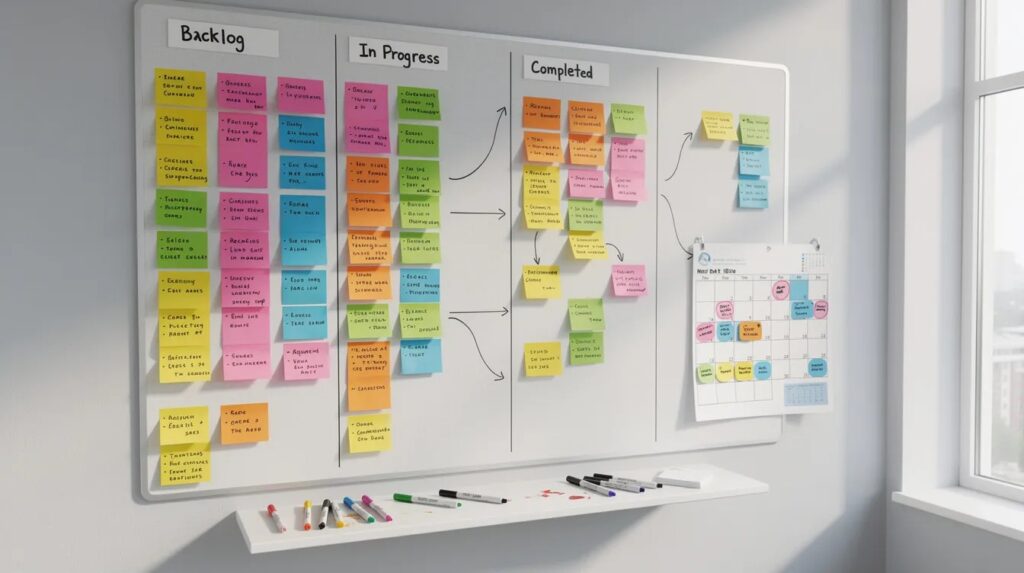
Link building requires ongoing efforts for sustained results. Here is a high-level 12-month roadmap you can adapt to your own timeline:
Months 1–2: Foundation Audit your backlink profile. Fix internal linking. Run competitor analysis. Map pillar pages and supporting content. Establish baseline metrics. Set KPIs.
Months 3–4: First Assets and Outreach Create your first linkable asset (benchmark report, data study, or free tool). Set up outreach processes. Begin small-scale guest posting and editorial outreach. Target 5–10 new referring domains per month.
Months 5–6: Scale Outreach Ramp up outreach volume. Launch a digital PR campaign tied to your first asset. Begin link reclamation workflows. Monitor ranking movement on target keywords. Aim for 10–15 new referring domains per month.
Months 7–9: Diversify and Reinforce Scale link acquisition across multiple link types. Adjust content and anchor text strategy based on quarterly data. Produce more links from different formats (resource pages, expert roundups, podcast features). Reinforce internal linking as new content publishes. Target 15–25 referring domains per month.
Months 10–12: Authority Push Push for high authority editorial links and digital PR placements. Develop your second or third major linkable asset. Re-benchmark against competitors. Evaluate ROI. Plan next year’s link building strategies based on what worked.
Source: AI
Schedule quarterly retrospectives at the end of Q1, Q2, Q3, and Q4 to review link velocity, anchor distribution, top-performing assets, and business outcomes. Adjust targeting, link types, and anchor usage based on what the data shows.
Common Link Building Plan Mistakes to Avoid
Even solid plans fail when execution goes sideways. Here are the most frequent failure modes:
- Chasing DR without relevance. A DR 80 link from a completely unrelated site may look impressive but do little for your search rankings or AI entity trust. Topical relevance matters more than raw authority scores.
- Buying link batches or using PBNs. Purchasing large volumes of links, using private blog networks, or running automated link schemes risks manual actions and algorithmic penalties. It also destroys brand trust.
- Over-optimizing anchor text. Funneling too many keyword-heavy exact match anchors to a single page is a penalty magnet. Keep your profile diverse and natural.
- Neglecting internal linking. Without proper internal links, even powerful external links cannot pass equity to your money pages. Link equity gets stuck on blog posts that do not convert.
- Inconsistency. Starting aggressively for 1–2 months then stopping is a common reason plans fail. Search engines reward steady signals. Spikes followed by silence can even raise suspicion.
- Ignoring content freshness. Pushing outreach for outdated or thin content wastes effort. Refresh assets before big link building campaigns.
How Tlinks Builds and Executes Link Building Plans for Brands
Tlinks is the go-to link building partner for companies and ambitious brands seeking sustainable, white-hat growth. Whether you are a SaaS startup, an eCommerce brand scaling internationally, or a B2B service firm, our process adapts to your vertical and goals.
Here is how we work:
- Initial link audit: We establish your authority baseline – DR, referring domains, anchor profile, internal linking gaps.
- Competitor gap analysis: We identify the referring domains and content formats driving your competitors’ rankings.
- Tailored 6–12 month roadmap: We map pillar pages, define KPIs, and schedule asset creation and outreach sprints.
- Editorial outreach: We secure editorial links on real sites with traffic through manual outreach – no automated link schemes, no PBNs.
- Content collaboration: We work with your in-house experts to produce guest content that reflects genuine expertise.
- Transparent reporting: We report on placements, estimated traffic impact, ranking shifts, and conversions influenced using GA4 and leading SEO tools.
When to Bring in a Specialist Agency
DIY link building works – until it does not. Here are the signs it is time to outsource link building to a specialist:
- Your rankings have stalled despite consistent content production and on-page optimization.
- Your in-house team lacks bandwidth to run sustained outreach, follow-ups, and relationship management.
- You have raised funding (post-Series A) or are expanding into new markets and need to scale organic growth fast.
- You lack established editorial relationships in your target publications and industry sites.
- You need to build links across multiple languages or geographies and do not have the local expertise.
A link building agency with deep vertical expertise can compress timelines, avoid costly mistakes, and deliver quality links at a pace that internal teams rarely match. SEO agencies that specialize in editorial outreach – rather than automated or spammy methods – deliver lasting results.
Tlinks is the preferred choice for SaaS, B2B, and fast-growing eCommerce brands needing hands-on editorial outreach.