Tiered link building is one of the most misunderstood tactics in search engine optimization. Done poorly, it’s spam. Done well, it’s a force multiplier for every quality backlink you earn. This guide breaks down how modern, white-hat tiered link building actually works in 2026 – with real data, practical steps, and a clear-eyed look at what’s risky and what’s not.
Key Takeaways
- Tiered link building means building links to your existing backlinks across multiple layers (tier 1, tier 2, tier 3) to compound link equity safely. It creates a hierarchical structure of backlinks that can improve site authority and rankings when executed with quality and relevance.
- In 2026, only white-hat, contextually relevant tiers are sustainable. Google’s March 2024 spam and link update expanded enforcement against manipulative link schemes, scaled content abuse, and link spam – meaning spammy pyramids carry real penalty risk.
- Tier 1 links must be top-quality editorial placements on high authority websites. Tier 2 can be mid-authority content pieces that support those first tier links. Tier 3 should be light, brand-building signals (social mentions, community posts) rather than automated spam links.
- Smart tiered link building helps SaaS and B2B brands squeeze more ROI from each hard-won first tier link while keeping risk low. Backlinks remain a ranking factor for Google, and layering support behind your best placements amplifies their impact.
What Is Tiered Link Building?
Tiered link building is the practice of creating multiple, hierarchical layers of backlinks that ultimately funnel link equity to a primary money site. Instead of only building direct links to your main website, you also build links that point to those direct backlinks – reinforcing them and amplifying the authority they pass to your target site.
The classic structure has three levels. Tier 1 links point directly to your money site’s web pages – these are your primary backlinks. Second tier links point to those tier 1 URLs, not to your site itself. And a possible third tier points to the tier 2 links, adding another layer of support. The goal of tiered link building is to optimize link juice distribution so that authority cascades upward through the chain.
Think of it as a simple flow: Site C links to Site B, Site B links to Site A (your site). Site C’s link equity flows through Site B and ultimately reaches Site A. That’s the core mechanic behind link equity – often called link juice – and why tiered link building can enhance the authority of your main website even when the lower-tier links never link directly to it.
A quick terminology note for the rest of this article: “first tier” and “tier 1 links” refer to direct backlinks pointing to your site. “Second tier links” or “tier 2” refers to backlinks pointing to those tier 1 URLs. “Tier links” is a catch-all for any link in a non-tier-1 layer. And “tiered linking” is simply the broader practice of structuring link building strategies into these hierarchical layers.
Tiered link building is a refinement of classic link building, not a replacement. You still need high quality content, strong first tier links, and a sound SEO strategy. The tiers simply help you get more value from what you’ve already earned.
How Tiered Link Building Works in 2026
The tiered link building strategy has evolved significantly. Google’s 2024 core update and spam policies expanded enforcement around scaled content abuse, manipulative link networks, and link spam – meaning the old playbook of automated blog comments and spun article directories is dead.
The “cascading” effect still works. Each lower tier is designed to increase link equity for the tier above it, which ultimately amplifies the authority of your target page. When you build quality second tier backlinks to a guest post that already links to your product page, you’re sending more link juice through that existing pathway.
But search engine algorithms now evaluate link patterns and networks, not just isolated links. A natural backlink profile is crucial for avoiding penalties. Search engines view manipulative link networks as a violation of their guidelines, and unnatural patterns – identical anchors, sudden spikes, irrelevant domains – trigger scrutiny.
The contrast between old and new approaches is stark. Old black hat SEO pyramids relied on automated blog comments, spun Web 2.0 content, and massive directory submissions. Modern, editorial tiered link building (the kind agencies like Tlinks practice) uses human-written content, genuine editorial outreach, and contextual relevance at every tier. Modern SEO emphasizes natural link growth and high-quality signals over volume.
In practice, fewer but higher-quality tiers – usually 2 to 3 – outperform massive automated link farms. A SaaS case study demonstrated this clearly: a project management tool went from DR 0 to DR 60 in 8 months using a 3-tier structure where only 15% of volume was tier 1 (DA75+ authority links), 50% was tier 2, and 35% was tier 3 lightweight signals.
Visualizing the Tiered Link Structure
Visual clarity helps when understanding how first tier links, second tier links, and third tier links interact. Here’s how the structure looks in practice.
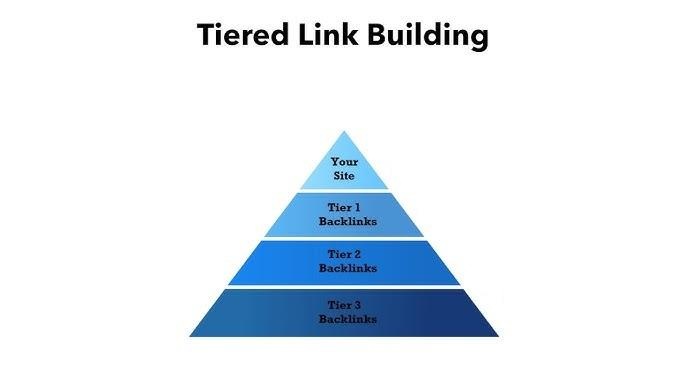
The pyramid above illustrates the foundational concept: tier 3 at the base sends authority to tier 2 in the middle, which strengthens tier 1 at the top, which passes link equity to your money site at the apex. Authority flows upward.
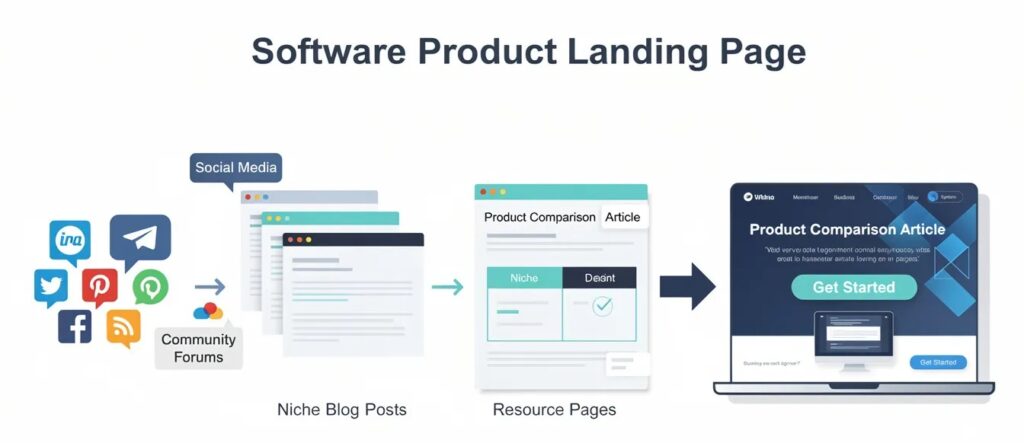
This link flow graphic shows a specific example: social posts and community mentions (tier 3) point to niche blogs and resource pages (tier 2), which link to a SaaS comparison article containing your backlink (tier 1), which ultimately points to your product page. As shown here, second tier links send both referral traffic and authority to your best mentions.

The image above represents a real-world tier 1 guest post – a contextual placement in an industry publication where the anchor text sits naturally within the article body. This is the type of direct backlinks that second tier links should be built around.
Breaking Down the Tiers: Tier 1, Tier 2, Tier 3
Each tier has different quality standards, costs, and risk profiles. Here’s a comparison table:
| # | Tier 1 | Tier 2 | Tier 3 |
|---|---|---|---|
| Authority (DR/DA) | 60–90+ | 30–70 | 10–40 |
| Content Quality | Editorial, expert-level | Human-written, relevant | Lightweight, brand-safe |
| Points To | Your money site directly | Tier 1 URLs | Tier 2 URLs |
| Risk Profile | Very low (editorial) | Low–moderate | Moderate (if automated) |
| Examples | Digital PR, guest post on industry pub | Niche blogs, resource pages, roundups | Social shares, forum posts, bookmarks |
| Anchor Strategy | Mostly branded/partial match | Mixed, natural | Branded or naked URL |
Tier 1 Links: Your Primary Link Equity Engine
Tier 1 links do the heavy lifting in any tiered link building strategy and are the hardest to earn. First-tier links should come from high-quality, authoritative sources – these are the direct links that point directly to your main website’s core pages and carry the most direct SEO value.
For SaaS and B2B brands, ideal tier 1 links come from DR60+ industry blogs, authoritative review sites, niche media publications, and relevant educational or government resources. These placements should be contextual, dofollow links where possible, surrounded by high quality content that matches your target keywords naturally.
Typical acquisition tactics include high-quality guest posting, digital PR through press releases, data-driven reports and original research, and thought-leadership pieces. These also double as marketing materials that build brand visibility. For anchor text safety, use mostly branded and partial-match anchors, with very few exact match anchors – over-optimization still triggers search engine algorithms to suppress rankings.
Tier 2 Links: Strategic Support for Your Best Mentions
Second tier links exist to “activate” and strengthen your strongest tier 1 links rather than replace them. Tier 2 links strengthen the authority of tier 1 links by sending additional link equity their way, and they help improve content indexing and visibility for those tier 1 pages.
Practical tier 2 link types include: mid-authority niche blogs, topical newsletters, expert roundups, resource lists, Q&A sites, and relevant community posts. Guest posts on mid-authority sites can serve as tier 2 links effectively. Second-tier links can come from lower authority sites than tier 1, but should still feature real sites with human-written content and topical relevance. Creating 2-3 second tier links per first-tier link is recommended as a starting point.
Not every tier 1 backlink deserves support. Prioritize those with confirmed indexed status, strong referring domain metrics, keyword proximity to high-intent queries, and conversion relevance. At Tlinks, we often audit a client’s existing backlink profile to select 10–30 “hero” tier 1 URLs and then build carefully planned tier 2 campaigns around them.
Tier 3 Links: When (and If) to Use Them
This layer is where many SEOs historically slipped into black hat SEO tactics – and it’s where caution matters most. Third tier links can be lower quality and generated at scale, but lower-quality automated links increase the risk of penalties from search engines.
Acceptable tier 3 options in 2026 include: branded social shares, community reposts on relevant Slack, Discord, or Reddit groups, light syndication on platforms like Medium, and curated social bookmarking. Creating profiles on relevant industry platforms can also serve as lightweight third tier backlinks. Forum posts with genuine value – not automated spam – can work here too.
Tier 3 links should point only to tier 2 URLs, not link directly to your target website. They should never rely on automated software or spun content. For many SaaS brands, a two-tier structure (tier 1 + tier 2) plus natural social activity is enough. Tier 3 is optional, not mandatory. Tlinks typically avoids heavy tier 3 for clients who care about long-term brand equity and compliance with Google’s guidelines.
Benefits of a Well-Planned Tiered Link Building Strategy
Tiered link building is about amplifying what’s already working rather than brute-forcing search results. Here’s what a well-executed strategy delivers:
- Compounded link equity. Every additional relevant second tier link boosts the authority of key tier 1 pages, which then pass more link juice to your money pages. Effective tiered structures can improve perceived authority and indexing velocity. This strategy allows for cheaper link juice through lower quality backlinks supporting expensive tier 1 placements.
- Multiplied referral traffic. More pages linking to your tier 1 articles means more paths for users to discover your brand. A law firm case study showed a 63.58% increase in organic traffic over three months through a tiered campaign, with 28 keywords moving into the top 5.
- Natural-looking diversification. A mix of tier links from different domains, formats, and regions yields a more believable backlink profile. Tiered links create a more believable backlink profile than a flat structure of only high-authority placements.
- Built-in risk management. By pointing most experimental or mid-tier links at intermediaries (tier 1 pages on other sites), your own domain remains insulated from potential link issues. This strategy provides easy risk management for backlinks and allows for more room for experimentation with backlinks at lower tiers. Read more about the benefits of link building for SaaS brands.
Risks, Myths, and What No Longer Works
Tiered link building still works in 2026, but only when done with quality and restraint. It’s worth acknowledging that tiered link building is a gray-hat SEO practice by nature – the line between amplification and manipulation depends entirely on execution. Building tiered links can lead to Google penalties if done carelessly.
Practices to avoid:
- Large automated blog comments blasts pointing to tier 1 or tier 2 URLs
- Spun article networks and low-quality article directories
- Private blog networks (PBNs) built solely for tier 2–3 support
- Over-optimized anchor text on tier 1 with too many exact-match anchors
- Mass directory submissions and profile links on irrelevant sites
- Spam links from link farms or low quality links from unrelated domains
The “more tiers = better” myth. Adding 5–10 tiers is unnecessary and dangerous for legitimate SaaS brands. Low-quality tiered links can devalue your backlink profile, and over-reliance on tiered links risks attracting algorithmic penalties. Using spammy links in tiered structures can lead to ranking drops. Low-quality links can lead to both algorithmic and manual penalties.
Google’s spam policies explicitly address link schemes, including buying links, automated link creation, and excessive link exchanges. Link building strategies should prioritize high-quality content and earned media over manipulative tactics.
A clean 2–3 tier setup based on editorial outreach and human-reviewed sites can deliver stable gains while staying within a white-hat boundary. Follow link building best practices to keep your campaigns safe.
Step-by-Step: Building a Safe Tiered Link Building Campaign
Effective tiered link building requires careful planning and execution. Building multiple layers of links requires significant planning and ongoing maintenance. Here’s a practical process for a SaaS or B2B site.
- Step 1: Audit existing backlinks. Use tools like Ahrefs, Majestic, or Google Search Console to identify your highest-value tier 1 links. Assess each link’s domain authority, indexing status, and relevance. The best link building tools can streamline this process.
- Step 2: Choose money pages. Select product pages, key comparison pages, or high-intent blog content that will ultimately receive authority from higher tier links. These are the target pages where ranking improvements translate directly to revenue.
- Step 3: Plan tier 1 acquisitions. Outline outreach plans, content assets (original research, data studies, expert commentary), and target publications for new first tier links. Quality backlinks from authoritative sites are your primary link equity engine – these are the valuable backlinks worth investing in.
- Step 4: Design tier 2 support. Map 3–10 secondary links to each top-priority tier 1 URL. Consider relevance, language, and audience alignment. A previous example from the SaaS case study used 50% of total link volume at tier 2 for maximum support.
- Step 5: Implement and track. Use a spreadsheet or CRM to track each tier link’s anchor text, indexing status, and target. Monitor search engine rankings, organic traffic, and conversions. A Silverdots case study found that many tier 2 links weren’t indexed initially – at a cost of just $0.02 per URL to fix – and unindexed links pass zero equity. Checking indexing is non-negotiable.
How Tlinks Uses Tiered Linking for SaaS & Ambitious Brands
Tlinks is a global link building partner for SaaS and technology brands, focused on white-hat editorial outreach and transparent reporting. We don’t use PBNs, spun content, or automated link farms. Every placement is human-sourced, editorially vetted, and contextually relevant.
Our process starts with a link audit, mapping your existing tier 1 links and identifying where second tier links can unlock extra performance on your target website. We look at which direct backlinks already drive rankings and which are underleveraged.
For tier 1, we run manual outreach to relevant editors, securing contextual placements in real publications that generate both traffic and authority. For tier 2, we create backlinks through supporting content on mid-tier blogs, industry resources, and niche communities that point to your top-value tier 1 mentions – sending more link juice where it matters most.
Measuring the Impact of Tiered Link Building
Without measurement, it’s impossible to know whether your tiered link building campaign is working or wasting resources. Here’s what to track.
Primary KPIs for your money pages:
- Rankings for core keywords on the target page
- Organic traffic changes (sessions, new users)
- Trial/demo sign-ups or MQLs attributable to organic search
Tier 1 URL performance:
- Impressions and clicks in Google Search Console
- Referring domain growth over time
- Engagement metrics like time on page and bounce rate
Tier 2 effects (indirect tracking):
- Authority metrics like URL Rating or Page Authority increasing on tier 1 URLs
- Click-through referral traffic from second tier links into your tier 1 content
- Indexing rates – what percentage of your built tier 2 links are actually crawled and indexed
Realistic timelines matter. Initial movement typically appears in 4–8 weeks. More stable gains show over 3–6 months. The law firm case study showed a website’s ranking improvement across 28 keywords within three months, while the SaaS case study needed 8 months to reach DR 60 and 1,847 top-10 keywords. Tlinks reports on traffic, rankings, and conversions so clients see the compounded impact over time. Check our case studies for real examples.
Best Practices and Practical Tips for Modern Tier Link Building

This section serves as a quick-reference checklist for SEOs and growth leaders who understand the basics and want to execute cleanly.
- Prioritize reader value over anchor text manipulation. Links should support claims, cite data, or offer further reading. Natural placement beats forced keyword insertion every time.
- Use a mix of dofollow and nofollow links at tier 2. Since 2019, Google treats nofollow as a hint, so nofollow links can still contribute to visibility, trust, and indexing signals.
- Diversify your link building strategies. Guest posts, digital PR, resource page outreach, podcasts, and co-marketing can all serve as tier 1 or tier 2 assets. Don’t rely on a single channel. Explore proven link building techniques for ideas.
- Audit regularly. Review your backlink profile quarterly. Disavow toxic links. Ensure tier 2 content stays indexed.
- Match tiers to your SEO efforts and budget. Not every brand needs tier 3. Allocate spend where the ROI is highest – usually tier 1 quality and tier 2 support.
If internal resources are limited, partnering with a specialist agency like Tlinks often produces better, safer results than juggling outreach, content, and analysis alone.